
Got a VHDX file and want to run it as a virtual machine? Microsoft Hyper-V can do it, and it’s already part of Windows 10 Pro and Windows 11 Pro. You just have to switch it on.
A VHDX file is a virtual hard disk: a whole drive, with Windows and your programs on it, saved as one file. You might have made one from an old PC, copied one from another computer, or downloaded one. If you’re new to all this, my guide to what virtual machines are explains the basics.
In this guide I’ll show you how to enable Hyper-V, import the VHDX file and start it up. I’ll also cover the one setting that trips most people up, and what to do if you only want to look at the files inside.
The Short Version
- Make a copy of your VHDX file, because Hyper-V runs from it and changes it.
- Turn on Hyper-V: search Start for Turn Windows features on or off, tick Hyper-V, click OK and restart.
- Open Hyper-V Manager and click Action, New, Virtual Machine.
- Choose Generation 2 for most modern PCs, or Generation 1 for an older one.
- At Connect Virtual Hard Disk, choose Use an existing virtual hard disk and pick your VHDX file.
- Click Finish, then Start and Connect.
Before You Start
Hyper-V is free, but it isn’t available on every PC. You need:
- Windows 10 or Windows 11 Pro, Enterprise or Education. Hyper-V isn’t available on Home editions.
- A 64-bit processor with virtualisation turned on in the BIOS. Most PCs from the last ten years have it, but it’s sometimes switched off. Here’s how to enable virtualisation in the BIOS.
- At least 4 GB of memory. My advice is 8 GB or more, because the virtual machine needs its own share.
- Enough free space on the drive where the VHDX file will live.
On Windows Home? You can still run a virtual hard disk using the free VirtualBox instead. My guide shows you how to import a VHD file into VirtualBox.
Which Edition of Windows Do I Have?
Open Settings, then System, then About. Look under Windows specifications for Edition. If it says Home, Hyper-V won’t be there.
Make a Copy of Your VHDX First
Hyper-V doesn’t make its own copy of your VHDX file. It runs the virtual machine straight from it, and everything that happens in the virtual machine changes that file.
Copy the VHDX somewhere safe before you start. If anything goes wrong, you’ve still got the original.
How To Enable Hyper V In Windows
Hyper-V is an optional extra that needs switching on before you can use it. Windows does all the work for you.
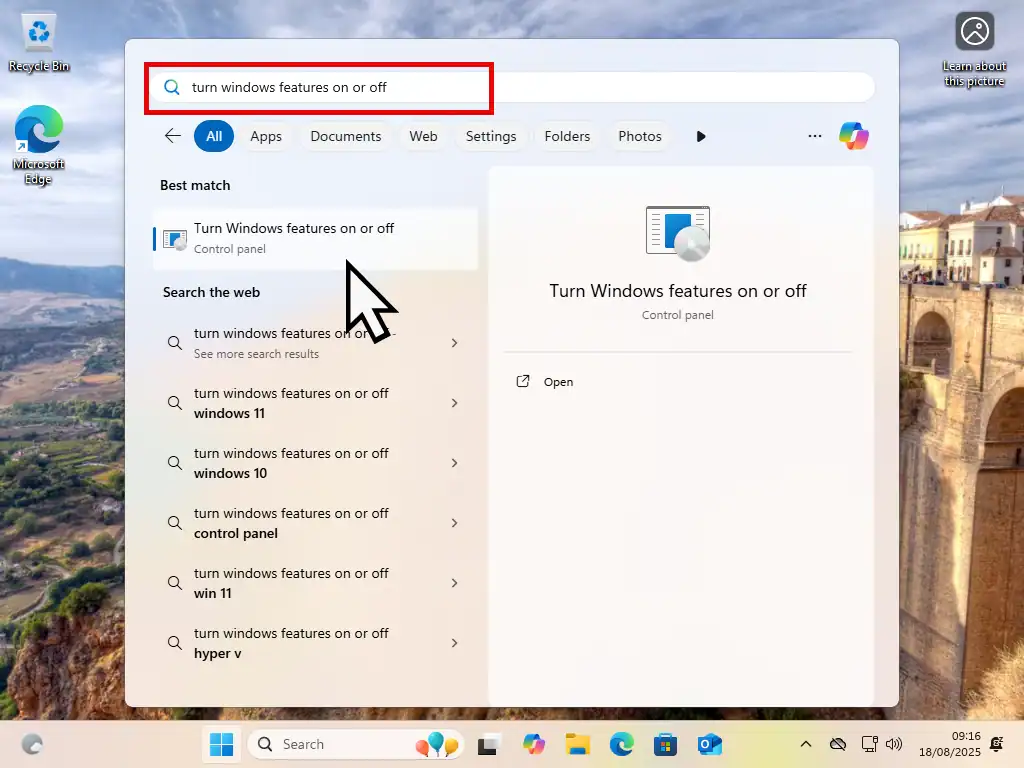
- Click the Start button and type turn windows features on or off, then open it.
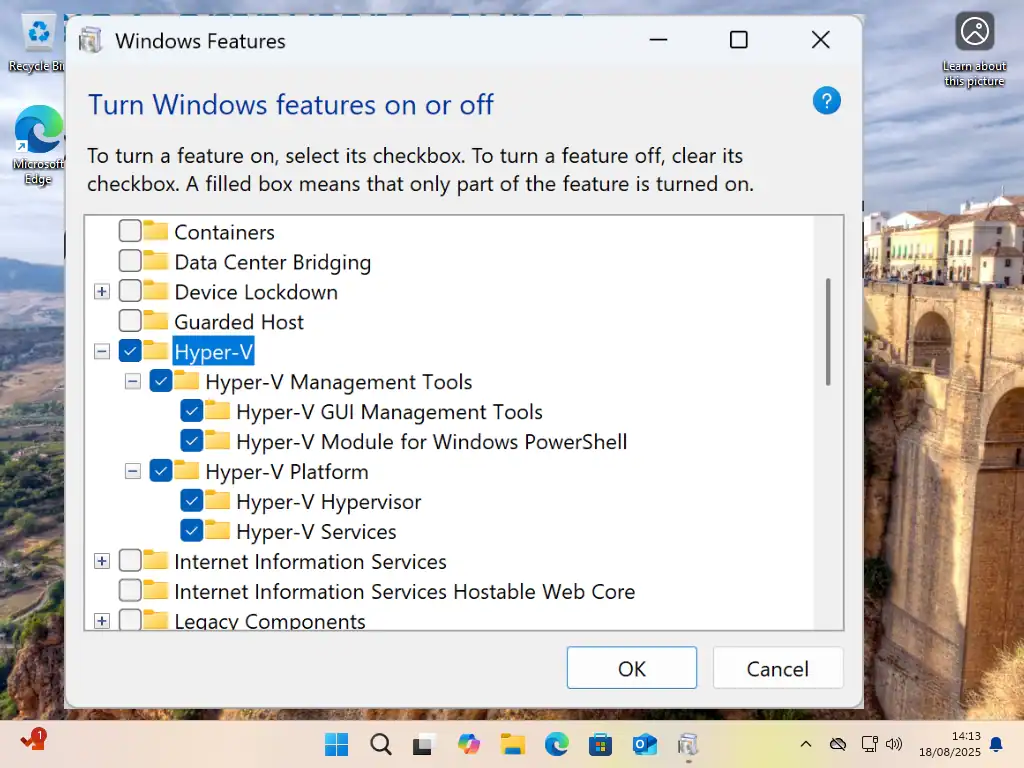
- In the Windows Features window, click the plus (+) sign beside Hyper-V to expand it.
- Tick every Hyper-V box that’s available, then click OK.
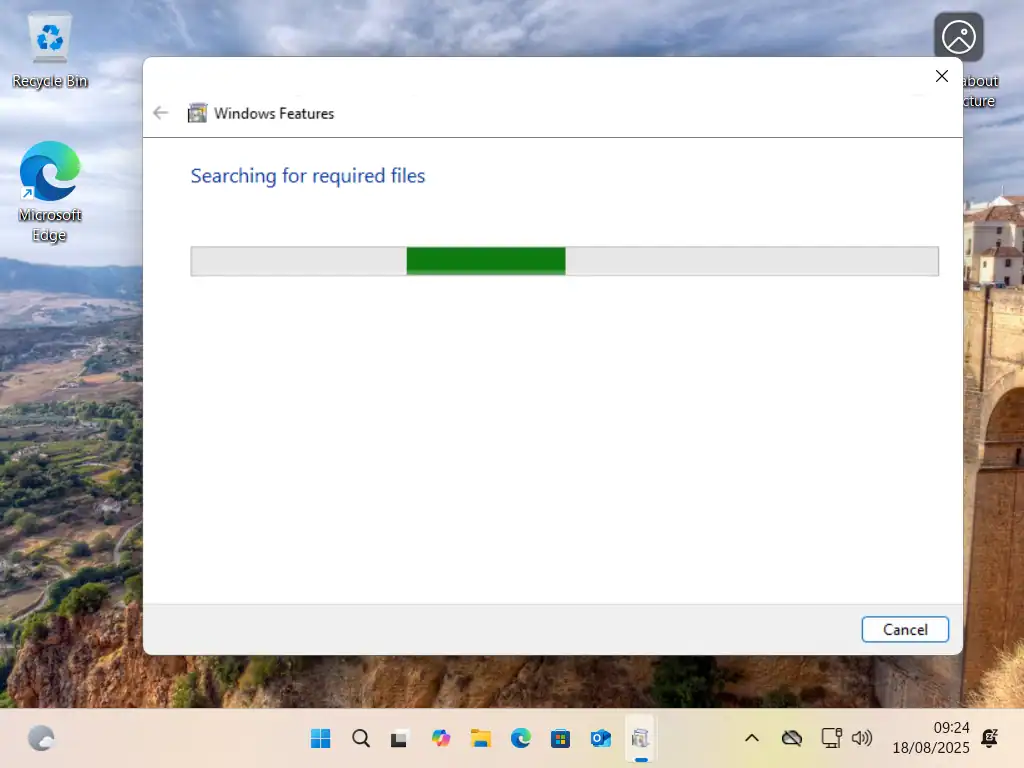
- Windows installs the files it needs. Restart your PC when it asks.

Prefer a Command?
You can turn on Hyper-V with one line instead. Right click Start, open Terminal (Admin) or Windows PowerShell (Admin), and run:
Enable-WindowsOptionalFeature -Online -FeatureName Microsoft-Hyper-V -AllPress Y when it asks to restart.
How To Import VHDX File Into Hyper V
Once your PC has restarted, click Start and type hyper-v. Click Hyper-V Manager to open it.
If you’re going to use Hyper-V often, right click it and pin it to the Start menu.

Hyper V Manager
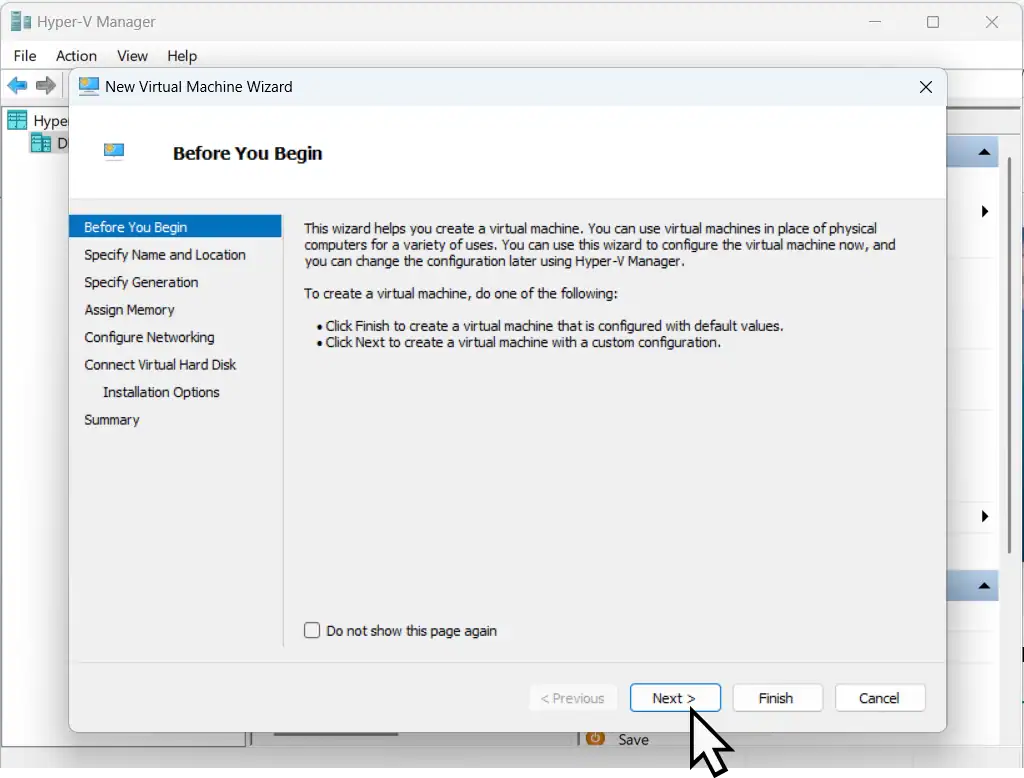
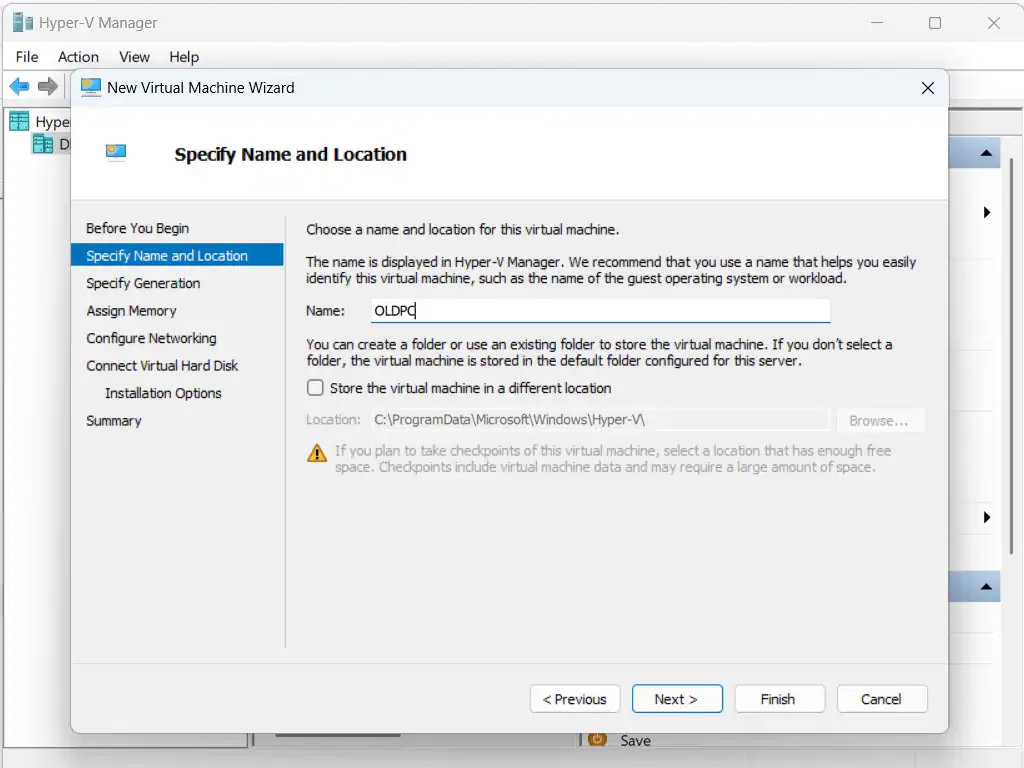
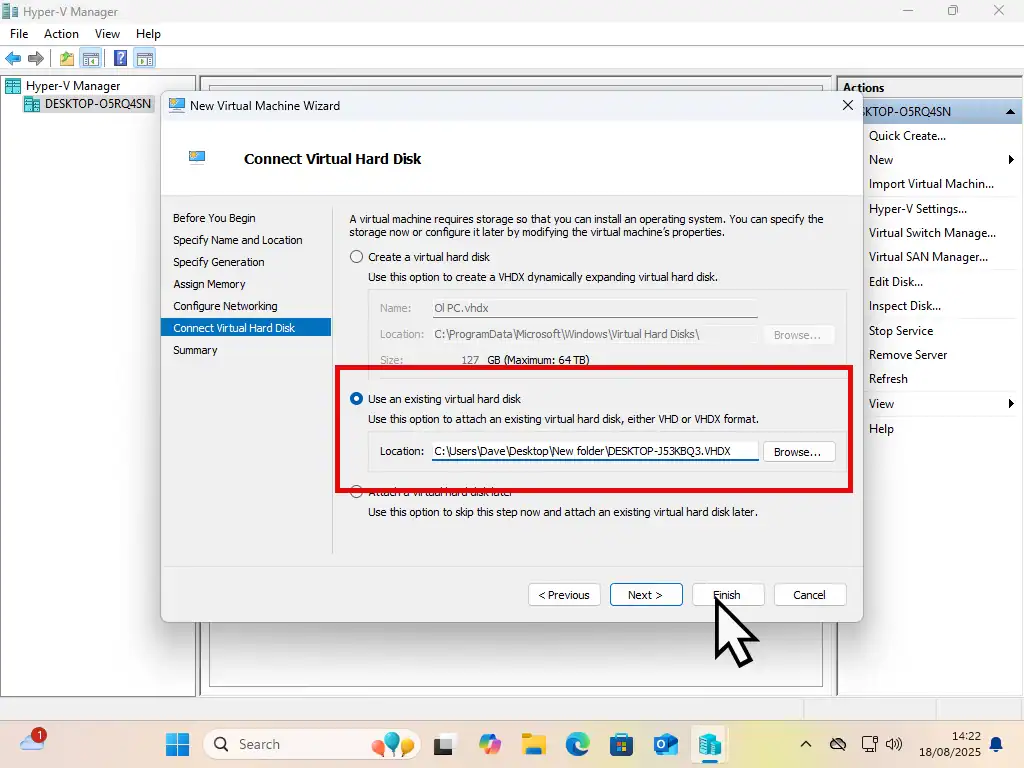
You don’t import a VHDX file on its own. Instead, you create a new virtual machine and connect your VHDX file to it as its hard disk. The New Virtual Machine Wizard does it all:
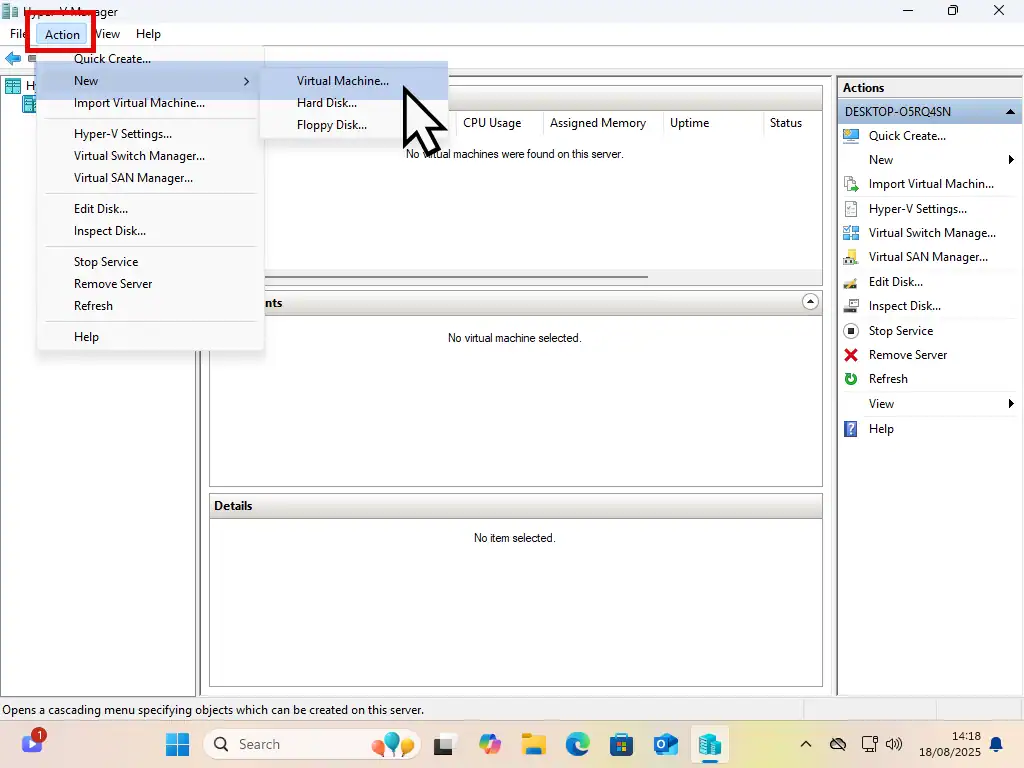
- Click Action on the toolbar, hover over New and click Virtual Machine.
- On the Before You Begin screen, click Next.
- At Specify Name and Location, give the virtual machine a name you’ll recognise and click Next.
- At Specify Generation, choose Generation 1 or Generation 2 (see below) and click Next.
- At Assign Memory, enter at least 4096 MB for Windows 10 or 11, and leave Use Dynamic Memory for this virtual machine ticked. Click Next.
- At Configure Networking, choose Default Switch so the virtual machine can get online. Click Next.
- At Connect Virtual Hard Disk, select Use an existing virtual hard disk, click Browse and pick your VHDX file. Click Next.
- Check the Summary and click Finish.
Generation 1 or Generation 2?
This is the setting that catches most people out, and you can’t change it after the virtual machine is created. It has to match how the original PC started up:
- Generation 2 for a VHDX made from a modern PC that uses UEFI. That’s most PCs that came with Windows 8, 10 or 11. Windows 11 only works as Generation 2.
- Generation 1 for an older PC that uses the traditional BIOS, for a 32-bit copy of Windows, or if your file is a VHD rather than a VHDX.
Not sure? Try Generation 2 first. If it won’t boot, delete the virtual machine (your VHDX file isn’t touched) and create it again as Generation 1.
Start Your New VM
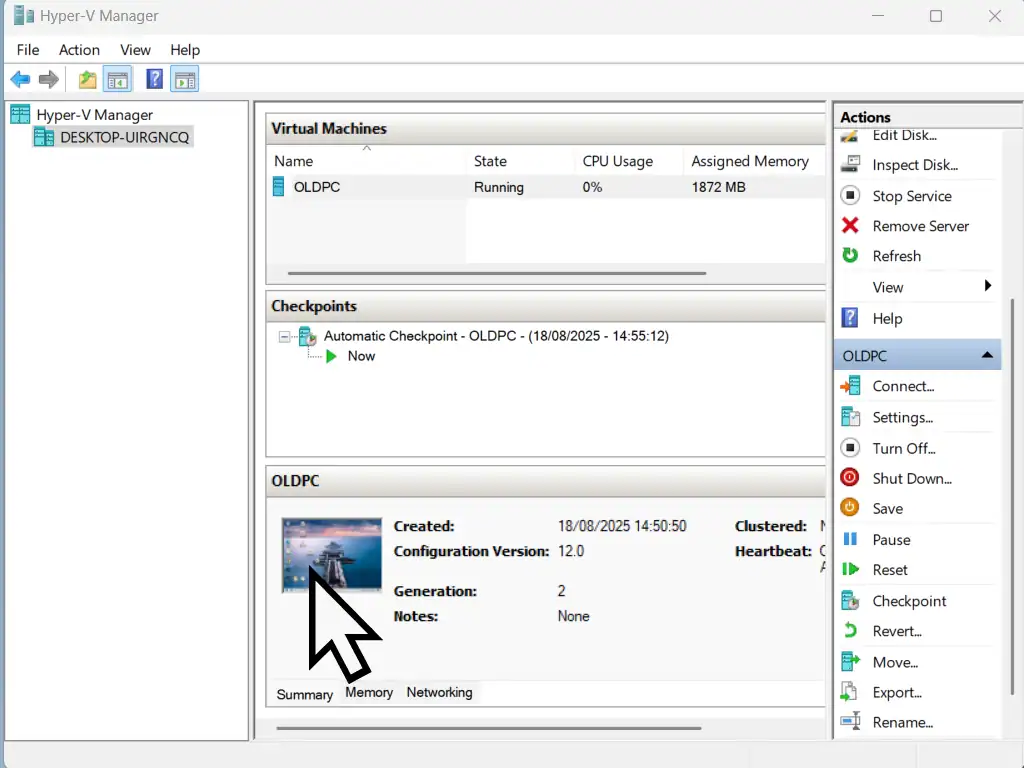
Your new virtual machine appears in the middle pane of Hyper-V Manager. Click it once to select it, then click Start in the right hand pane.
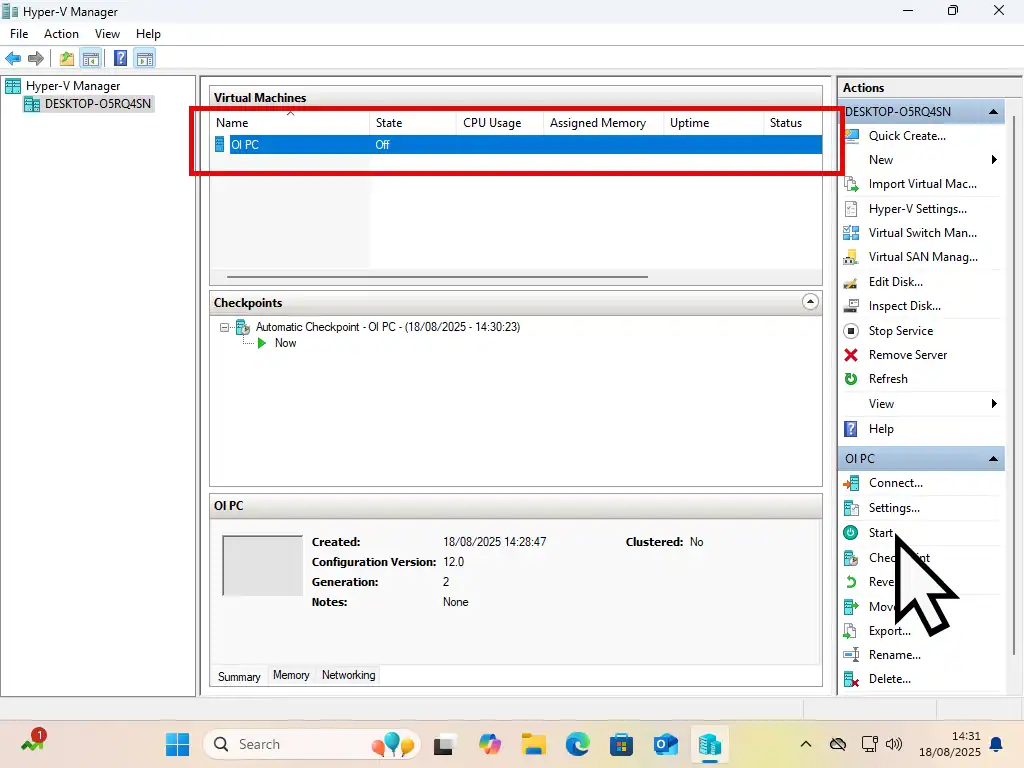
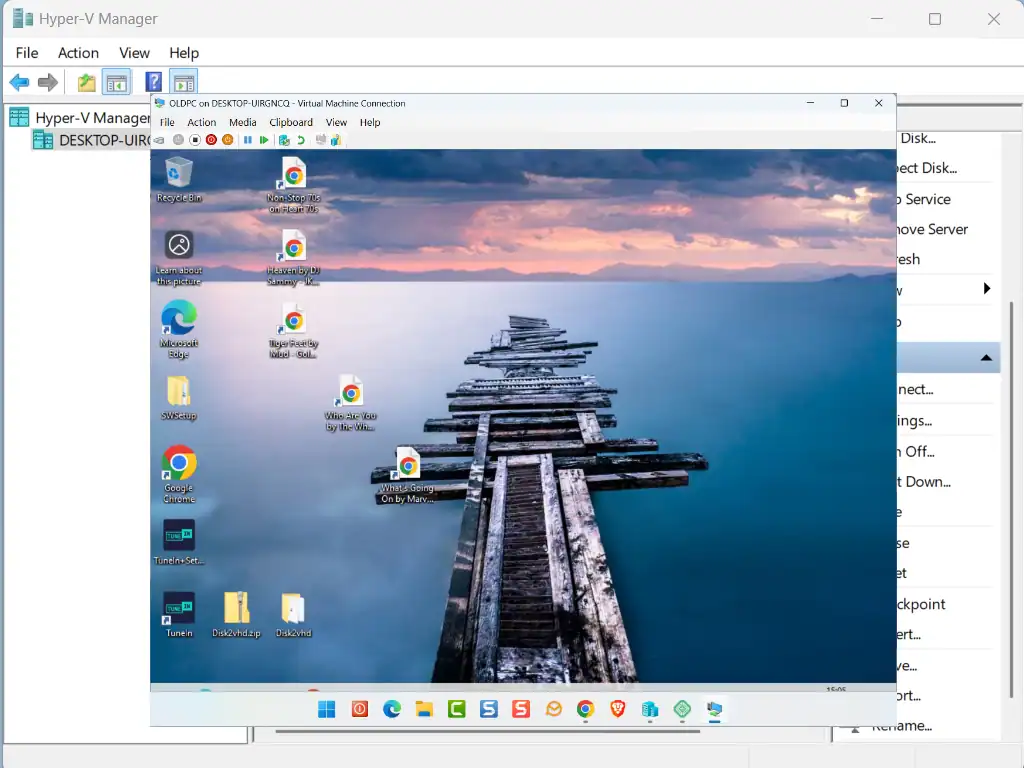
As the virtual machine starts, you’ll see it booting up. It might take a few restarts before it settles down and boots to the desktop, because Windows is getting used to its new, virtual hardware.

Double click the virtual machine, or right click it and choose Connect, to open it in its own window.
Just Want to Open a VHDX File?
If you only need to get at the files inside a VHDX, you don’t need Hyper-V at all. Windows 10 and 11 can open a VHDX file like a USB stick, and this works on Home editions too.
- Find the VHDX file in File Explorer.
- Double click it, or right click it and choose Mount.
- It appears as a new drive under This PC. Open it and copy off whatever you need.
- When you’ve finished, right click the drive and choose Eject.
Eject it before you use it in Hyper-V. While it’s mounted, Windows has the file open and the virtual machine can’t use it.
Can VMware Open a VHDX File?
No. VMware Workstation doesn’t open VHDX files, because VMware uses its own format, VMDK. If you want to run a VHDX in VMware, you’ll need to convert it first with a free converter such as StarWind V2V Converter.
If your VHDX file was made from your own PC and VMware is what you’d rather use, it’s simpler to skip the VHDX. See my guide to converting a physical PC to a virtual machine on Workstation Pro.
Troubleshooting
Hyper-V Isn’t in Windows Features
You’re almost certainly on Windows 10 Home or Windows 11 Home, which don’t include Hyper-V. Use VirtualBox instead (see Before You Start), or upgrade to Pro.
Hyper-V Platform Is Greyed Out
Hover over the greyed out box and Windows tells you why. Usually virtualisation is switched off in the BIOS. Turn it on, restart and try again. My guide shows you how to enable virtualisation (VT-x and AMD-V).
The Virtual Machine Won’t Boot
If it starts but can’t find an operating system, or keeps failing to boot, the generation is wrong. You can’t change it, so right click the virtual machine, choose Delete, and create it again with the other generation.
Deleting the virtual machine in Hyper-V Manager doesn’t delete your VHDX file.
Hyper-V Says the File Is in Use
The VHDX is probably still mounted in File Explorer. Right click its drive under This PC and choose Eject, then try again. Also check another virtual machine isn’t already using the same file.
Windows Asks to Be Activated
Windows sees the virtual machine as a brand new PC, so it may ask to be activated again. That’s normal after moving Windows onto different hardware.
Frequently Asked Questions
Q: Can I use Hyper-V on Windows 11 Home?
A: No. Hyper-V is only included with the Pro, Enterprise and Education editions of Windows 10 and 11. On Home, use the free VirtualBox instead.
Q: What is the difference between VHD and VHDX?
A: VHDX is the newer format. It handles much bigger disks (up to 64 TB, against about 2 TB for VHD) and copes better with sudden power cuts. Generation 2 virtual machines need VHDX.
Q: Why can’t I use Import Virtual Machine in Hyper-V Manager?
A: Import Virtual Machine is for a whole virtual machine that was exported from Hyper-V, with its settings files. A VHDX on its own is just the hard disk, so you create a new virtual machine and connect the VHDX to it instead.
Q: Should I choose Generation 1 or Generation 2?
A: Generation 2 for a VHDX made from a modern PC that uses UEFI, which includes every Windows 11 PC. Generation 1 for an older BIOS PC, a 32-bit copy of Windows or a VHD file. You can’t change it later.
Q: Can I open a VHDX file without Hyper-V?
A: Yes. Double click it in File Explorer, or right click it and choose Mount. It opens as a new drive, even on Windows Home.
Q: Can VMware Workstation open a VHDX file?
A: No. VMware uses VMDK files, so you need to convert the VHDX first with a free converter such as StarWind V2V Converter.
Summary
Hyper-V is pretty good at handling VHDX files. Switch it on, create a new virtual machine, pick the right generation and connect your VHDX, and you’re away.
Make a copy of the VHDX before you start, and if it won’t boot, try the other generation.
Related Posts
Convert an Old Windows 10 PC into a Virtual Machine
It’s easy to make a VHDX file from a running computer. Save your old PC and use it as a virtual machine in Hyper-V.
How to Import a VHD File into VirtualBox
If you don’t have a Pro version of Windows, you can use the ever popular VirtualBox.
Run Windows 7 as a Virtual Machine
Windows 7 may be well past its end-of-life date (January 2020), but thousands of people still use it to run older software that simply won’t work on Windows 10 or 11.
In this step-by-step guide I’ll show you exactly how to set up a Windows 7 virtual machine using VMware Workstation Pro
You can find this and other related step by step guides in – At Home Computer Virtual Machines
Written by Jeff Porter. I’ve been fixing Windows PCs since 2010 and I’m CompTIA Network+ certified. More about me