
When you set up a new virtual machine in VMware or VirtualBox, you have to choose a size for its virtual hard disk. That means guessing how much space it will ever need.
Guessing future storage is always hard, and the size you picked often turns out to be too small. Windows updates alone can fill a small virtual disk.
Fortunately, both VMware Workstation Pro and VirtualBox let you expand a virtual disk when you need more space. It’s a two-part job: first increase the size of the virtual disk, then tell Windows inside the virtual machine to use the extra space.
The Short Version
- Shut down the virtual machine (don’t suspend it).
- VMware: click VM, Settings, Hard Disk, then Expand. Enter the new size and click Expand.
- VirtualBox: press Ctrl + D (or click File, Tools, Media), select the disk, set the new Size and click Apply.
- Start the virtual machine, open Disk Management, and extend the C: drive into the new space.
Back Up First
Expanding a virtual disk is safe, but it’s still worth having a copy in case something goes wrong. Here’s how to back up a VMware Workstation Pro virtual machine and how to back up a VirtualBox VM.
How to Increase Virtual Disk Size in VMware
Before you start, check these, or the Expand button won’t be available:
- The virtual machine is powered off, not suspended.
- It has no snapshots. Delete any you don’t need in VM, Snapshot, Snapshot Manager.
- It isn’t a linked clone, or the original a linked clone was made from.
Then:
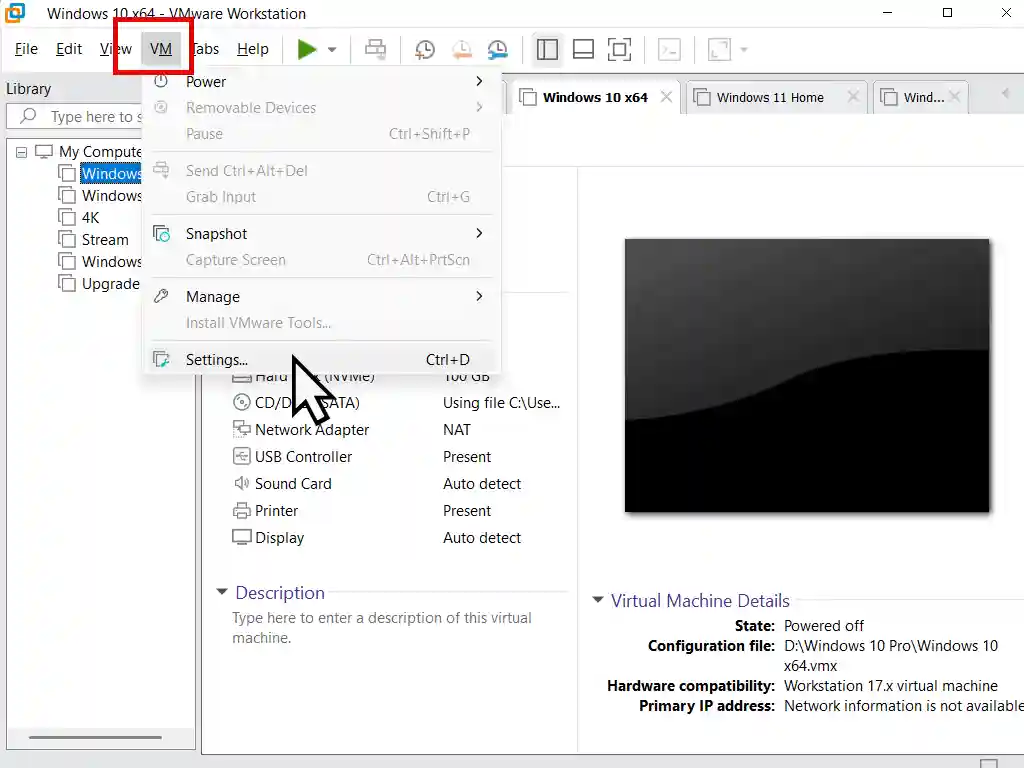
- Select the virtual machine in the Library on the left, click VM on the toolbar, then Settings. Or press Ctrl + D.
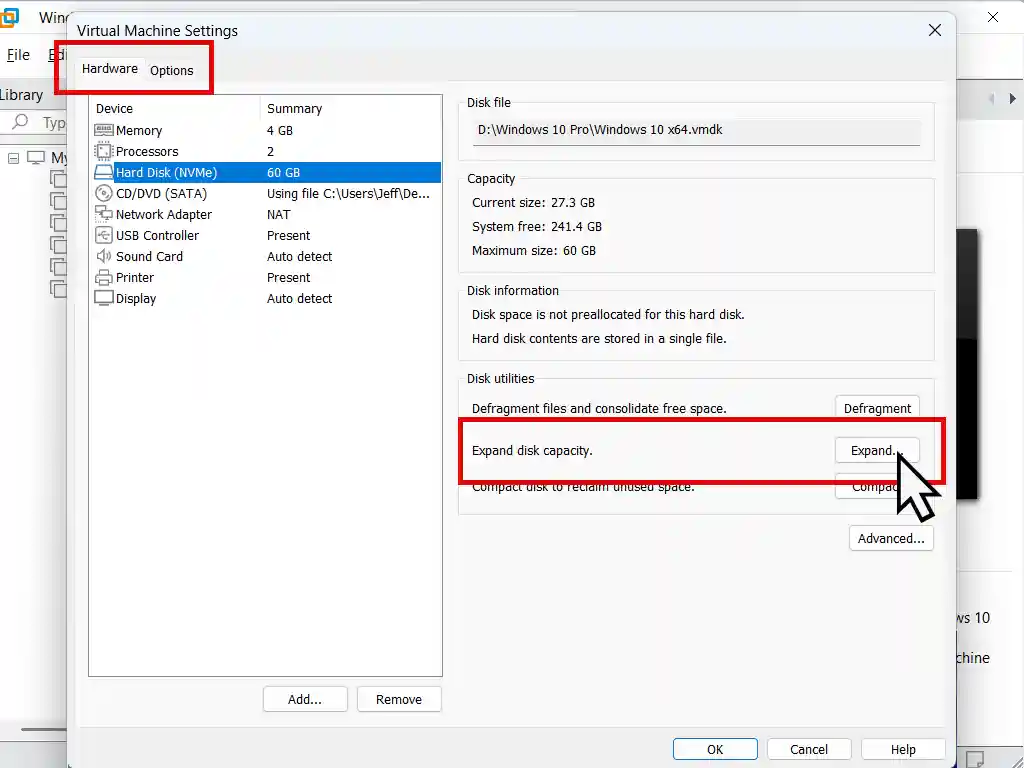
- On the Hardware tab, select Hard Disk in the left-hand panel (it may say Hard Disk (NVMe), (SCSI) or (SATA)). Capacity on the right shows its Maximum size now. Under Disk utilities, click Expand.
- Enter the new size (capacity) you want, in gigabytes, and click Expand.
- VMware increases the disk size. It can take a while, depending on your PC. When it says the disk was successfully expanded, click OK.

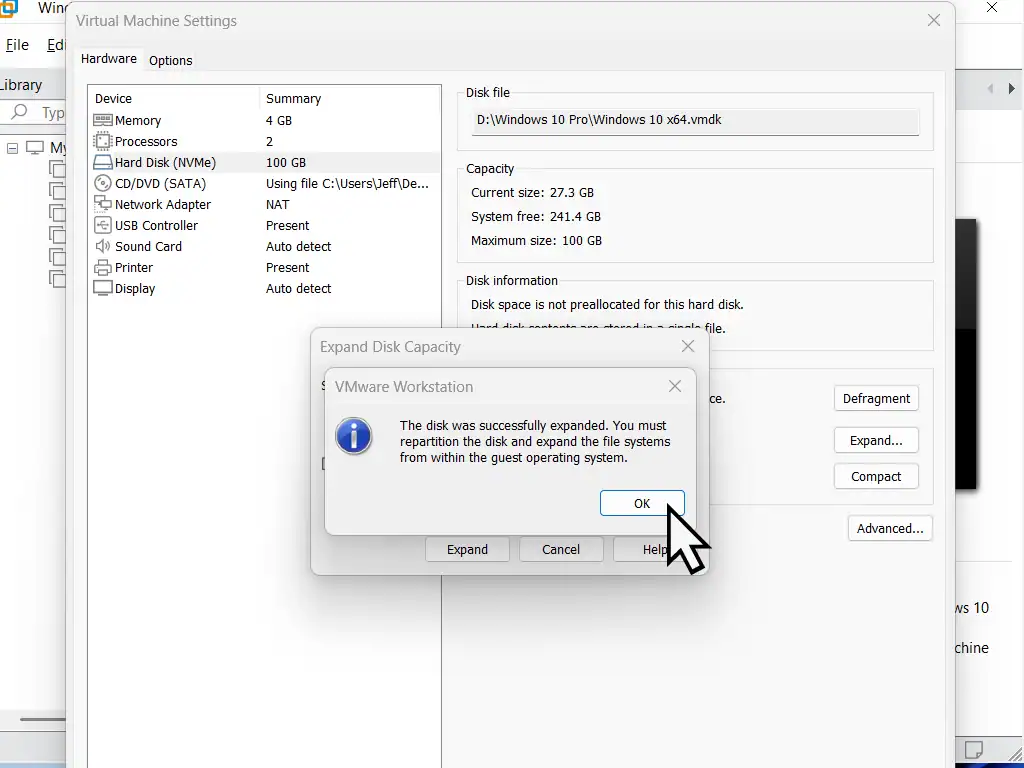
VMware reminds you that the new space isn’t ready to use yet. That’s the second part of the job: see Use the Extra Space in Windows, below.
Expand Is Greyed Out in VMware
If you can’t click Expand, one of the checks above is the reason:
- The virtual machine is running or suspended. Start it, then shut it down properly from inside Windows.
- It has snapshots. Open VM, Snapshot, Snapshot Manager and delete them. Deleting a snapshot doesn’t lose your work: it merges the changes into the virtual disk.
- It’s a linked clone. Make a full clone instead (VM, Manage, Clone, then Create a full clone) and expand that.
How to Expand a Virtual Disk in VirtualBox
To expand, or increase, the virtual disk for a virtual machine in VirtualBox, first make sure the virtual machine is shut down. A saved state won’t do.
The option is in VirtualBox’s Media section. The quickest way there is to press Ctrl + D, or click File, Tools, then Media.
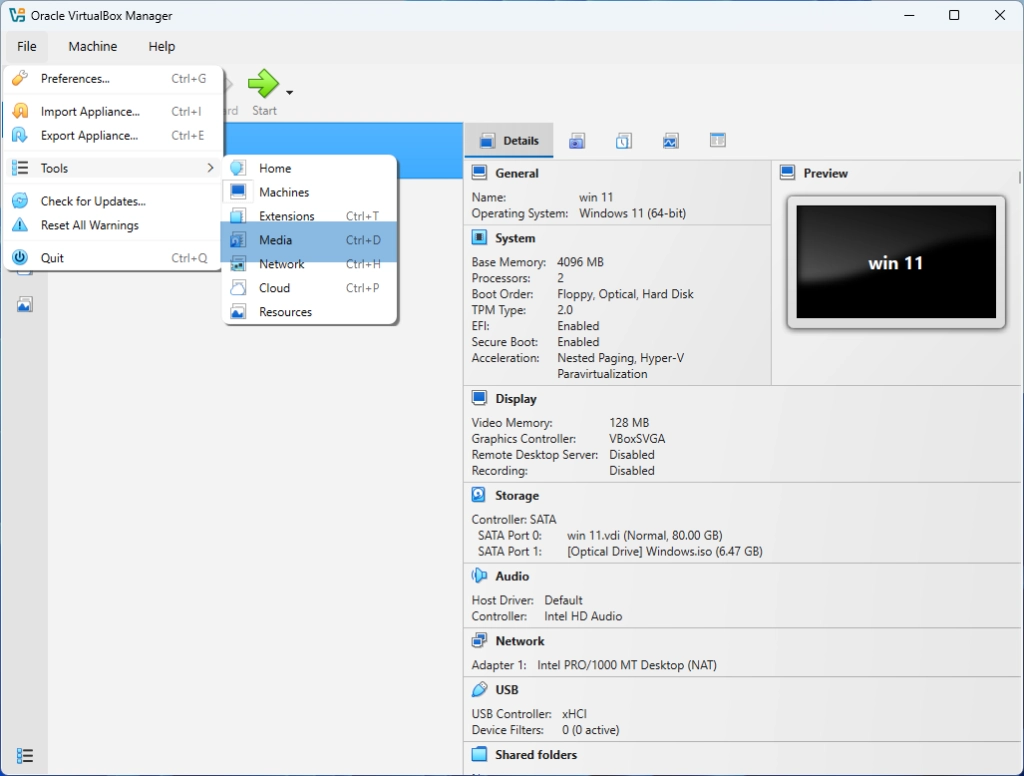
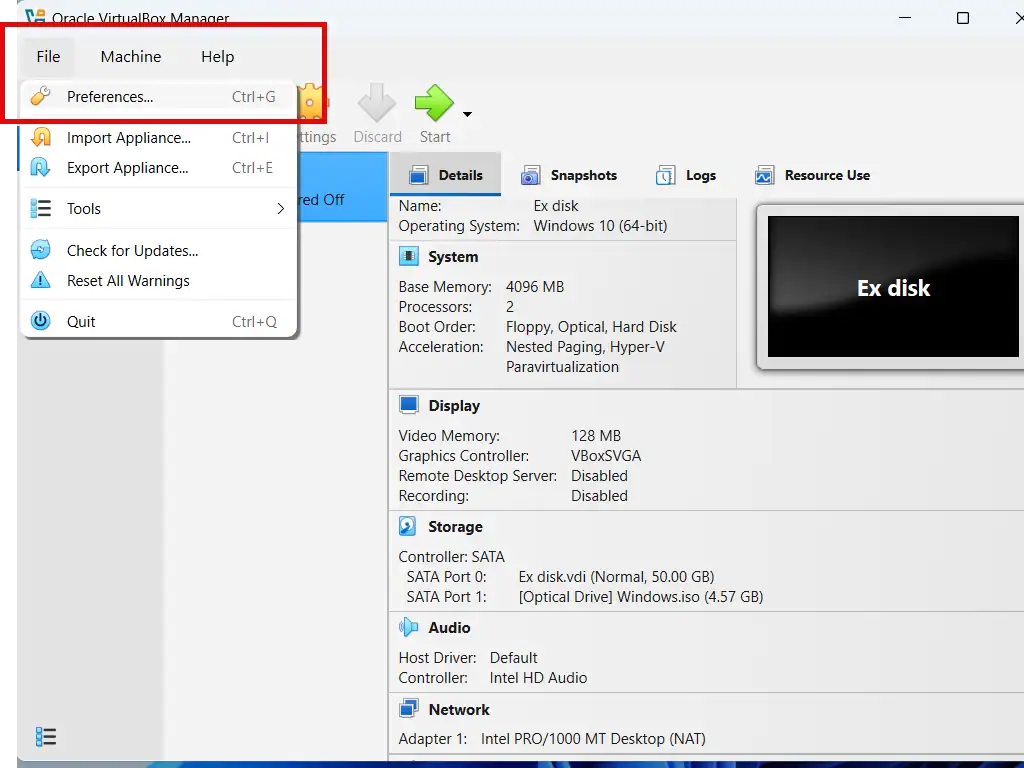
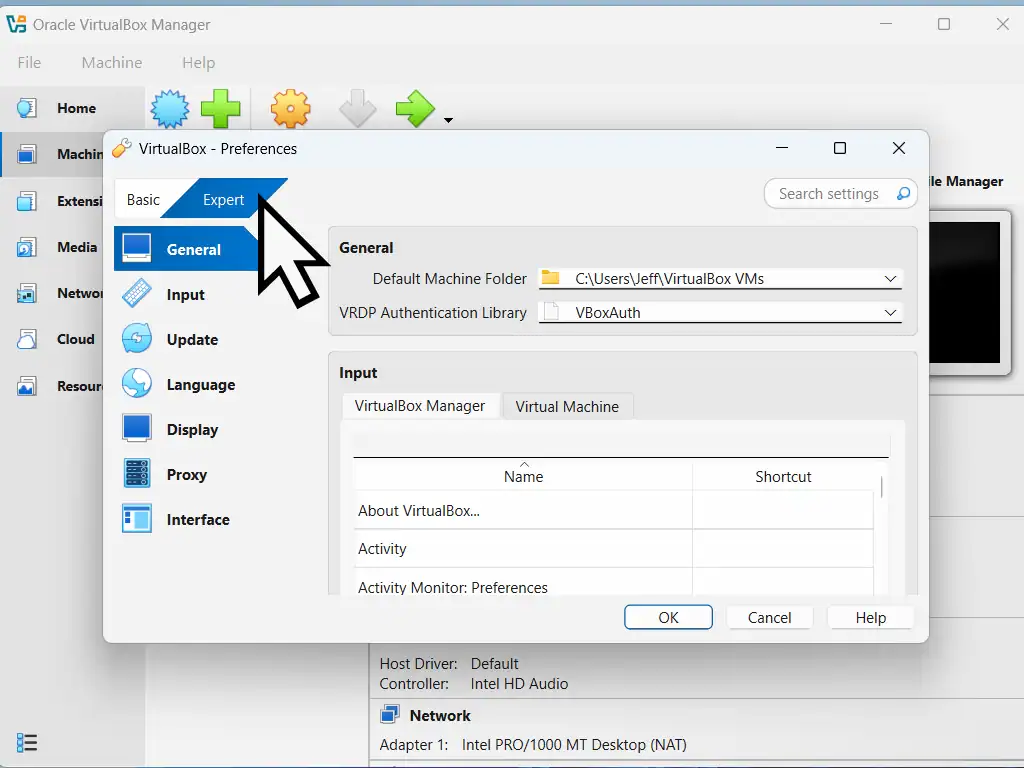
You can also get to it from the navigation pane on the left, but Media only shows there in Expert mode:
- Click File and then Preferences, or press Ctrl + G.
- Select Expert at the top and click OK.
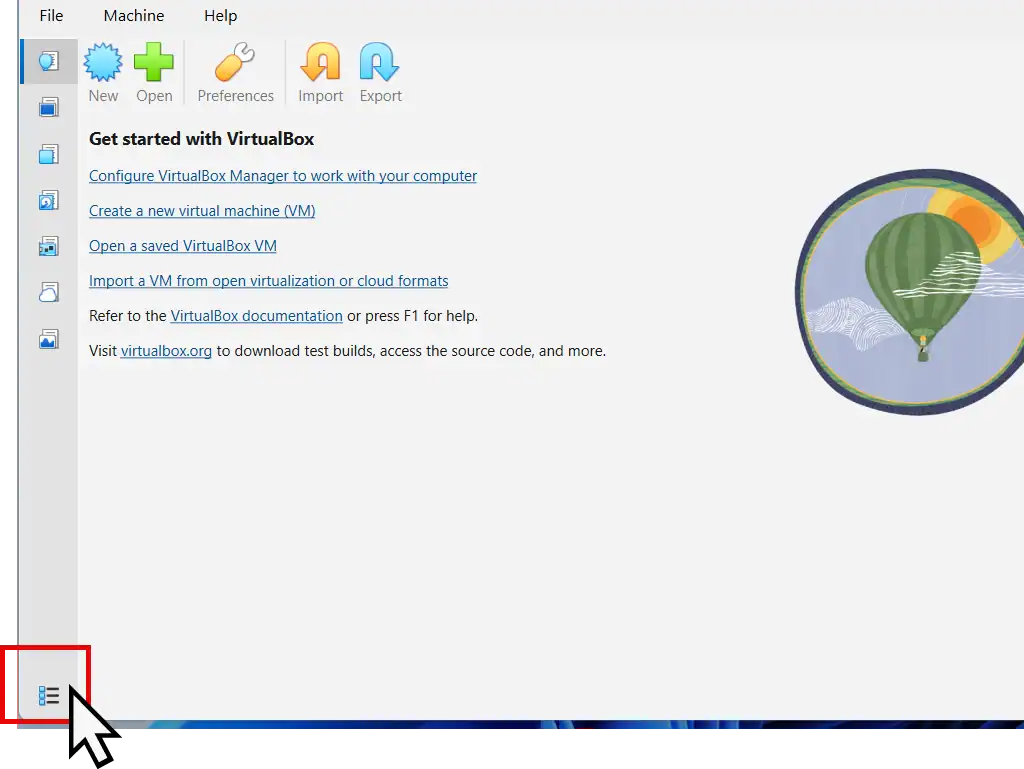
- On the VirtualBox home screen, click Media in the left-hand navigation pane.
- If you can’t see the Media option, click the Show Text button at the bottom left of VirtualBox.

Increase Virtual Disk Size in VirtualBox
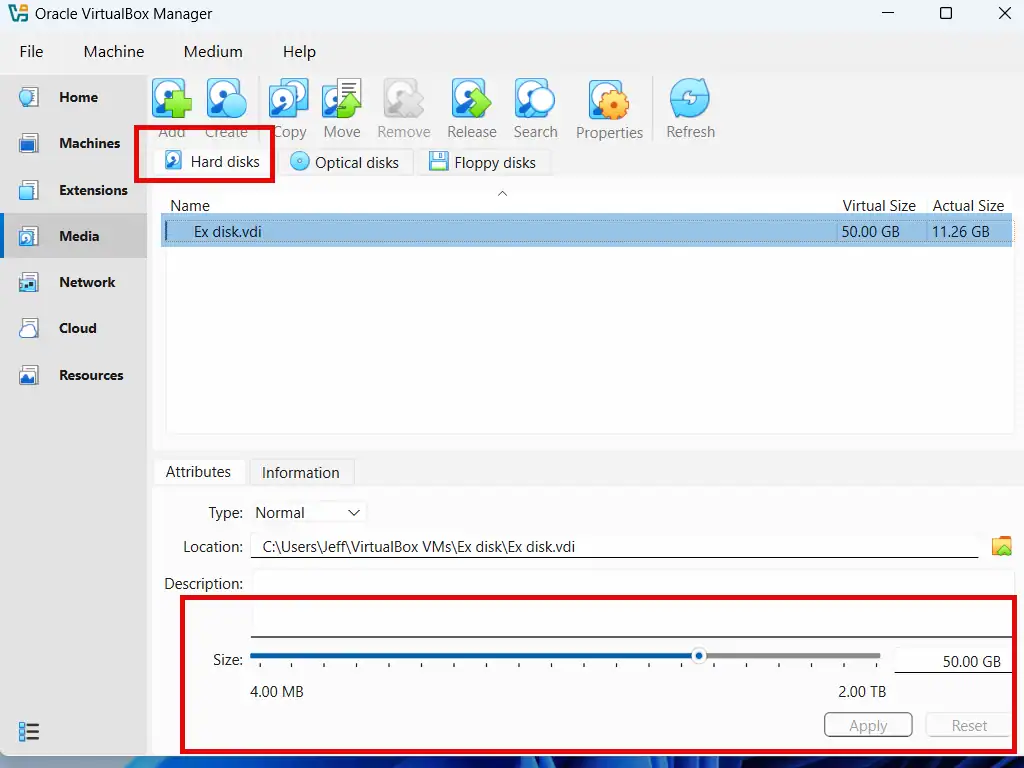
- Select the Hard disks tab.
- Select the virtual disk you want to expand (usually a .vdi file with the same name as the virtual machine).
- Use the Size slider at the bottom of the window to set the new size, or type it into the box.
- Click Apply, close the window and start your virtual machine.
If you can’t see the size slider at the bottom of the window, click the Properties button on the toolbar.

Can’t See Media, or the Size Slider Is Greyed Out?
- No Media option on the left: VirtualBox is in Basic mode. Switch to Expert in File, Preferences, or go straight there with File, Tools, Media (Ctrl + D).
- The slider is greyed out: the virtual machine is still running or in a saved state, or the disk is a type VirtualBox can’t resize. VirtualBox can only resize dynamically allocated VDI and VHD disks, not fixed-size disks or VMware VMDK files.
- The disk got bigger but Windows doesn’t see the space: the virtual machine probably has snapshots. Delete the ones you don’t need (select the virtual machine, then Snapshots) and resize again.
Increase VirtualBox Disk Size with VBoxManage
If the slider won’t work, VirtualBox’s command-line tool can do the same job. Open Command Prompt and type the command below, changing the path to your own .vdi file. The size is in megabytes: 102400 is 100 GB (1 GB is 1024 MB).
"C:\Program Files\Oracle\VirtualBox\VBoxManage.exe" modifymedium disk "C:\Users\YourName\VirtualBox VMs\Windows 11\Windows 11.vdi" --resize 102400It can only make a disk bigger, never smaller.
Use the Extra Space in Windows
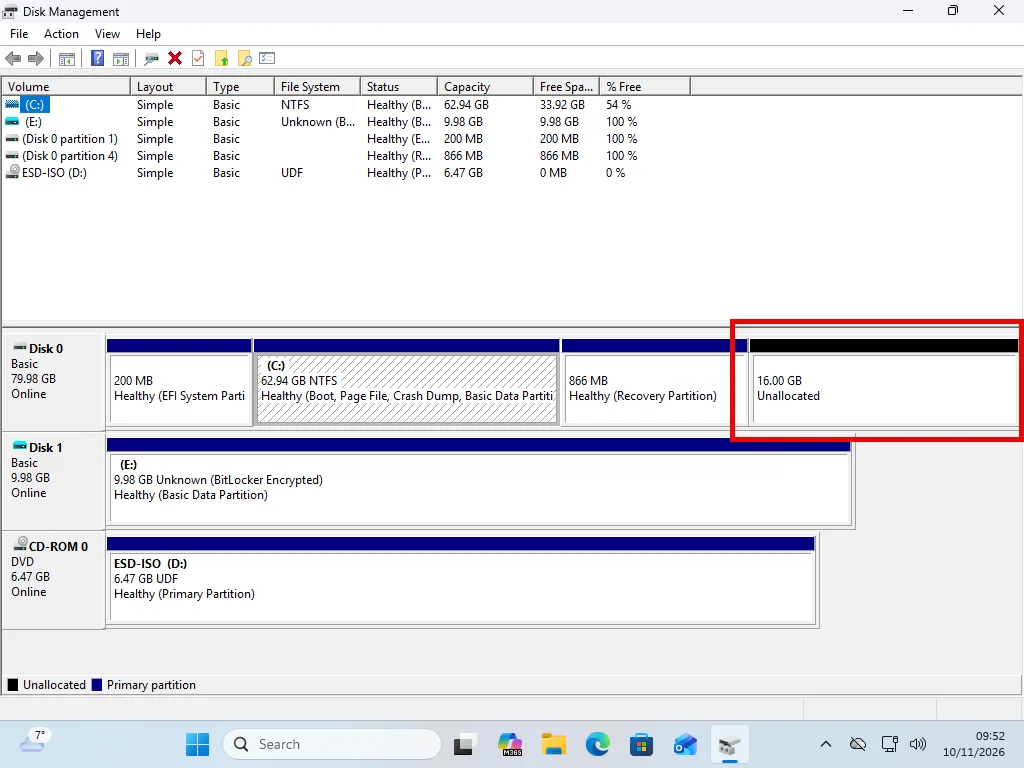
Expanding the virtual disk doesn’t make your C: drive any bigger on its own. Inside the virtual machine, the extra capacity shows up as Unallocated space at the very end of the disk.
To see it, start the virtual machine, right-click the Start button and choose Disk Management.
If the Unallocated Space Is Right Next to C:
- Right-click the C: drive and choose Extend Volume.
- Click Next. The wizard selects all the unallocated space for you.
- Click Next again, then Finish.
Your C: drive now has the extra space.
Moving the Windows Recovery Partition
On most Windows 10 and 11 virtual machines, the Windows Recovery Partition sits between the C: drive and the new unallocated space, which makes things a little awkward. Extend Volume is greyed out, because Windows can only extend C: into space directly after it.
There are two ways around it:
- Use the space as a separate drive. Right-click the unallocated space, choose New Simple Volume and follow the wizard. You get a new drive letter, such as E:, for storage.
- Move the recovery partition to the end of the disk, so the unallocated space sits next to C:, then extend C: as above. I’ve written a guide to how to move a hard disk partition.
Frequently Asked Questions
Q: Do I need to shut down the virtual machine first?
A: Yes. In VMware it must be powered off, not suspended. In VirtualBox it must be shut down, not in a saved state.
Q: Will I lose any data when I expand a virtual disk?
A: No. Expanding only adds space. It’s still worth backing up the virtual machine first, in case anything goes wrong.
Q: Why is Expand greyed out in VMware?
A: The virtual machine is running or suspended, it has snapshots, or it’s a linked clone. Shut it down, delete the snapshots, or make a full clone and expand that.
Q: Why can’t I see the extra space in Windows?
A: The new space is unallocated until you use it. Open Disk Management and extend the C: drive, or make it a new drive with New Simple Volume.
Q: Why is Extend Volume greyed out?
A: Windows can only extend C: into space directly after it, and the recovery partition is usually in the way. Move the recovery partition, or use the space as a separate drive.
Q: Can I make a virtual disk smaller?
A: Not in VirtualBox. VMware Workstation Pro’s Compact button shrinks the disk file by freeing unused space, but it doesn’t reduce the disk’s capacity.
Q: Does this work in VMware Player?
A: Yes. If you still have Player, select the virtual machine, click Edit virtual machine settings, then Hard Disk and Expand. The steps are the same as Workstation Pro.
Summary
Increasing a virtual disk’s size isn’t difficult, but it’s a little more involved in VirtualBox than in VMware. In VirtualBox, the main thing is to switch on Expert mode, and then all the options become available. In both programs, remember the second step: extend the drive inside Windows so you can actually use the new space.
Related Posts
How to Back Up and Restore a VirtualBox VM
Copy, export or clone your VirtualBox virtual machines.
How to Back Up VMware Workstation Pro Virtual Machines
Keep a copy of your VMware virtual machines.
How to Move a Hard Disk Partition
Move the recovery partition out of the way so you can extend C:.
Run Windows 7 as a Virtual Machine
Windows 7 may be well past its end-of-life date (January 2020), but thousands of people still use it to run older software that simply won’t work on Windows 10 or 11.
In this step-by-step guide I’ll show you exactly how to set up a Windows 7 virtual machine using VMware Workstation Pro.
You can find this and other related step by step guides in – At Home Computer Virtual Machines
Written by Jeff Porter. I’ve been fixing Windows PCs since 2010 and I’m CompTIA Network+ certified. More about me