
Back up any virtual machine you’ve created in VirtualBox, and you’ll save yourself a lot of time later. A full backup of your VM is easy to make, and just as easy to restore.
VirtualBox has snapshots, of course, which take a virtual machine back to a time when it was working fine. They’re great, but they won’t always save you. They’re stored with the VM itself, so if its files are damaged or deleted, the snapshots go too.
A full backup of the whole VirtualBox virtual machine means you can replace it in minutes, on the same PC or a new one. If you haven’t got VirtualBox yet, here’s how to install VirtualBox.
The Short Version
- Shut down the virtual machine properly, then close VirtualBox.
- In File Explorer, open the VirtualBox VMs folder inside your user folder.
- Copy the virtual machine’s folder to an external drive or another safe place.
- To restore it, put the folder back. On a new PC, copy it across, then use Machine, Open in VirtualBox and pick its .vbox file.
How to Back Up a VirtualBox Virtual Machine
VirtualBox keeps each virtual machine in its own folder, and all those folders sit together in one main folder.
To back up a virtual machine, all you need to do is copy and paste its folder somewhere else. It’s as easy as that.
Shut the Virtual Machine Down First
The virtual machine must be properly shut down, not asleep, hibernating or in a saved state. Shut it down from its own Start menu, or close its window and choose Send the shutdown signal. Don’t choose Save the machine state.
Then close VirtualBox as well, so none of the files are in use.
Copy the Virtual Machine Folder
By default, VirtualBox keeps its virtual machines here. Paste this into the File Explorer address bar and press Enter:
%USERPROFILE%\VirtualBox VMsInside, you’ll see a folder for each virtual machine you’ve created. Copy the whole folder and paste it somewhere else.


Copy the whole folder, not just the big disk file inside it. The folder holds the virtual machine’s settings (the .vbox file), its virtual hard disk (usually a .vdi file), any snapshots, and the smaller files it needs to start.
Can’t Find the VirtualBox VMs Folder?
If you saved a virtual machine somewhere else, VirtualBox will show you where. Select the virtual machine in VirtualBox, click Machine, then Show in Explorer.
To see or change where new virtual machines go, click File, Preferences, then General.
Where to Keep Your Backup
It doesn’t really matter where you store your backup, but it will be big. In this example, I’m backing up a fresh copy of Windows 10, and it’s well over 10 GB. A Windows 11 virtual machine is often 30 GB or more.
An external hard drive is ideal. If you keep the backup on the same drive as the virtual machine and that drive fails, you lose both.

Check for Disks Stored Somewhere Else
Copying the folder only works if everything is inside it. If you added a disk from somewhere else, such as a VHD file you imported into VirtualBox, that disk stays where it is and isn’t in your backup.
To check, select the virtual machine, click Settings, then Storage, and click each disk. Its Location is shown on the right. If any disk is outside the virtual machine’s folder, back that file up too, or use one of the methods below.
Other Ways to Back Up a VirtualBox VM
Copying the folder is the quickest way to make an exact backup. VirtualBox also has two built-in tools that make a copy for you:
| Method | What you get | Best for |
|---|---|---|
| Copy the folder | An exact copy, including snapshots | Regular backups on the same PC |
| Export Appliance | One .ova file (no snapshots) | Moving a VM to another PC |
| Full Clone | A second VM you can run alongside the first | Trying risky changes on a copy |
| Snapshot | A restore point inside the same VM | Undoing changes, not a backup |
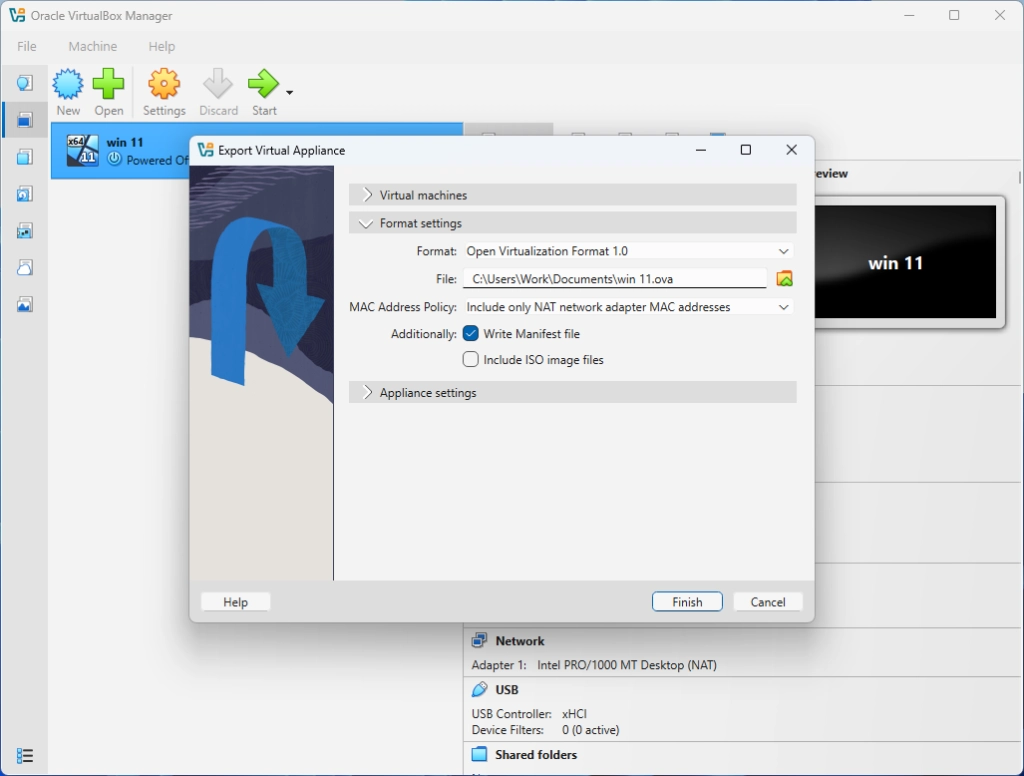
Export a VirtualBox VM to an OVA File
Exporting packs the whole virtual machine into a single .ova file, which is tidy to keep on an external drive and easy to import on another PC.
- Shut down the virtual machine.
- In VirtualBox, click File, then Export Appliance.
- Select the virtual machine and then click the Format Settings drop down menu.
- Use the Browse button to select a destination and click Finish. Leave the other settings as they are.
- Exporting can take several minutes.
An OVA file only holds the virtual machine as it is now. Snapshots aren’t included.
Make a Full Clone
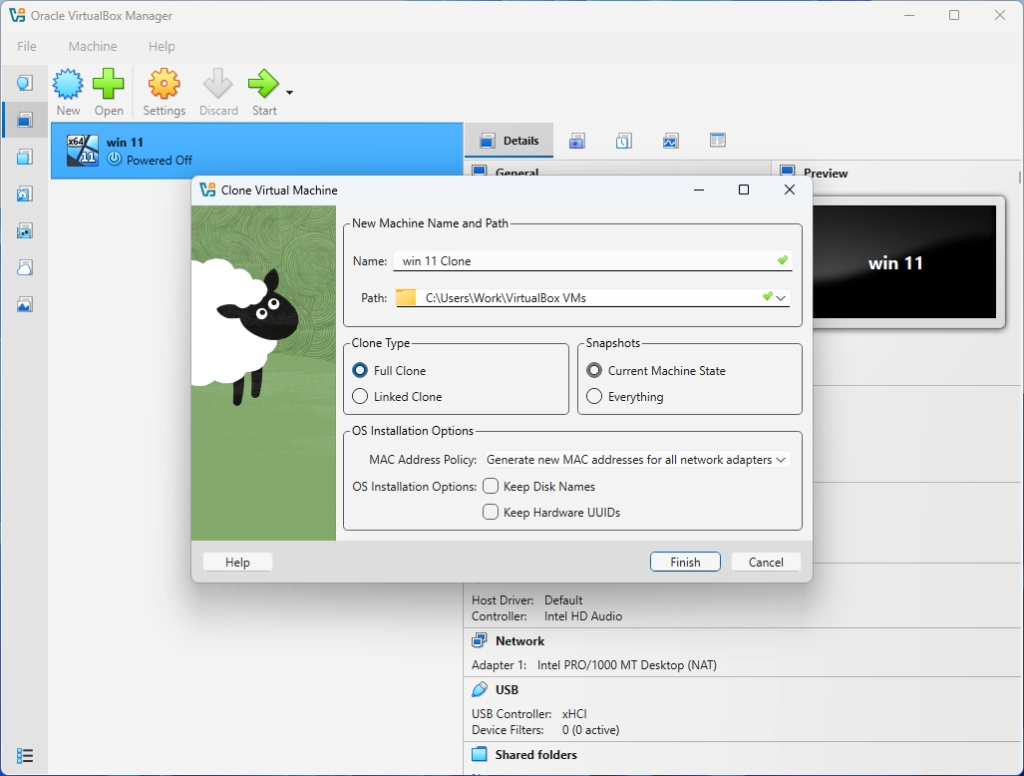
A clone is a complete copy that appears in VirtualBox as a second virtual machine. It’s handy when you want to try something risky on a copy and keep the original safe.
- Shut down the virtual machine.
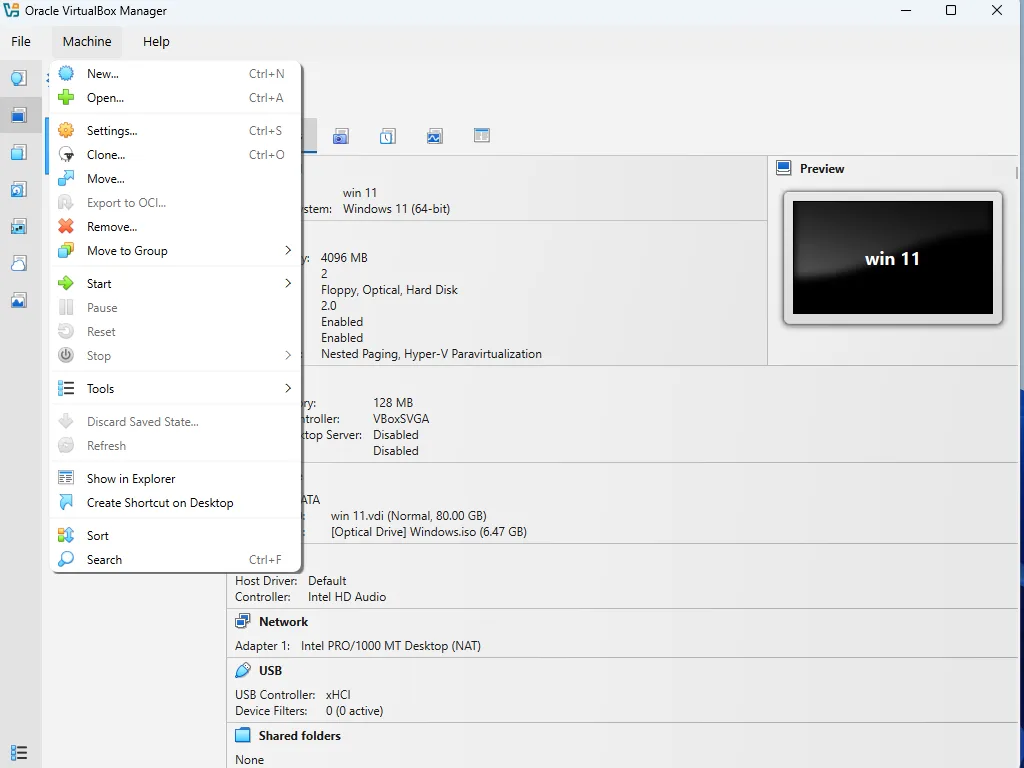
- Select it, click Machine, then Clone (or press Ctrl + O).
- Give the clone a name.
- Choose Full Clone, not Linked Clone.
- Under Snapshots, select either Current machine state (no snapshots) or Everything (includes snapshots).
- Set MAC Address Policy set to generate new MAC addresses.
- Click Finish
If you can’t see Clone, switch VirtualBox to Expert mode: click File, Preferences, then Expert.
Linked Clones Aren’t Backups
A linked clone shares the original virtual machine’s disk. If the original is lost, the linked clone stops working too. For a backup, always choose Full Clone.
Is a VirtualBox Snapshot a Backup?
No. A snapshot saves the state of your virtual machine so you can go back to it, which is great before installing updates or trying new software. But snapshots are stored inside the virtual machine’s own folder and depend on its main disk.
If that disk is damaged, deleted or the drive fails, your snapshots are gone too. Use snapshots for undoing changes, and a real backup for everything else.
How to Restore a VirtualBox VM Backup
A backup is only useful if you can get it back. Restoring a virtual machine from a folder backup is easier than you might think: it’s copy and paste again.
- If the virtual machine is running, shut it down, then close VirtualBox.
- Go to the VirtualBox VMs folder.
- Delete the faulty virtual machine’s folder. To be extra safe, rename it instead (for example, add “old” to the end) and delete it once the restore has worked.

- Go to wherever you stored your backup and copy the virtual machine’s folder.
- Paste it into the VirtualBox VMs folder.
- Open VirtualBox and start the virtual machine.
All you’re doing is replacing one folder with another. VirtualBox won’t even know the folders have been swapped.

Restore a VirtualBox VM on a New PC
Got a new PC, or reinstalled Windows? First install VirtualBox. Then:
- Copy the virtual machine’s folder from your backup onto your PC. The VirtualBox VMs folder in your user folder is the usual place (create it if it isn’t there).
- Open VirtualBox and click the green Open button on the toolbar (or Machine, then Open).
- Open the virtual machine’s folder, select its .vbox file and click Open.
The virtual machine appears in the list, ready to start.
Restore from an OVA File
Click File, then Import Appliance (or Import on the Home screen). Choose your .ova file, check the settings, and click Finish. You can also just double-click the .ova file.
Troubleshooting
The VM Shows as Inaccessible
VirtualBox can’t find the virtual machine’s files where it expects them, usually because the folder was moved or renamed. Right-click the virtual machine and choose Remove. If you’re asked, choose Remove only, never Delete all files. Then add it back with Machine, Open and its .vbox file in the new location.
“Same UUID as an Existing Virtual Machine”
Every VirtualBox virtual machine has a unique ID. If you try to add a backup copy while the original is still in the list, VirtualBox refuses because they have the same ID.
Either remove the original first (Remove, then Remove only) and add the backup, or, if you want both, import an OVA file or make a Full Clone instead. Both give the copy a new ID.
Recover a VM When Its .vbox File Is Missing
If a virtual machine won’t open because its settings file is missing or damaged, look in its folder for a file ending in .vbox-prev. That’s VirtualBox’s copy of the previous settings.
- Close VirtualBox.
- Copy the .vbox-prev file and paste it in the same folder.
- Rename the copy so it ends in .vbox instead (for example, Windows 11.vbox).
- Open VirtualBox and add it with Machine, Open if it isn’t already in the list.
If you can’t see the file endings, turn on File name extensions in File Explorer (on Windows 11, click View, Show, File name extensions).
Frequently Asked Questions
Q: Where does VirtualBox store virtual machines?
A: By default in a folder called VirtualBox VMs inside your user folder, with one folder for each virtual machine. Select a virtual machine in VirtualBox and click Machine, Show in Explorer to go straight to its folder.
Q: Can I back up a VirtualBox VM while it’s running?
A: Not safely. Shut it down properly first (not Save the machine state) and close VirtualBox, so none of the files are in use while you copy them.
Q: How big is a VirtualBox backup?
A: About the same size as the virtual machine’s folder. A fresh Windows 10 virtual machine is over 10 GB, and Windows 11 is often 30 GB or more.
Q: Is a snapshot the same as a backup?
A: No. Snapshots are stored inside the virtual machine and depend on its main disk. If the disk is lost, so are the snapshots. Use them alongside a backup, not instead of one.
Q: Does exporting to an OVA file include snapshots?
A: No. An OVA file only holds the virtual machine as it is now. To keep snapshots, copy the whole folder instead.
Q: Can I restore a VirtualBox backup on another computer?
A: Yes. Install VirtualBox, copy the folder across, then click Machine, Open and select its .vbox file. Or import an OVA file with File, Import Appliance.
Q: How often should I back up a virtual machine?
A: Straight after you’ve set it up and installed everything, then again after any big change. That way you always have a clean, working copy to go back to.
Summary
It’s well worth taking a moment to back up your VirtualBox virtual machines. Copy the folder for an exact backup, export an OVA file to move a VM to another PC, or make a Full Clone to experiment on. It’ll save you a lot of time and effort later on, especially with Windows virtual machines.
Ideally, make a backup as soon as your virtual machine is set up and working. That way, you’ve always got a clean installation to go back to.
Related Posts
How to Install VirtualBox Guest Additions
Guest Additions are the drivers that make your VM run smoothly.
How to Set Up a Windows 11 Virtual Machine in VirtualBox
Create a Windows 11 virtual machine for free.
How to Import a VHD File into VirtualBox
Complete, ready-to-go virtual machines.
How to Back Up VMware Workstation Pro Virtual Machines
Using VMware instead? Here’s how to back up Workstation Pro.
How to Setup a Windows 11 VM on VirtualBox
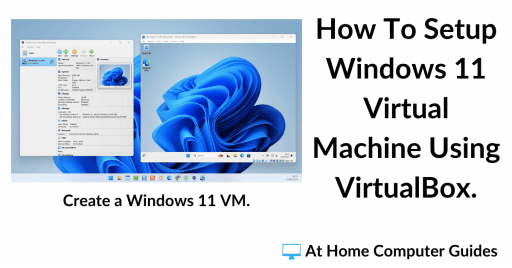
Windows 11 runs great on VirtualBox. You can use it even if your current PC doesn’t meet the system requirements.
You can find this and other related step by step guides in – At Home Computer VirtualBox Guides
Written by Jeff Porter. I’ve been fixing Windows PCs since 2010 and I’m CompTIA Network+ certified. More about me