
A Windows 11 backup that saves everything doesn’t have to cost a penny. I’ll show you how to make a complete system image of your PC on an external drive for free, put it on a schedule so it keeps itself up to date, and make a rescue USB in case your PC ever won’t start.
Unlike file backups, a system image saves everything on your home computer: Windows 11 itself, all the partitions, your settings, installed programs and all your files and folders. If your PC goes horribly wrong, you can put the whole lot back exactly as it was.
Windows 11 still has the old Backup and Restore (Windows 7) tool, but it’s becoming unreliable on updated Windows 11 PCs and Microsoft no longer develops it. So we need free third party software to do the job, and the one I use here is EaseUS Todo Backup Free.
The Short Version
- Download and install EaseUS Todo Backup Free.
- Plug in your external drive and click Create Backup.
- Click Disk, tick all the partitions on your Windows drive and click OK.
- Check the backup drive is the right one, then click Backup Now.
- Set a schedule and make an emergency rescue USB.
Free Software to Create a Windows 11 System Image
The software needs to be good, reliable and, most importantly on a home computer, free. There are several good options, which I compare further down, and the one I use in this guide is EaseUS Todo Backup Free.
Doesn’t Windows 11 Have Its Own Backup?
Sort of. Windows 11 has three backup tools built in, but none of them is quite what you need:
- Backup and Restore (Windows 7) can still make a system image, but Microsoft stopped developing it years ago and says it may be removed in a future update.
- The Windows Backup app saves your files, settings and apps to OneDrive. It can’t make a system image. I explain the difference in types of computer backup.
- File History backs up your personal files, not Windows or your programs.
System Restore Isn’t a Backup
System Restore only rolls Windows settings, drivers and programs back to an earlier date. It won’t help if your drive fails or your files get deleted. A system image will.
What You’ll Need
- An external hard drive or SSD with more free space than you’ve used on your PC’s C: drive. To keep several backups, get one at least as big as your PC’s own drive.
- An empty USB flash drive for the emergency rescue disk. Making the rescue disk wipes whatever is on it.
- A bit of time. The first backup is the slowest.
To see how much space you’ve used, open File Explorer and click This PC. The bar under your C: drive shows it.
Download and Install EaseUS Todo Backup Free
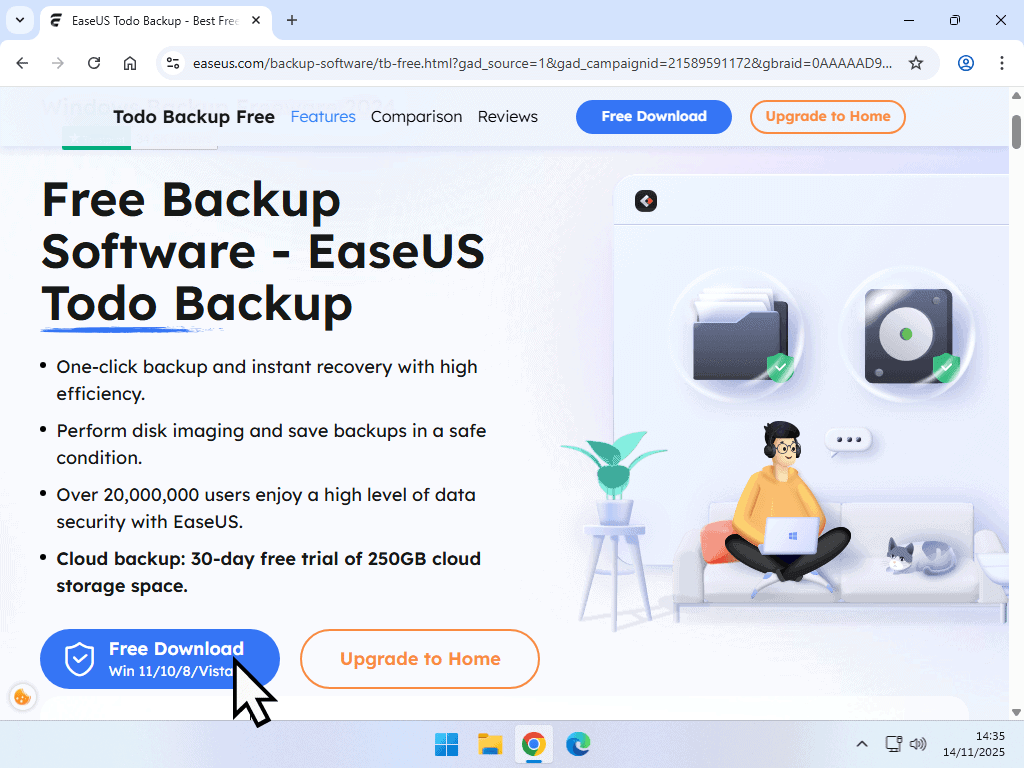
Go to the EaseUS Todo Backup Free download page. The installation is fairly routine without any nasty surprises.
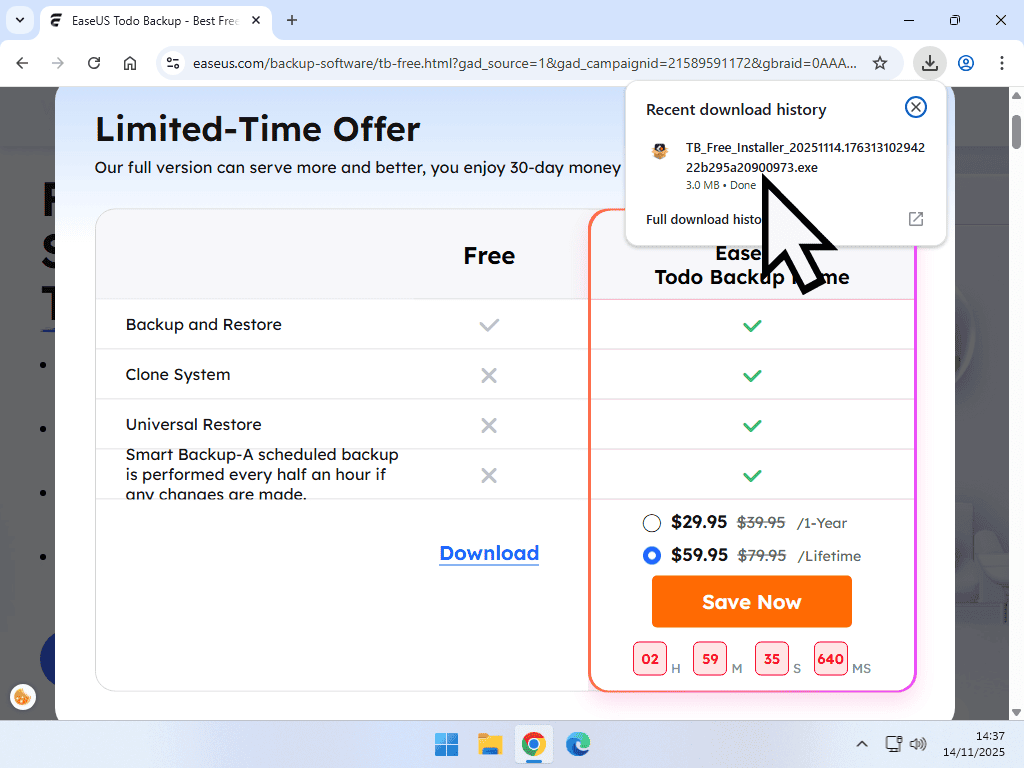
- On the website, click the Free Download button. That downloads the installer.
- Run the installer, either from your browser or from wherever you saved it.
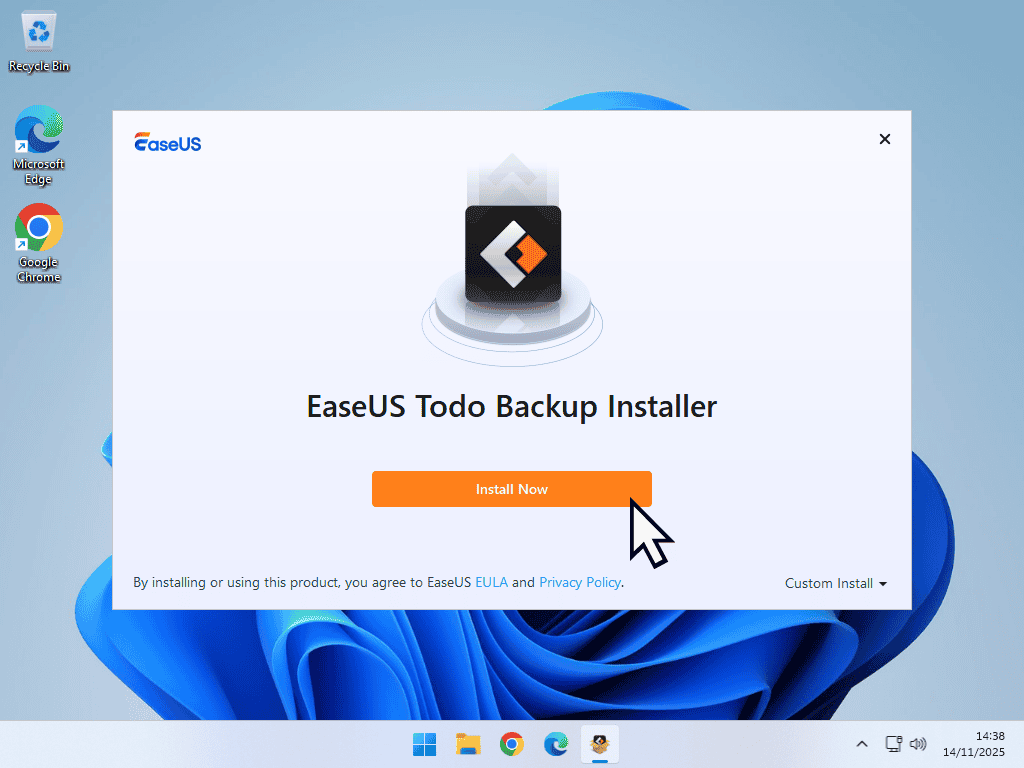
- Click Install Now and let EaseUS Todo Backup install.
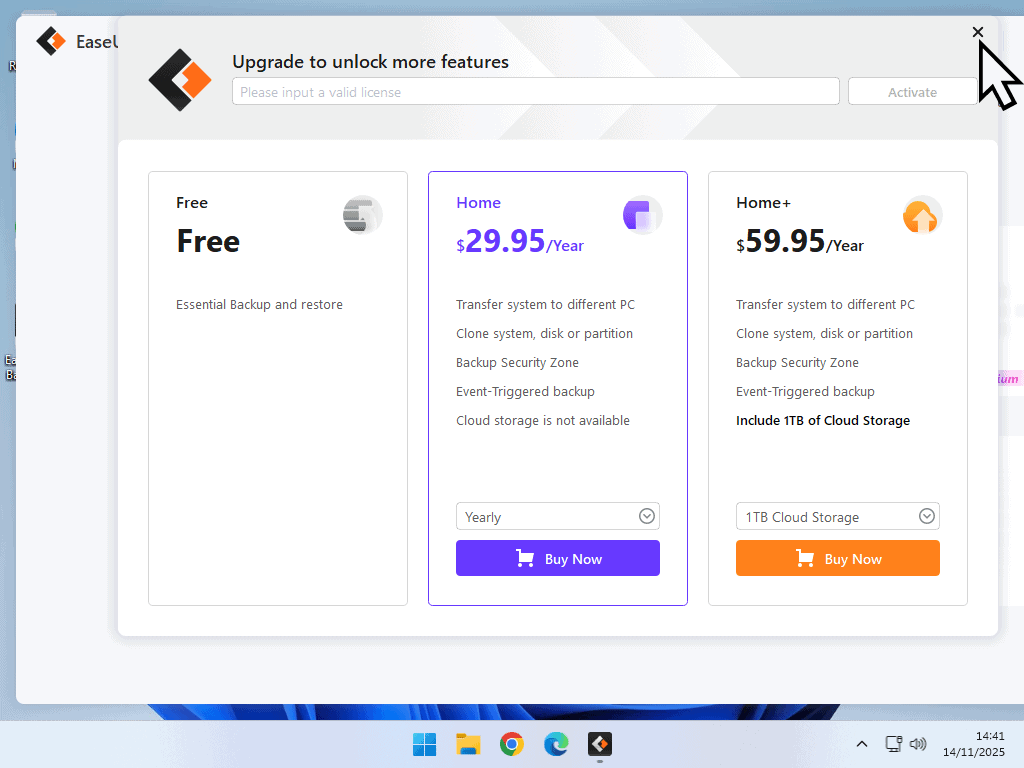
- When the installation finishes, a web page opens with upgrade offers. If you want to stay with the free version, just close it.
Free Means Free
You don’t need to buy anything or enter a licence key. Backing up and restoring are both included in the free version. EaseUS will show you upgrade offers and adverts from time to time. You can ignore them.
How to Backup Windows 11
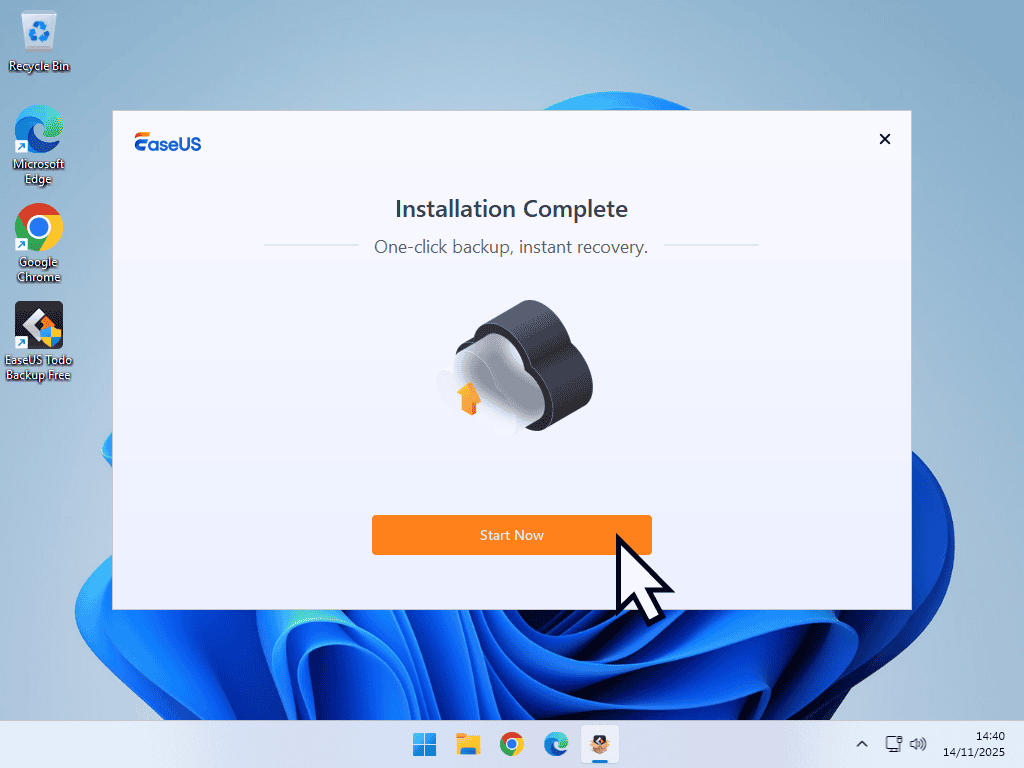
To start backing up Windows 11, plug in your external USB hard drive. When the installation finished you’ll have seen a Start Now button. Click it, or open EaseUS Todo Backup from the Start menu.
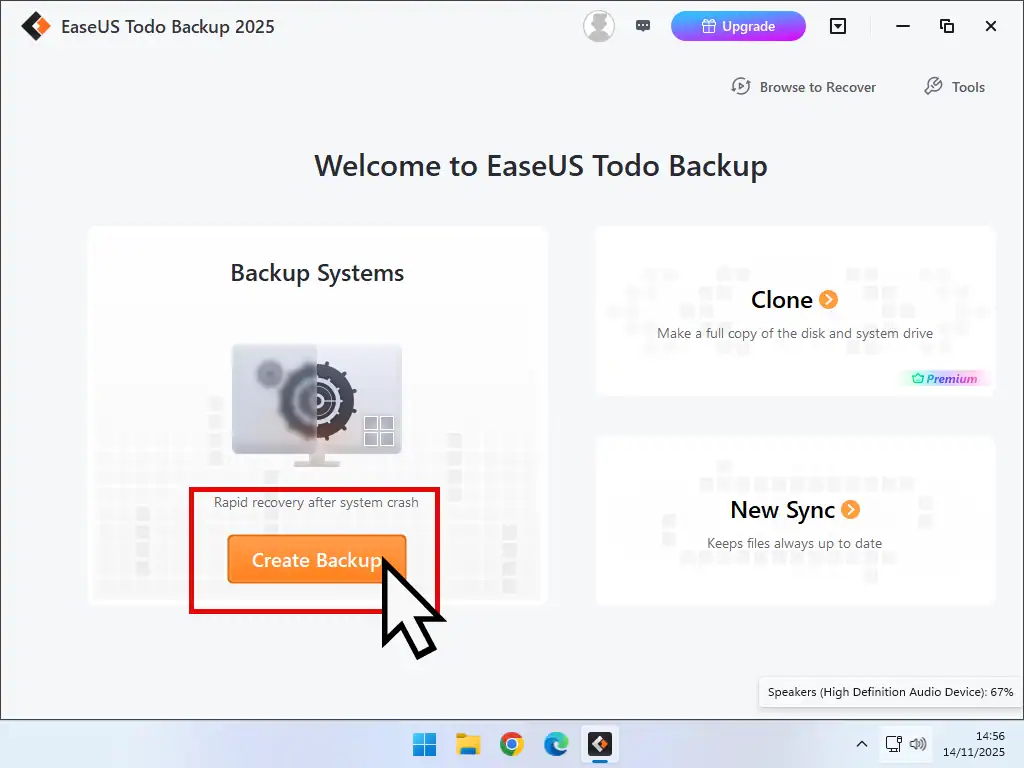
On the home screen, click the Create Backup button. The picture above the button changes every few seconds. You can simply ignore it.
Select Drives
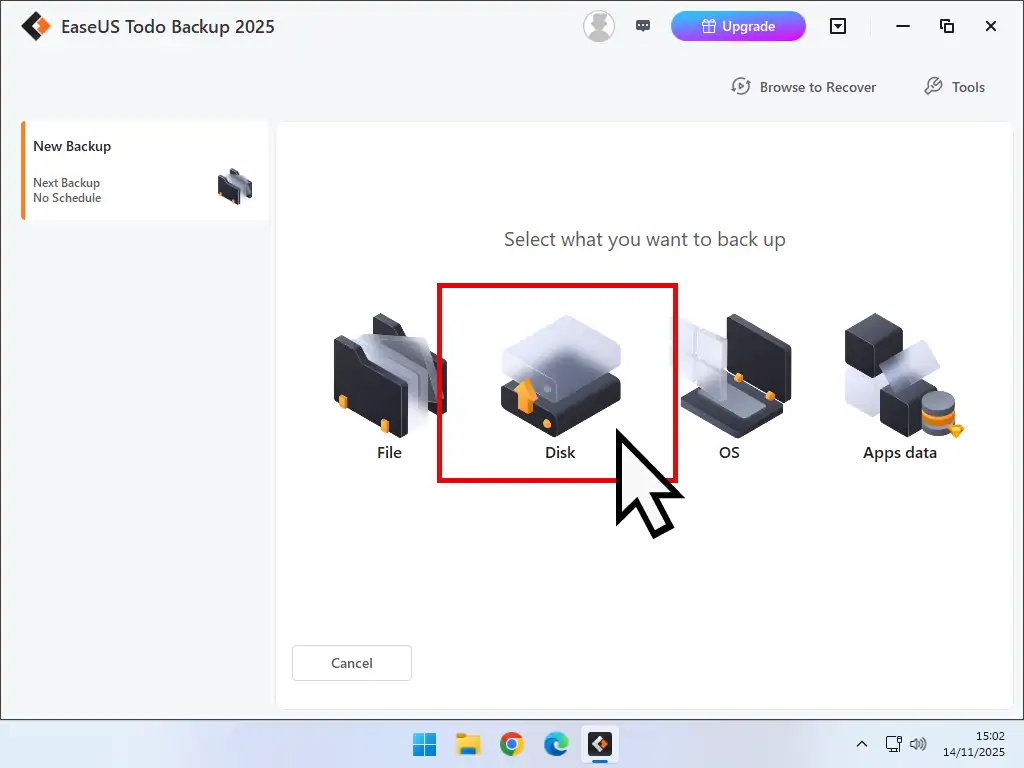
- To create a system image of Windows 11, click the Disk option.
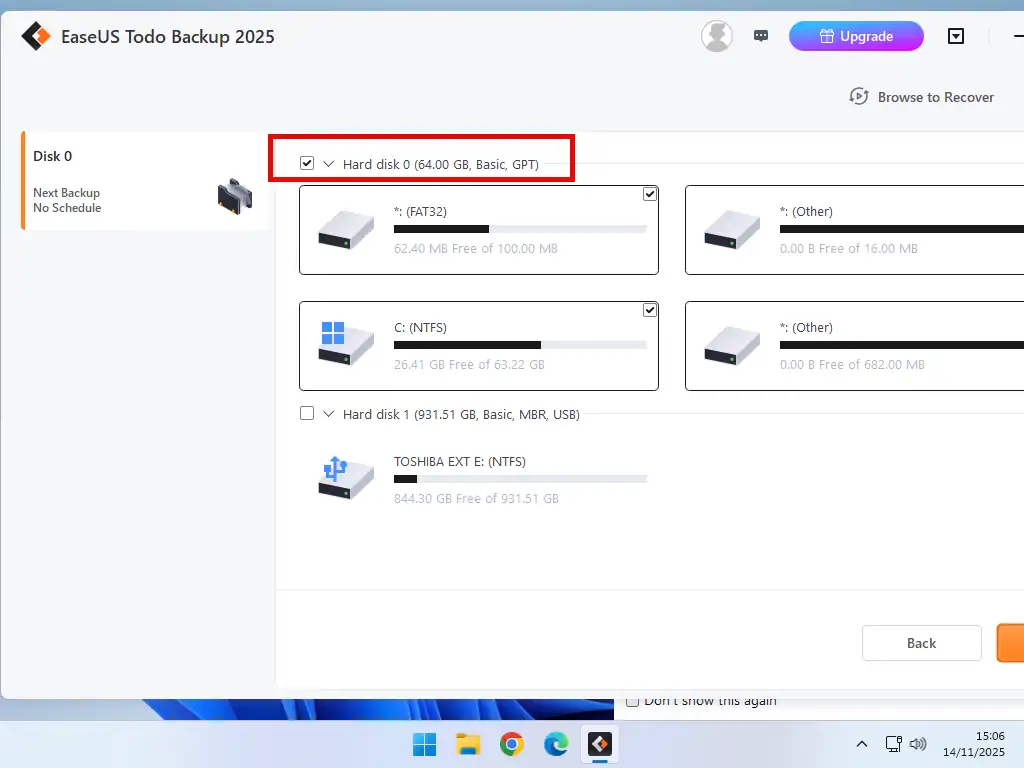
- Tick all the partitions on your Windows drive (the system drive), then click OK. The drive at the bottom is your backup drive, so leave that one unticked.
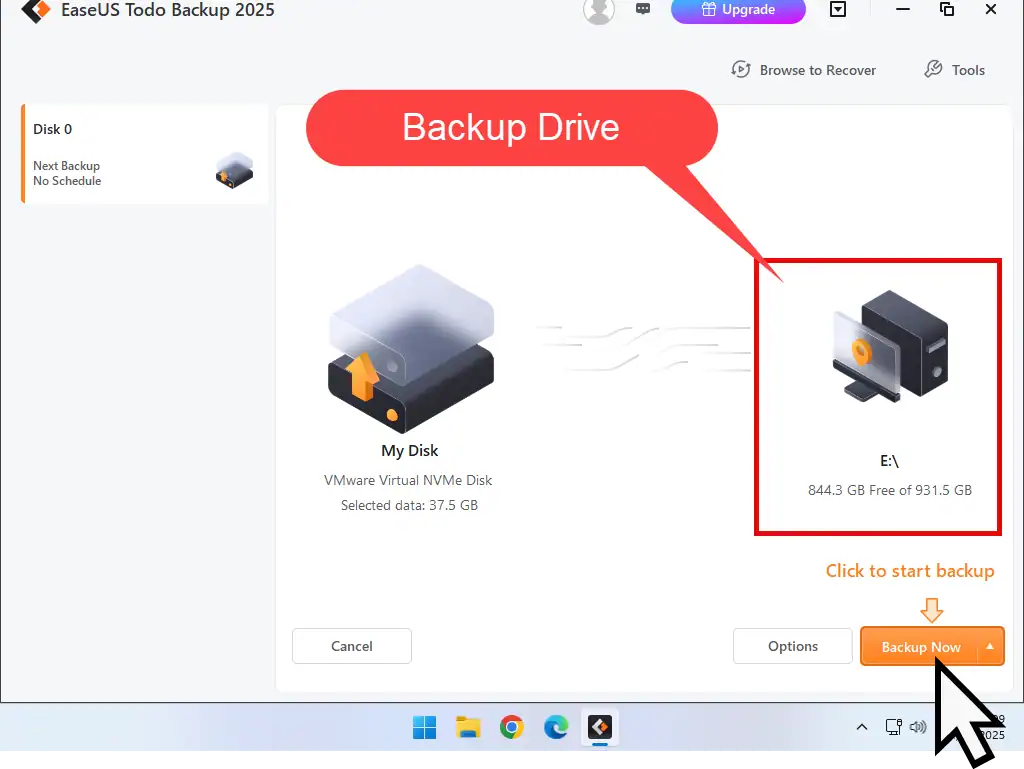
- EaseUS usually picks the right drive to save the backup to, but check it. Sometimes it gets it wrong. If it’s right, click Backup Now.
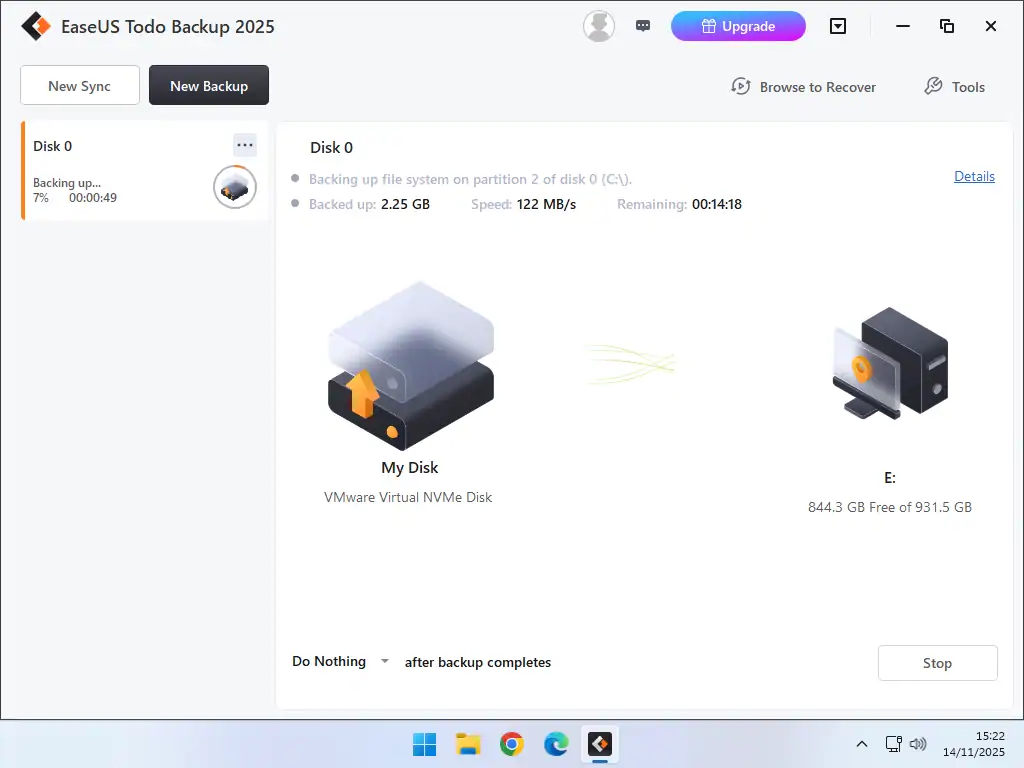
- Let the backup run without interruption. EaseUS shows an estimate of how long it’ll take.
Wrong Backup Device Selected
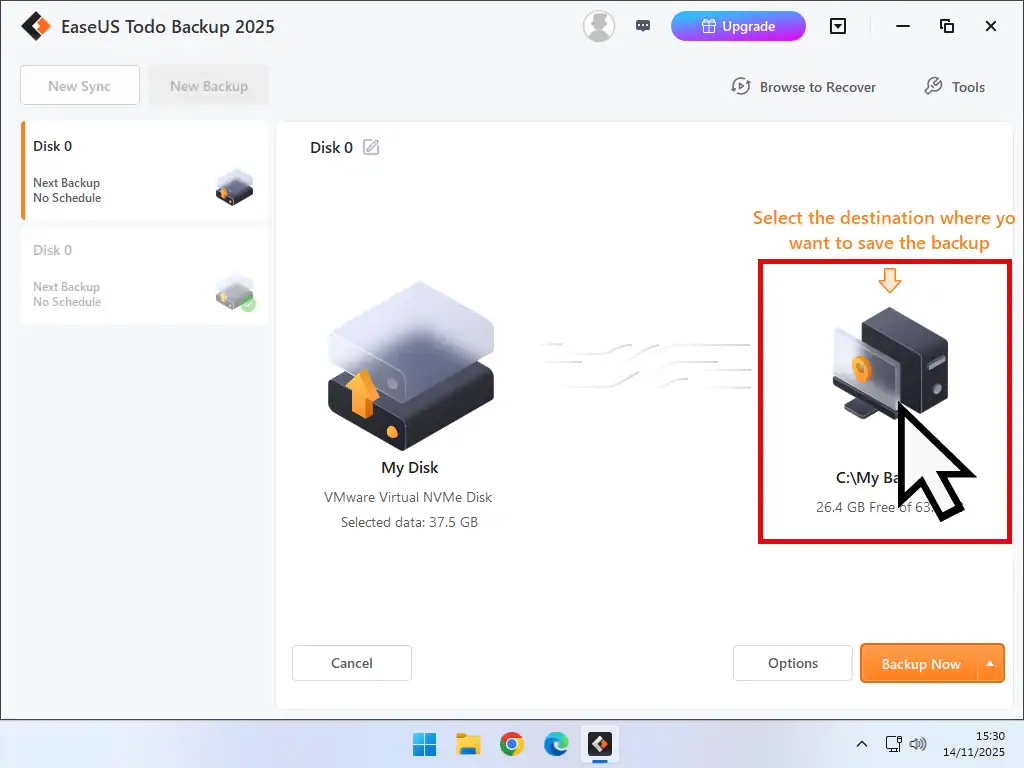
If Todo Backup has picked the wrong drive for your backup:
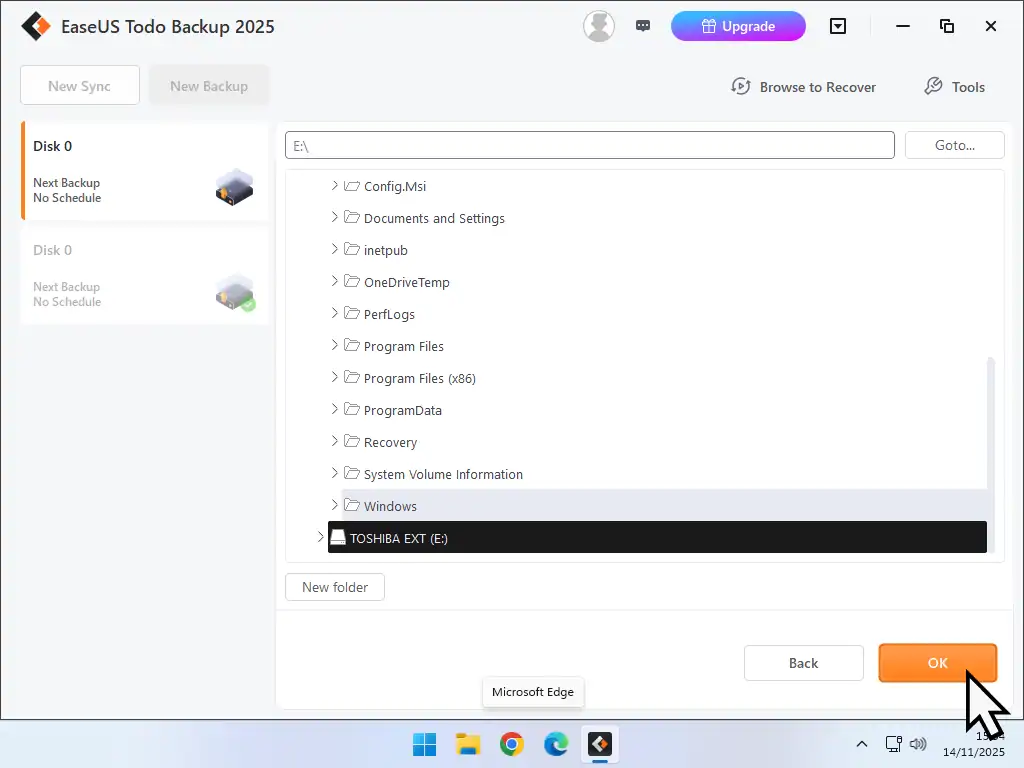
- Click the destination drive that’s currently selected.
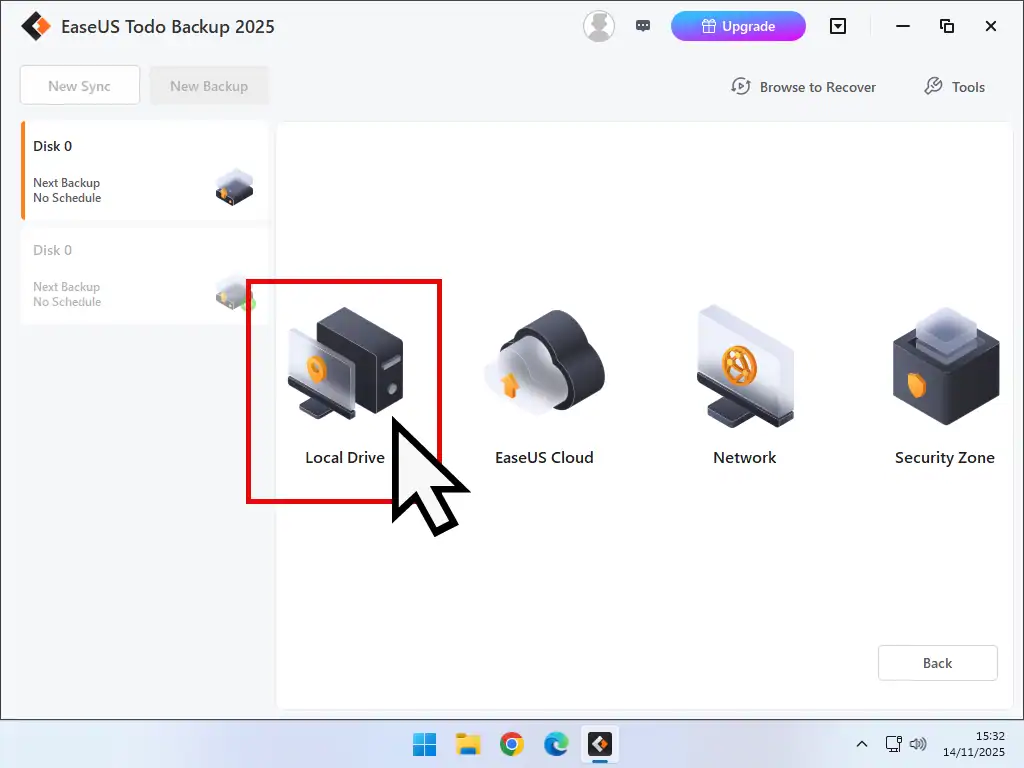
- Click Local Drive.
- Find the correct drive, select it and click OK.
How Long Does a Windows 11 Backup Take?
It depends on how much is on your PC and how fast your backup drive is. A first full backup of a typical home PC usually takes somewhere between half an hour and a couple of hours.
A USB 3 drive in a USB 3 port (often blue, or marked SS) is much quicker than an old USB 2 drive. Later backups on a schedule are faster too, because they only copy what’s changed.
You can carry on using your PC while it runs, but don’t shut it down or unplug the drive until it has finished.
Check That Your Backup Worked
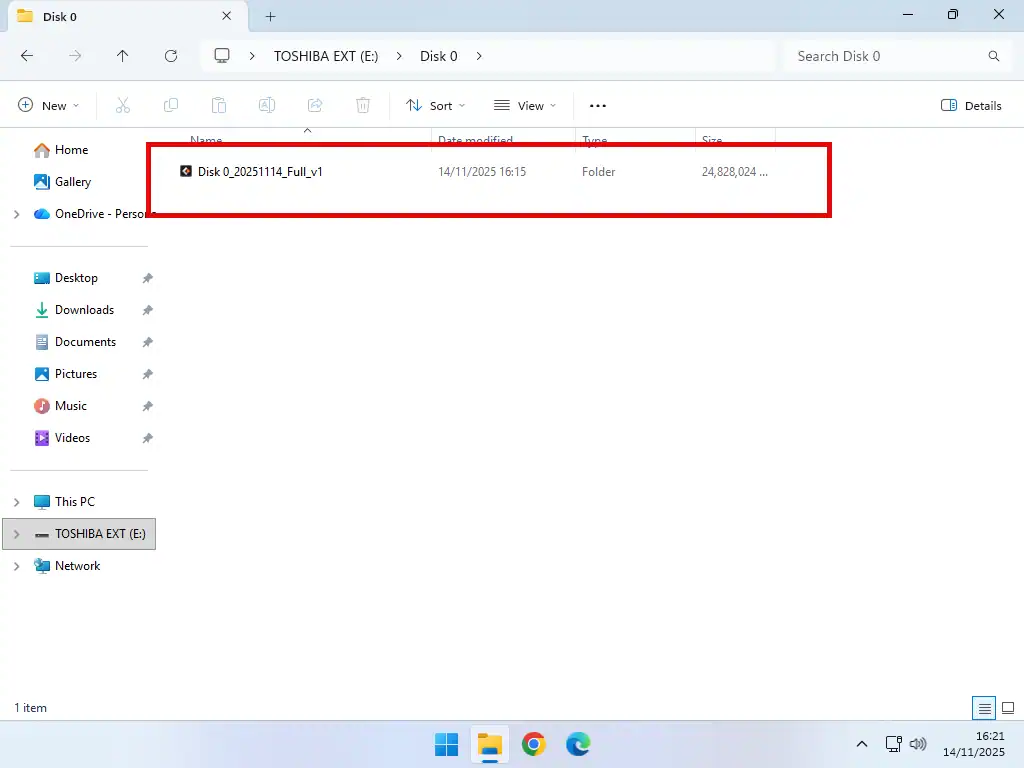
You can check that your Windows 11 backup did actually work. Open your backup drive in File Explorer and you should find the backup file. EaseUS backup files end in .pbd.
Backup Windows 11 on a Schedule
Scheduling a backup to run regularly keeps it up to date. You can run your backups by hand whenever you like, but that means remembering to do it. A schedule makes everything automatic.
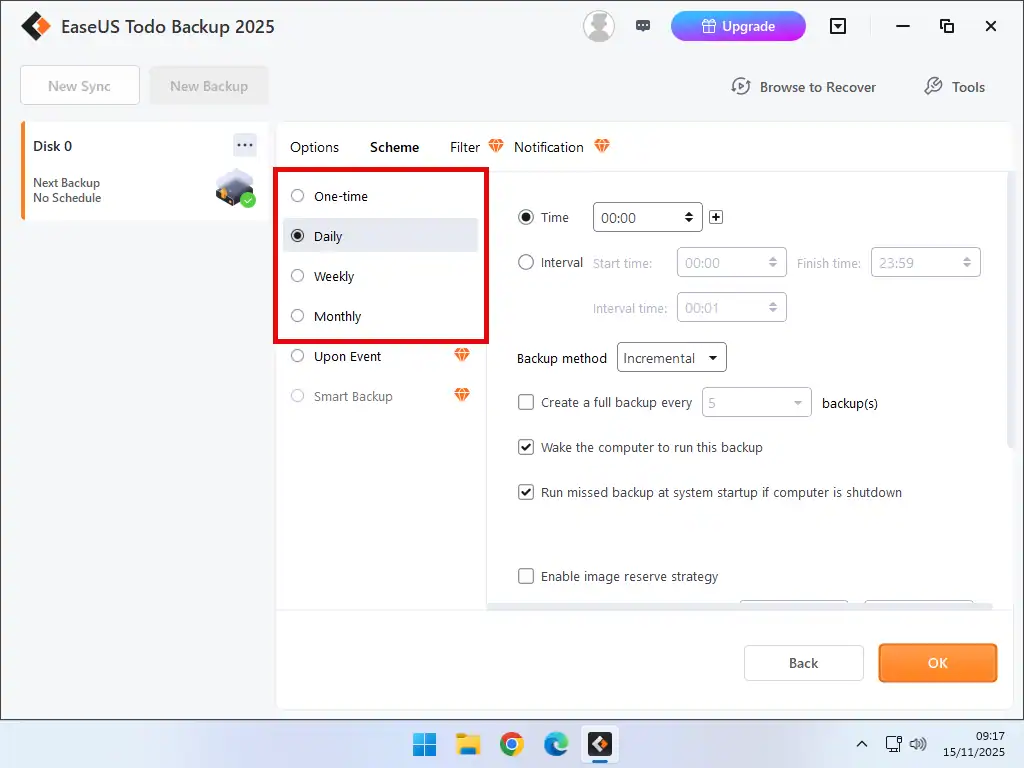
In common with most backup software, EaseUS Todo Backup lets you back up daily, weekly or monthly.
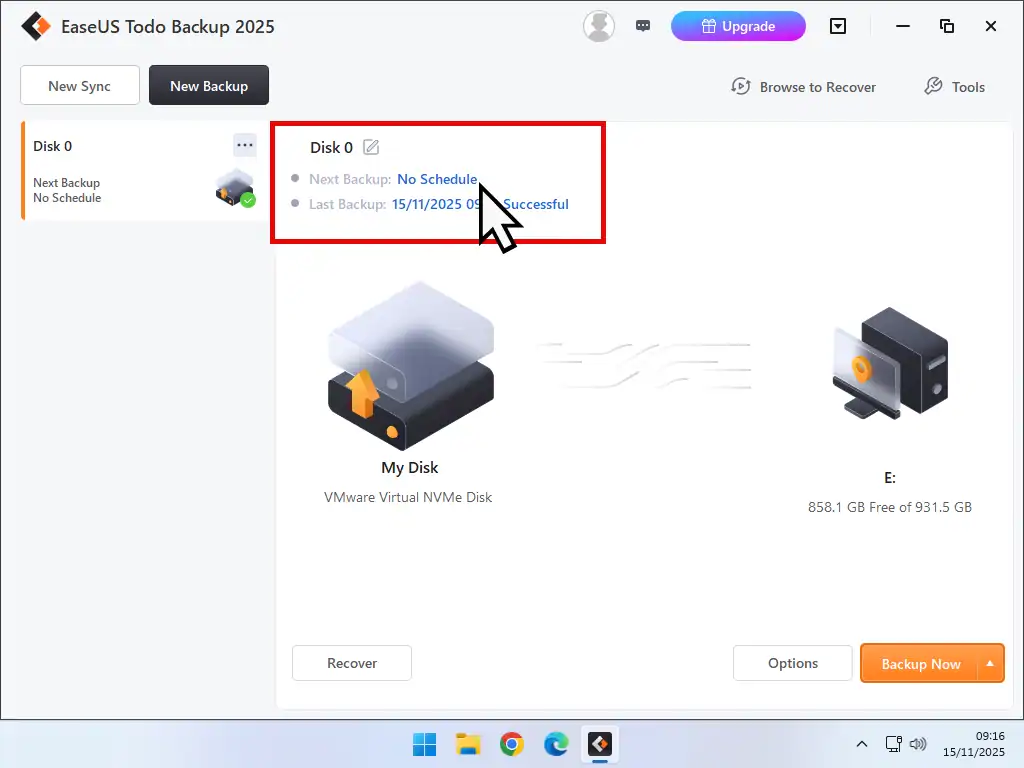
- To set up a schedule, run the first backup (see above), then on the Home screen click the No Schedule link.
- Choose how often you want the backup to run: daily, weekly or monthly.
- Set the time the backup should start.
- Set the backup method. You can choose between incremental, differential and full.
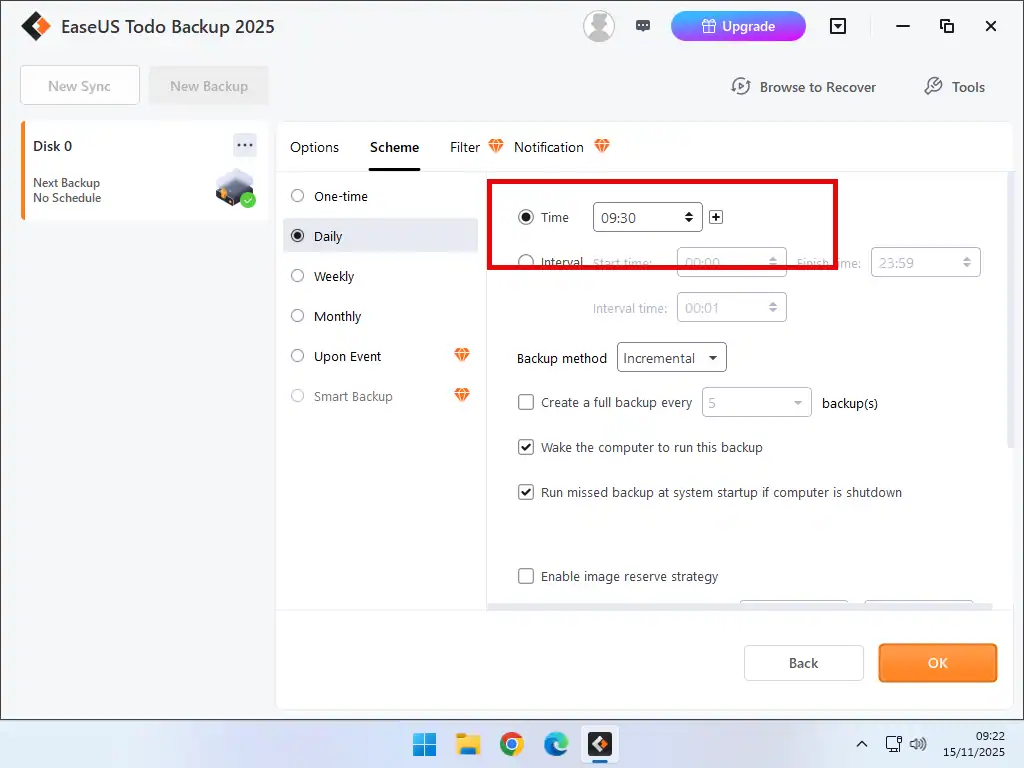
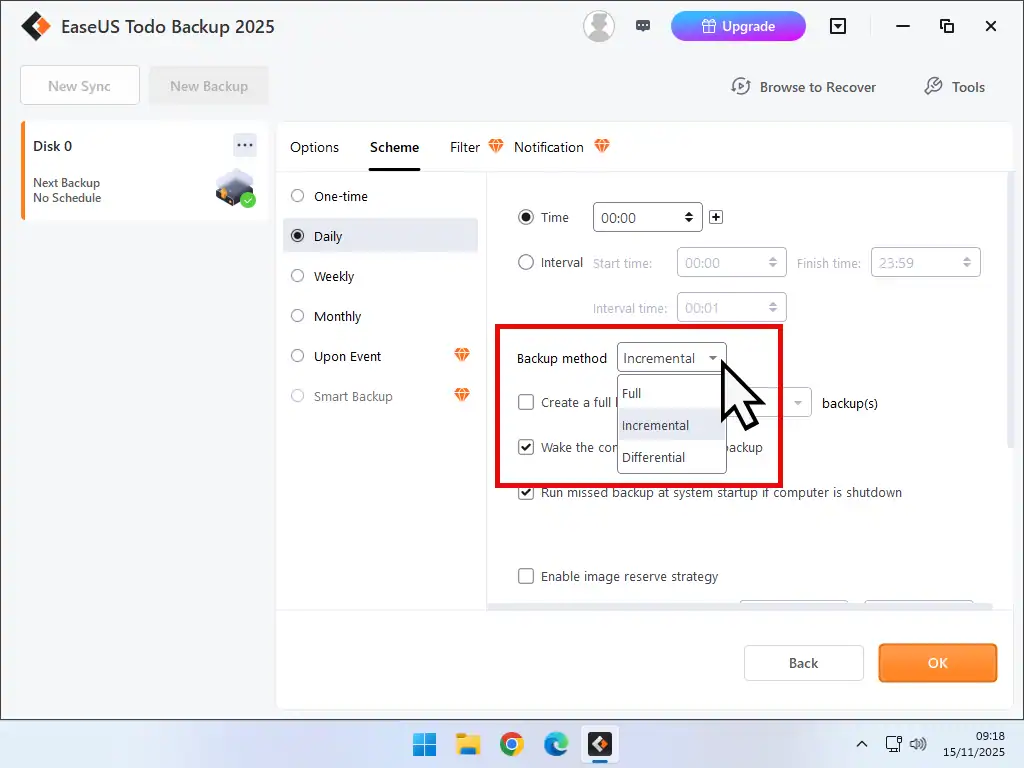
Your backup drive needs to be plugged in when the schedule runs. If it isn’t, the backup can’t run, so leave it connected or plug it in before the time you’ve set.
Grandfather, Father and Son Backup Scheme
One of the best backup strategies, combining space saving with safety, is known as the Grandfather, Father, Son scheme.
To use it, click the Daily tab and set it to Incremental. Then click the Weekly tab and set that to Differential. Finally click the Monthly tab and select Full.
Create an Emergency Rescue Disk
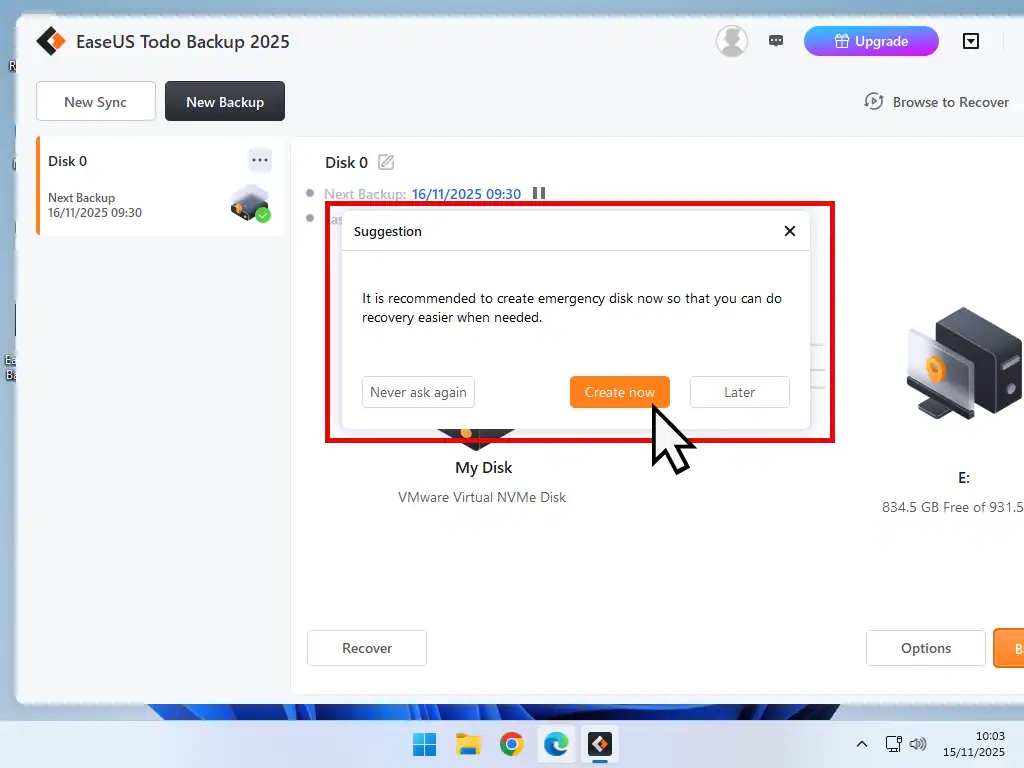
EaseUS will nag you to create an emergency disk, and it’s worth doing. If your computer ever won’t start, you can start it from the rescue USB and restore your PC from your backup. If you really don’t want one, click Never Ask Again.
- Connect an empty USB flash drive and click the Create Now button.
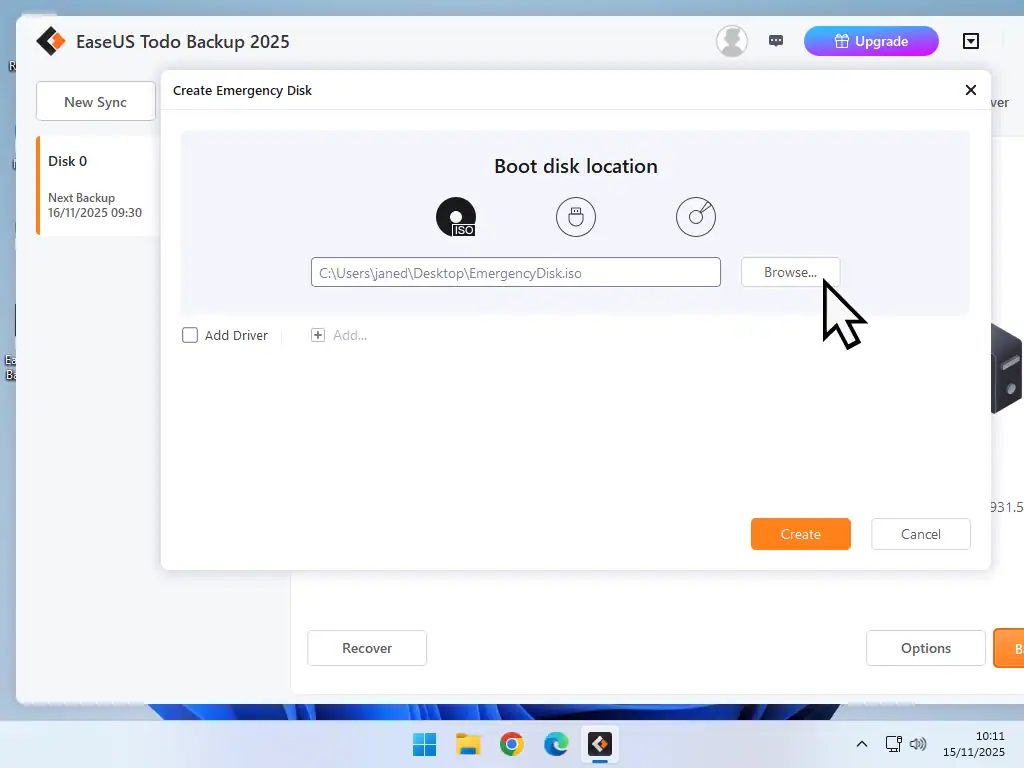
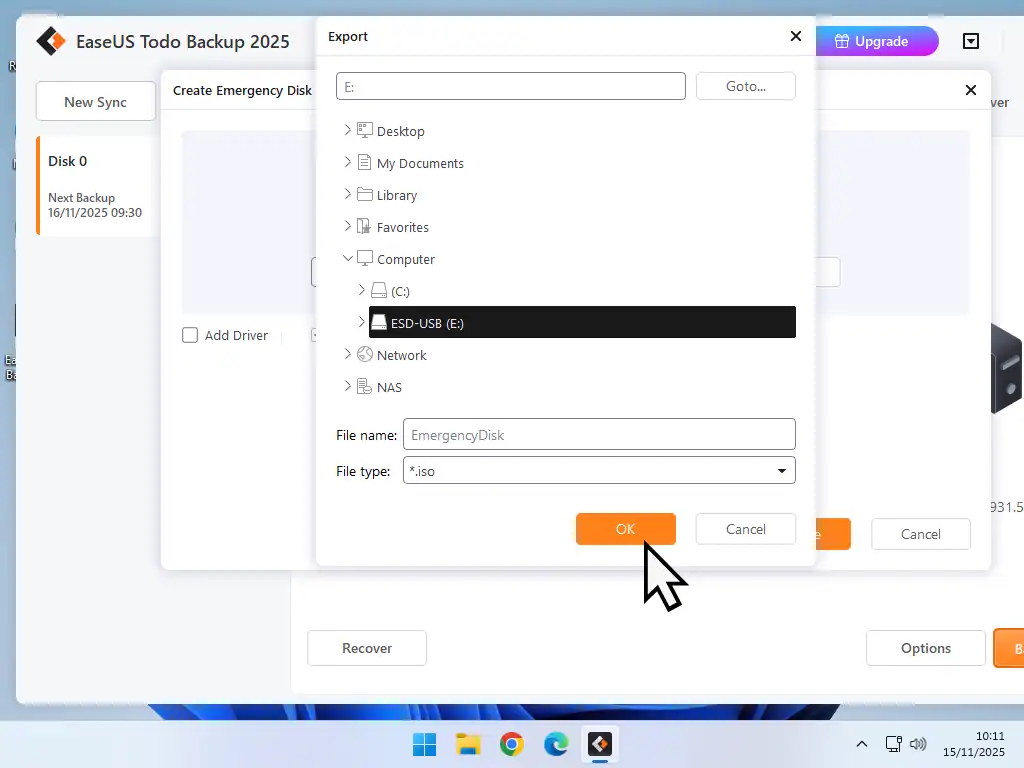
- Click Browse.
- Find and select your flash drive, then click OK.
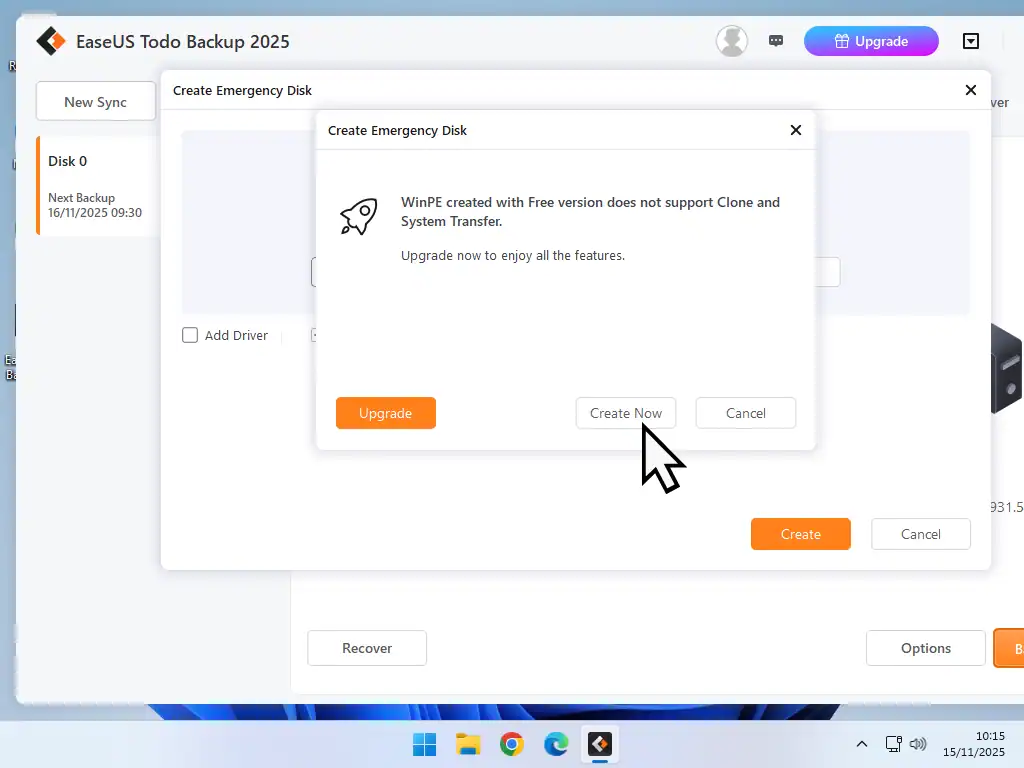
- EaseUS warns you that the free version has limitations. That’s fine, it works perfectly well as a rescue disk. Click Create Now.
The Free Version Doesn’t Support Clone and System Transfer
Since this is the free version of EaseUS Todo Backup, it’s hardly surprising that a few options are kept back for the paid versions. Restoring from a Windows 11 backup is included in the free version.
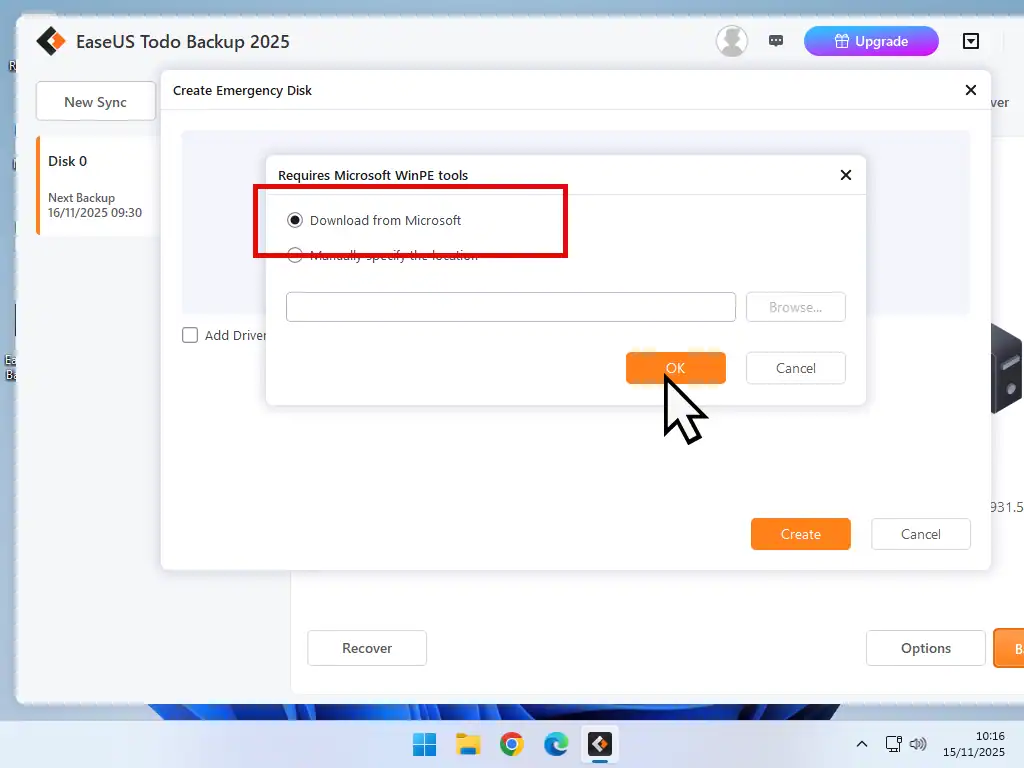
WinPE Will Be Downloaded from Microsoft
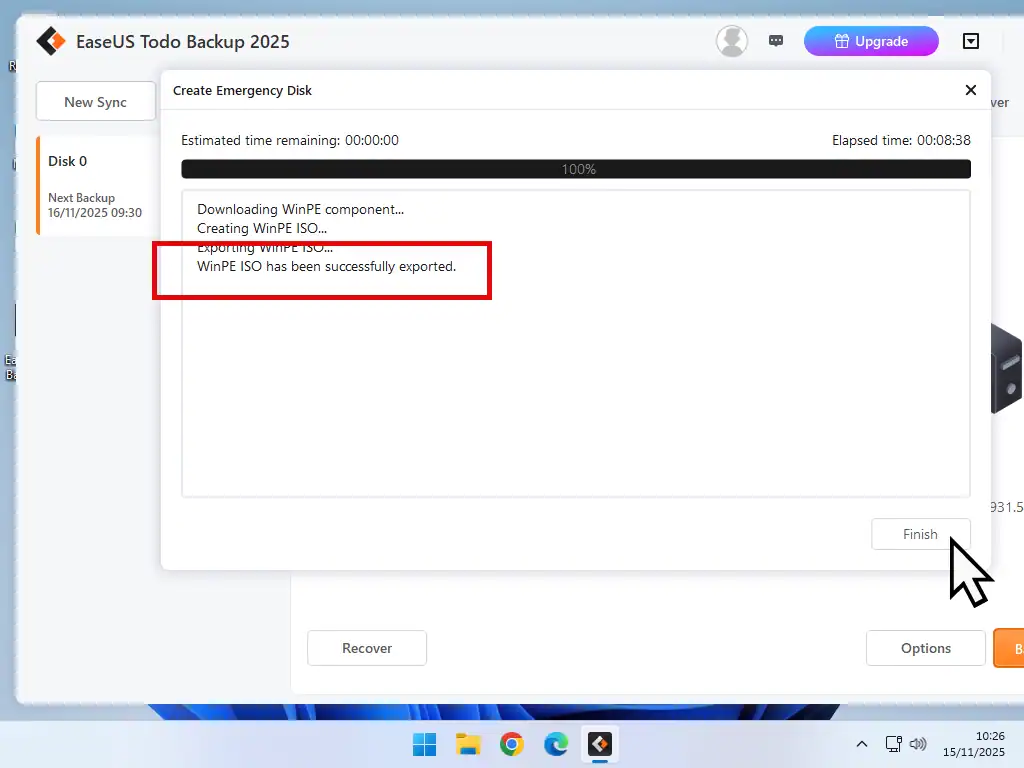
Select Download WinPE from Microsoft (if it isn’t already selected) and click OK. Everything needed to make a bootable rescue disk is downloaded, put together and copied to the flash drive.
When it has finished, click Finish.
Test Your Rescue USB
A rescue USB you’ve never tried is a guess. While your PC is working, restart it and start it from the USB stick to check that EaseUS loads. Then just restart to get back to Windows.
Label the stick and keep it with your backup drive. If it ever refuses to start your PC, make a fresh one. Windows security updates have changed how PCs check start-up disks, and older rescue USBs can be turned away.
Best Free Backup Software for Windows 11
EaseUS Todo Backup Free isn’t the only free way to make a Windows 11 system image. These are the ones worth considering, and what to watch out for with each.
EaseUS Todo Backup Free is the one this guide uses. It’s easy to follow, the free version includes scheduling and a rescue USB, and it’s still being updated. The downsides are the upgrade offers and adverts, and cloning a drive needs the paid version.
Hasleo Backup Suite Free has no adverts and picks the right partitions for you. It can also add a recovery option to your PC’s start-up menu, so you can restore without a USB stick. It looks plainer, and paid versions arrived in late 2025, but backing up and restoring are still free.
AOMEI Backupper Standard works much like EaseUS, upgrade prompts included. The free version can’t clone your Windows drive or restore it to a different computer.
Veeam Agent for Microsoft Windows Free is very reliable and has no adverts. It’s made for businesses, though, so the wording is more technical than most home users want.
Macrium Reflect Free was many people’s favourite, but it was retired in January 2024 and gets no more updates. I wouldn’t rely on it for Windows 11 now.
Whichever You Choose
The program matters less than having a backup at all, keeping it up to date and knowing how to use it. Have a read of how to restore Windows 11 from a system image before you need it.
Frequently Asked Questions
Q: Does Windows 11 have a backup program?
A: Yes, but not a modern one for full backups. Backup and Restore (Windows 7) can still make a system image, but Microsoft no longer develops it. The Windows Backup app saves your files, settings and apps to OneDrive. It doesn’t make a system image.
Q: What’s the difference between a system image and a clone?
A: A system image is a backup file you keep on another drive, and you can keep several from different dates. A clone copies your whole drive onto another drive, ready to swap in. EaseUS Todo Backup Free makes system images. Cloning needs the paid Home version.
Q: How big does my backup drive need to be?
A: It needs more free space than you’ve used on your PC’s C: drive. To keep several backups, choose a drive at least as big as the one in your PC.
Q: Is EaseUS Todo Backup Free really free?
A: Yes. Backing up and restoring cost nothing and there’s no time limit. You’ll see upgrade offers and adverts. The paid Home version adds cloning, moving Windows to a different PC and faster backups.
Q: Can I restore my Windows 11 backup to a new SSD?
A: Yes. Fit the new drive in the same PC, start from your rescue USB and choose the new drive when EaseUS asks where to restore to. A drive the same size or bigger is the safest choice. Restoring to a different computer needs the Universal Restore feature in the paid version.
Q: How often should I back up Windows 11?
A: For most home users, once a week is enough, plus an extra backup before a big Windows update or new hardware. A schedule does it for you, so you don’t have to remember.
Q: What is a .pbd file?
A: It’s a backup file made by EaseUS Todo Backup. You restore it with EaseUS, either from the Home screen or with Browse to Recover. Don’t delete it unless you have a newer backup.
Summary
You now have a complete Windows 11 backup on an external drive, a schedule to keep it up to date and a rescue USB in case your PC won’t start.
EaseUS will try to upsell its free backup software, and you will see adverts. Unless you need the extra tools in the paid versions, just ignore them.
If disaster strikes, my guide on how to restore Windows 11 from a system image shows you how to get your PC working again.
Related Posts
Types of Computer Backup: Which One Do You Need?
Written by Jeff Porter. I’ve been fixing Windows PCs since 2010 and I’m CompTIA Network+ certified. More about me