
Here’s how to add a USB device to a virtual machine in VMware Workstation Pro. You can connect USB flash drives, external hard drives and CD/DVD drives, which is an easy way to move files between your PC (the host) and the virtual machine (the guest).
In this step-by-step guide, I’ll show you how to connect a USB device, and what to do if VMware doesn’t see it or the virtual machine says it isn’t recognised.
The Short Version
- Start the virtual machine, then plug in the USB device.
- When New USB Device Detected appears, choose Connect to a virtual machine, pick the virtual machine and click OK.
- Already plugged in? Click VM, Removable Devices, the device, then Connect (Disconnect from host).
- Older guest like Windows 7? Set the virtual machine’s USB compatibility to USB 2.0.
How to Add a USB Device to Workstation Pro
A USB device can be connected to your PC or to the virtual machine, but not both at once. Workstation Pro hands it from one to the other, so when it’s in the virtual machine it disappears from your PC, and the other way round.
VMware New USB Device Detected
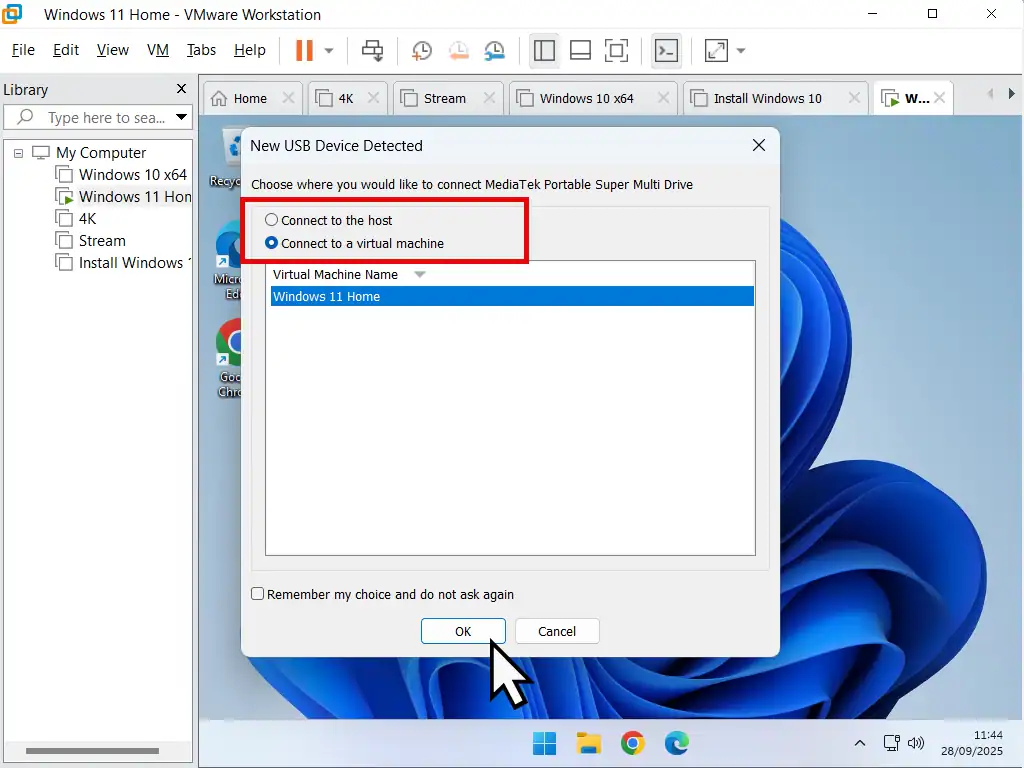
If your virtual machine is running when you plug in a USB device, you’ll see the New USB Device Detected window. To attach the device to the virtual machine:
- Select Connect to a virtual machine.
- Select the virtual machine you want the device attached to.
- Click OK.
The Remember My Choice Option
Near the bottom of the window there’s an option to Remember my choice and do not ask again. If you tick it, that USB device connects to the virtual machine automatically every time you plug it in.
Personally, I think that’s too restrictive, so my advice is to leave it unticked.
VMware Attach Removable Devices
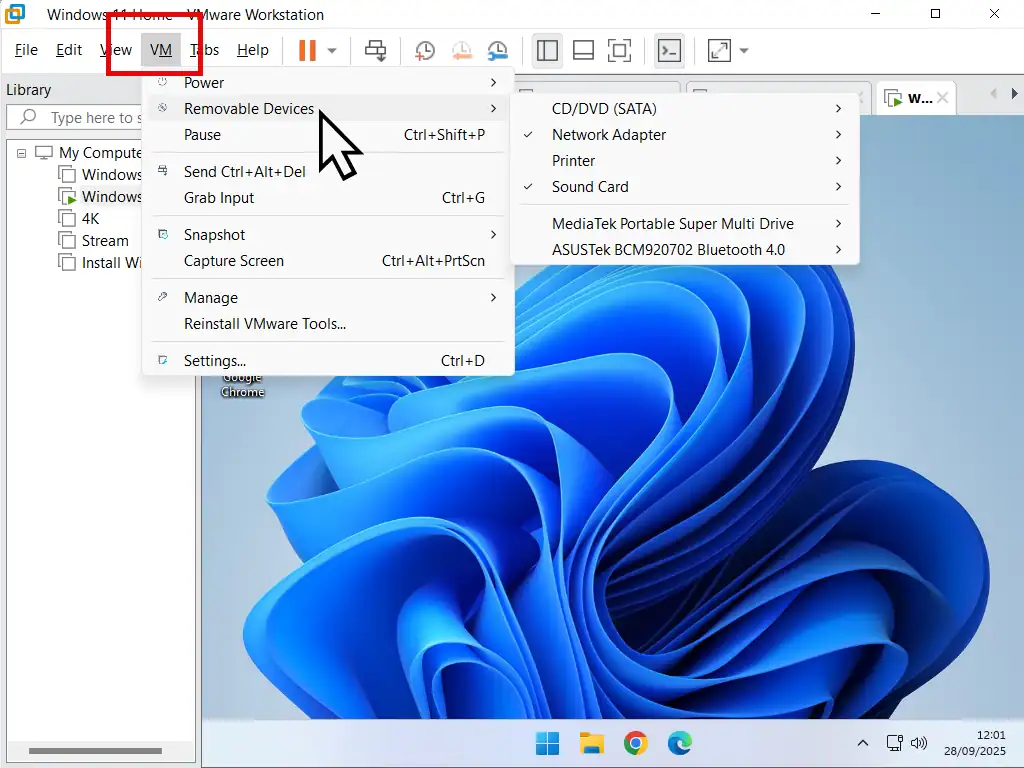
You can also add a USB device that’s already plugged into your PC. This way you can switch it between your PC and the virtual machine, which is handy when you’re passing files between the two.
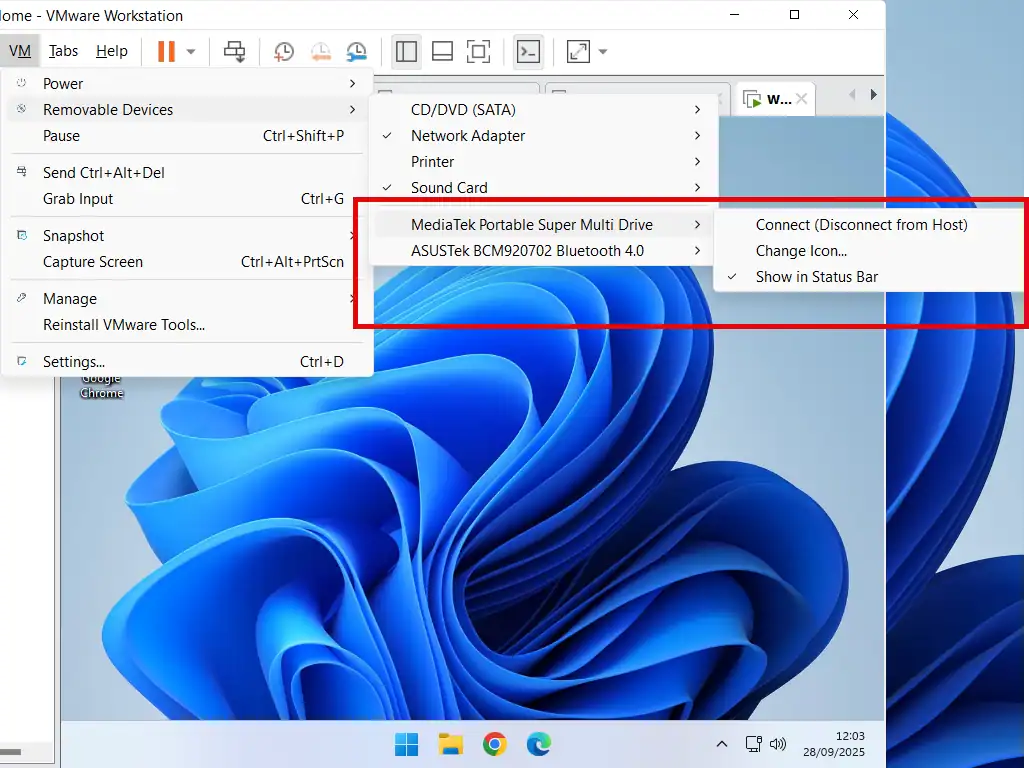
- Click VM on the Workstation Pro menu, then point to Removable Devices. A second menu lists every device VMware has found.
- Point to the USB drive you want and click Connect (Disconnect from host).
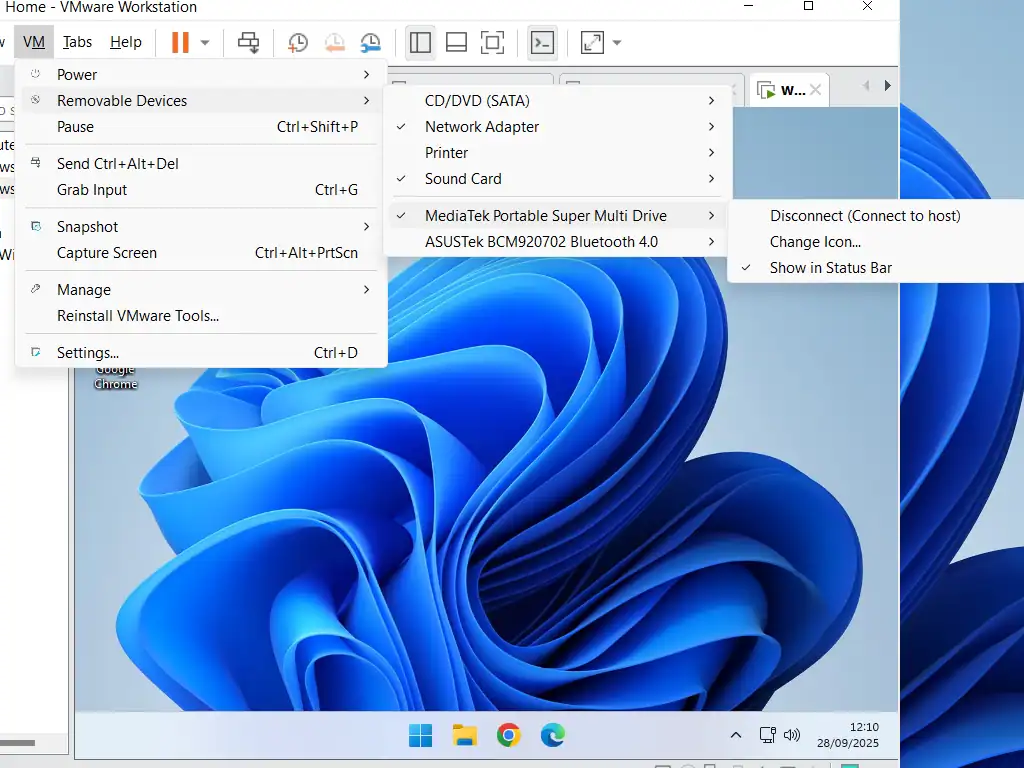
- To give it back to your PC, click VM, Removable Devices, point to the device, and click Disconnect (Connect to host).
USB Device Not Recognised in VMware
Sometimes you’ll connect a USB device and the virtual machine says USB Device Not Recognised. It means the guest couldn’t load drivers for it, so the device won’t work in the virtual machine.
It usually happens with older guests like Windows 7 and Windows XP, and it’s usually down to USB 3.
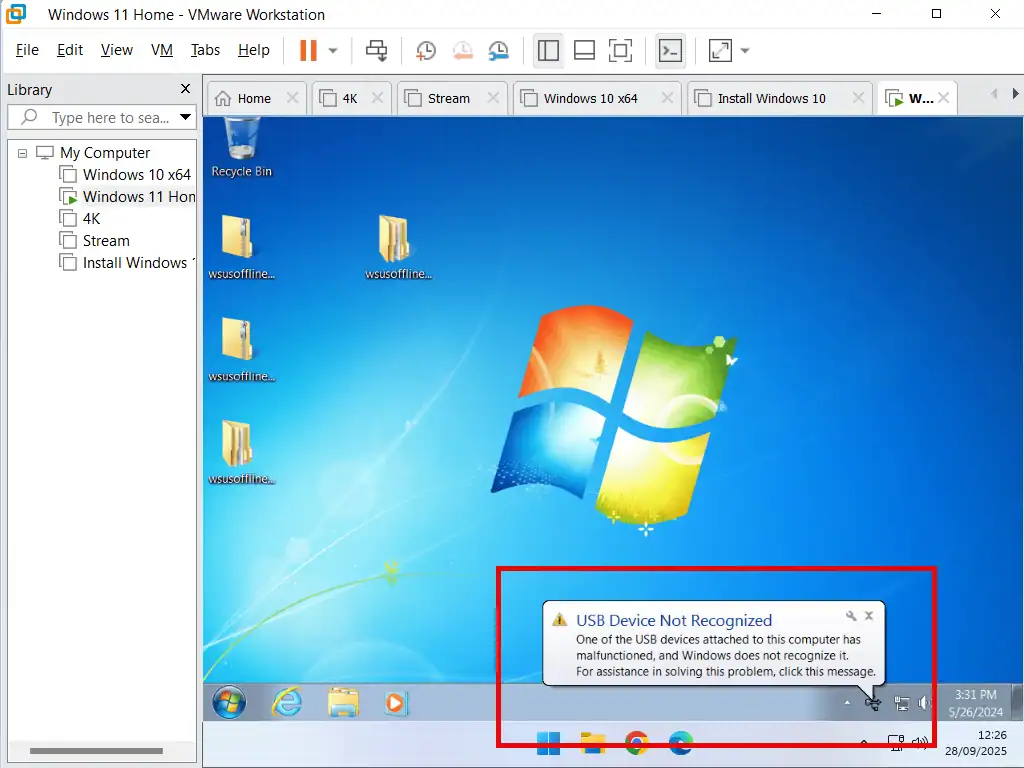
Change the USB Compatibility to USB 2.0
Windows 7 and XP don’t have drivers for the virtual USB 3 controller that VMware gives new virtual machines. Switching the virtual machine to USB 2.0 usually fixes it:
- Shut down the virtual machine.
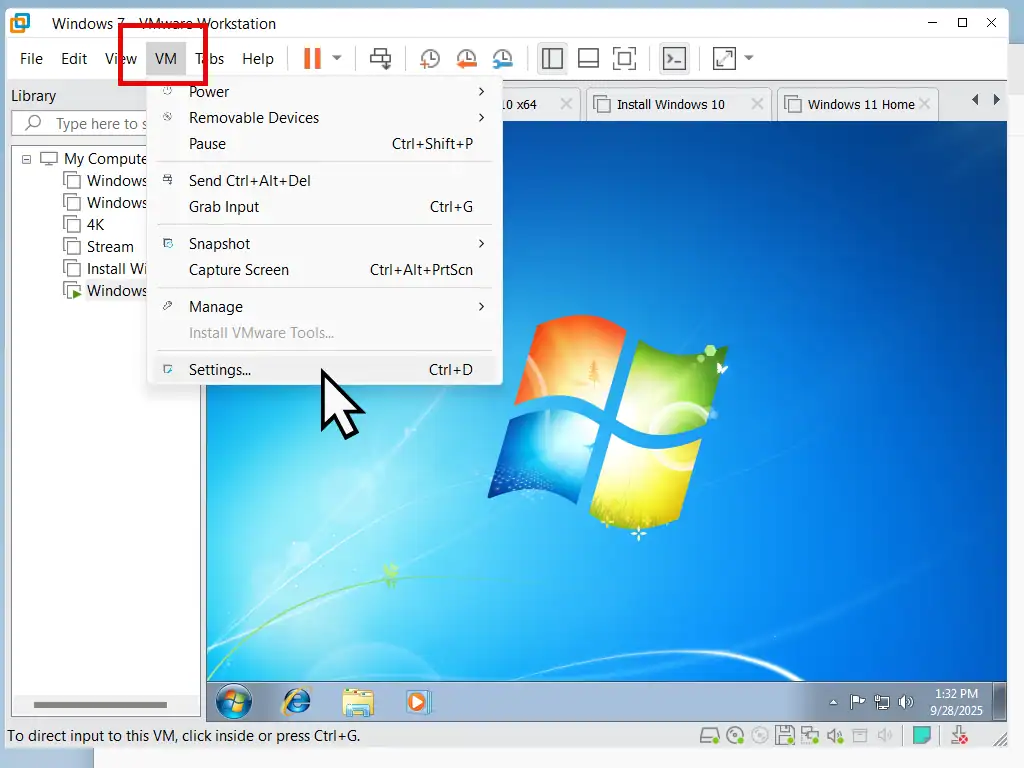
- Click VM, then Settings.
- On the Hardware tab, select USB Controller.
- Change USB compatibility from USB 3 to USB 2.0, and click OK.
Using a USB 2 port on your PC, or a USB 2 device, can also help.
VMware Doesn’t Show the USB Device at All
If the device isn’t in the Removable Devices menu, check these:
- The virtual machine has a USB controller. In VM, Settings, Hardware, look for USB Controller. If it isn’t there, shut down the virtual machine, click Add, choose USB Controller and click Finish.
- The VMware USB Arbitration Service is running. On your PC, press Windows + R, type services.msc and press Enter. Double-click VMware USB Arbitration Service, set Startup type to Automatic, click Start, then restart Workstation Pro.
- The device works on your PC. Try another USB port, and check it shows in File Explorer before you connect it to the virtual machine.
How to Get Around USB Device Not Recognised
If you really can’t get the USB device recognised, there are other ways to get files and programs into the virtual machine. Which one depends on what you’re trying to do.
Passing Files Between Host and Guest
If you just want to move files between your PC and the virtual machine, the easiest way round it is a shared folder. Both your PC and the virtual machine can use it at the same time. Here’s how to set up a shared folder in VMware Workstation Pro.
Install a Program onto the Guest
To install a program in the virtual machine, put it in an ISO file and connect that as a virtual CD/DVD drive. The virtual machine can always read it.
If the program is on a CD or DVD, here’s how to create an ISO file from a disc. If you downloaded the setup files, here’s how to create an ISO file from a folder.
How to Add a Virtual Disc in VMware
Once you have the ISO file, connect it as a virtual disc:
- Click VM, then Settings.
- If there’s already a CD/DVD drive in the list, select it and skip to the next part. If there isn’t, or it’s misbehaving, select each CD/DVD drive and click Remove.
- Click Add.
- Select CD/DVD Drive and click Finish.
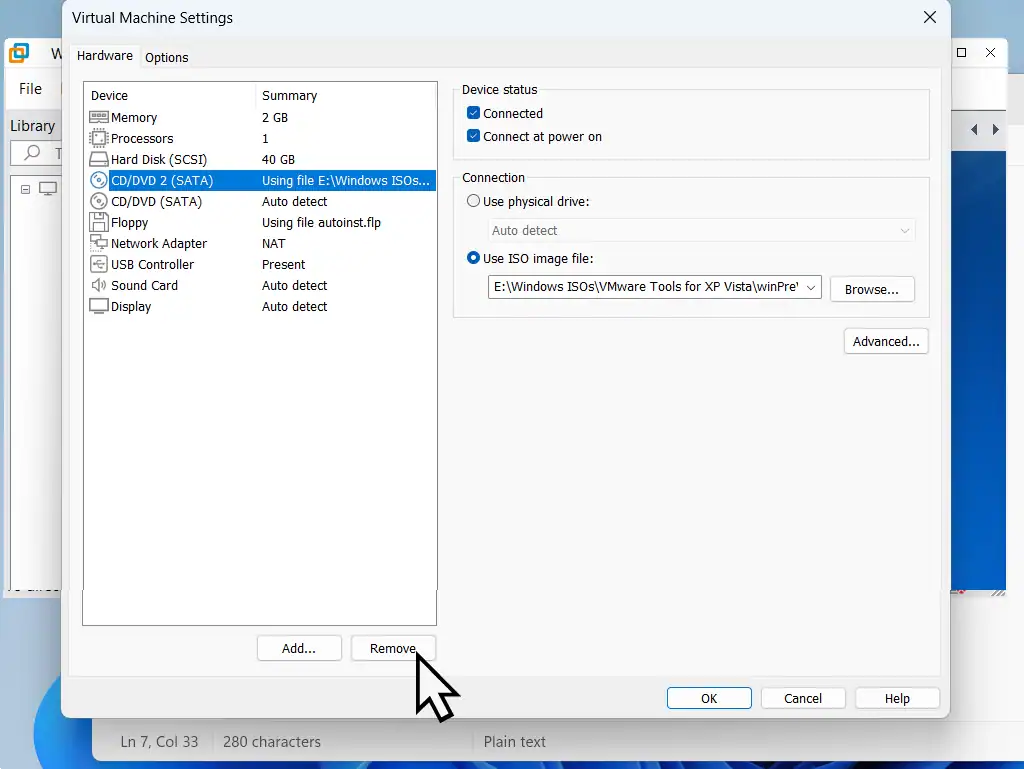
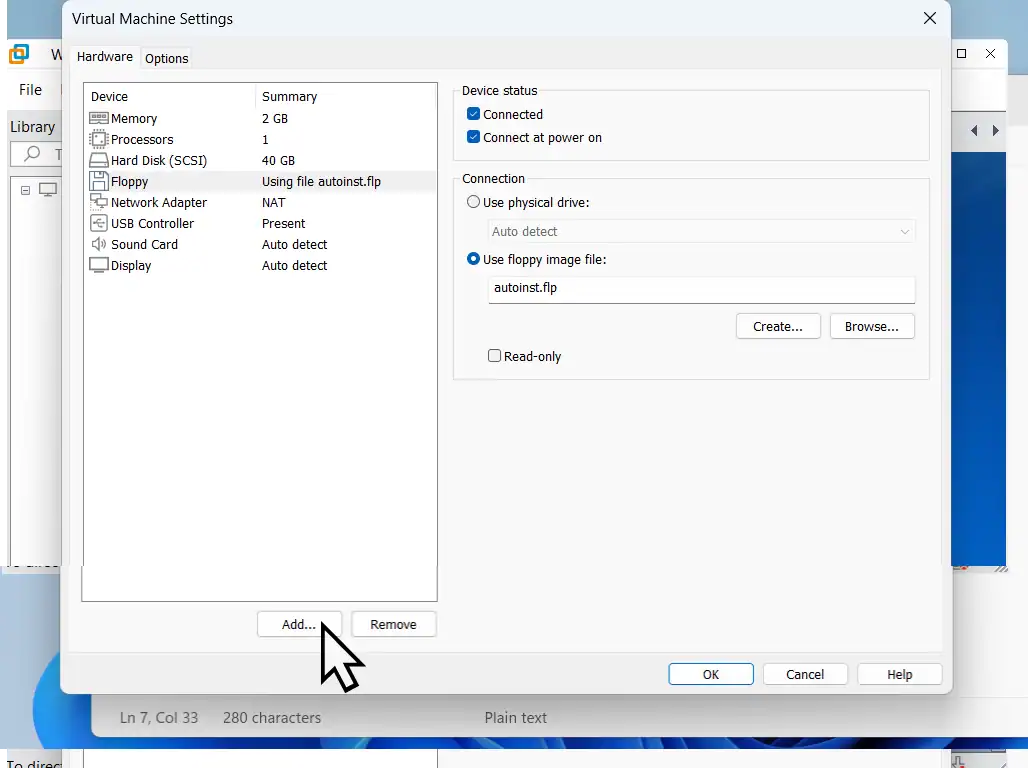
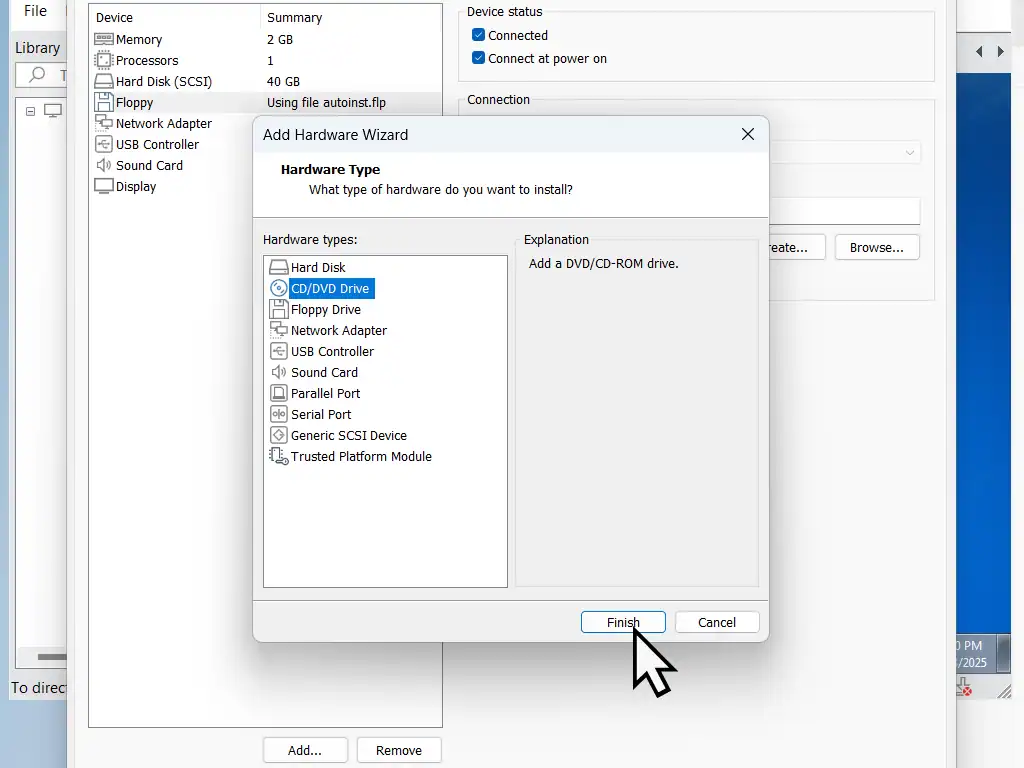
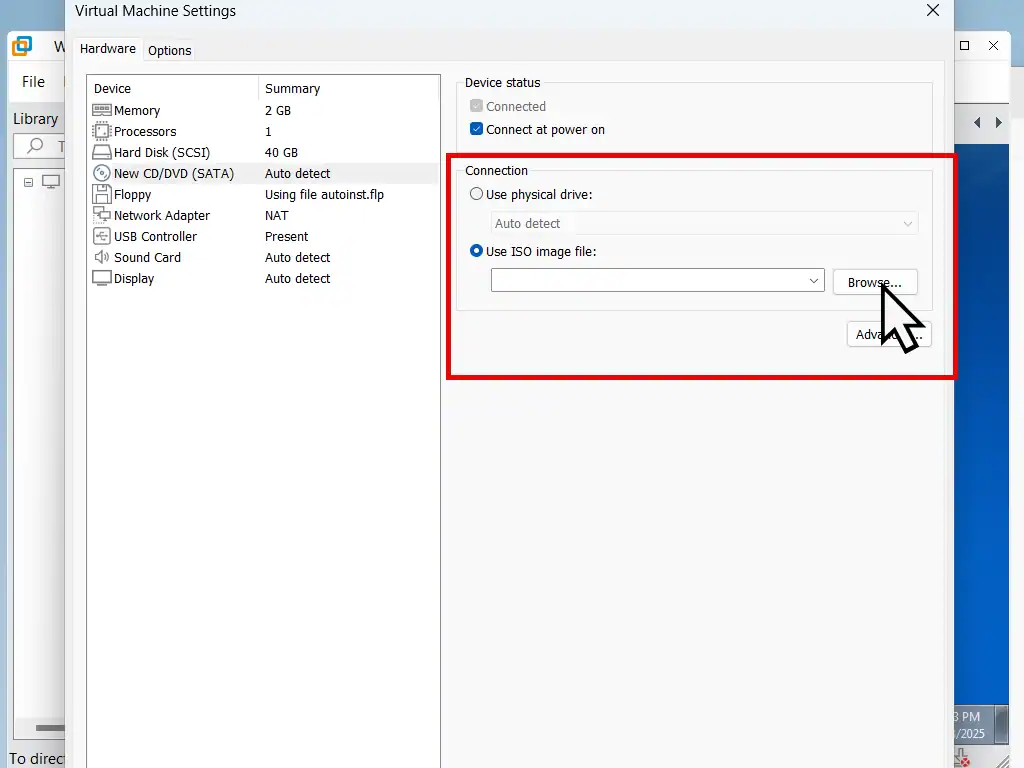
With the CD/DVD drive selected, choose Use ISO image file on the right. Click Browse and find the ISO file you made. Make sure Connected is ticked, then click OK. Back in the virtual machine, the virtual CD/DVD is ready to use.
Frequently Asked Questions
Q: Can my PC and the virtual machine use a USB device at the same time?
A: No. A USB device connects to one or the other. To share files with both at once, use a shared folder instead.
Q: Why isn’t my USB device showing in VMware?
A: Check the virtual machine has a USB controller in its settings, and that the VMware USB Arbitration Service is running on your PC. Also check the device works in File Explorer first.
Q: How do I get a USB device to work in a Windows 7 virtual machine?
A: Shut down the virtual machine, open VM, Settings, USB Controller, and change USB compatibility to USB 2.0. Windows 7 doesn’t have drivers for VMware’s virtual USB 3 controller.
Q: How do I make a USB drive always connect to the virtual machine?
A: When the New USB Device Detected window appears, tick Remember my choice and do not ask again. Leave it unticked if you also use the drive on your PC.
Q: How do I give a USB device back to my PC?
A: Click VM, Removable Devices, point to the device and click Disconnect (Connect to host).
Q: Does this work in VMware Player?
A: Yes, the steps are almost the same. Player has been discontinued, so I recommend Workstation Pro, which is free for everyone.
Summary
Attaching removable devices in VMware Workstation Pro is usually easy. The device appears in the virtual machine and disappears from your PC until you give it back.
The only real problems I’ve had are with older guests like Windows 7, and switching the virtual machine to USB 2.0 or using a shared folder gets round those.
Related Posts
Windows 11 Virtual Machine in VMware Workstation Pro
You can set up a Windows 11 virtual machine even if your PC doesn’t meet the requirements.
How to Back Up VMware Workstation Pro Virtual Machines
A complete backup saves a lot of time recreating your virtual machines.
How to Convert a Physical PC to a Virtual Machine
Moving to a new PC? Take your old one with you as a virtual machine.
Windows 11 Virtual Computer
Create a Windows virtual machine. It’s free and not that difficult to do.
Virtual machines are great for experimenting with. You can try out new operating systems, you can browse the web safely and open suspicious emails. Download new software to try it out, all without risking your host (real) computer.
Set up a Windows 11 VM even if your PC doesn’t currently support it.
You can find this and other related step by step guides in – At Home Computer VMware Guides
Written by Jeff Porter. I’ve been fixing Windows PCs since 2010 and I’m CompTIA Network+ certified. More about me