
You open your Pictures folder expecting to see your photos, and all you get is a list of file names. Or worse, rows of identical blank icons.
Windows can absolutely show you the pictures themselves. It just doesn’t always do it, and there are two separate settings involved. Most guides only mention one of them, which is why so many people follow the instructions, find it still does not work, and give up.
So we’ll work through this properly. The quick fix first, then both settings, then what to do when the pictures still refuse to appear.
Table of contents
- The Quick Fix, Change How the Folder Displays
- Still Getting Icons? There Are Two Settings, Not One
- Both Settings Right and Still No Pictures?
- Seeing Thumbnails When You Open a File From a Program
- Thumbnails for File Types Windows Will Not Preview
- What Thumbnails Actually Are
- Frequently Asked Questions
- Summary
The Quick Fix, Change How the Folder Displays
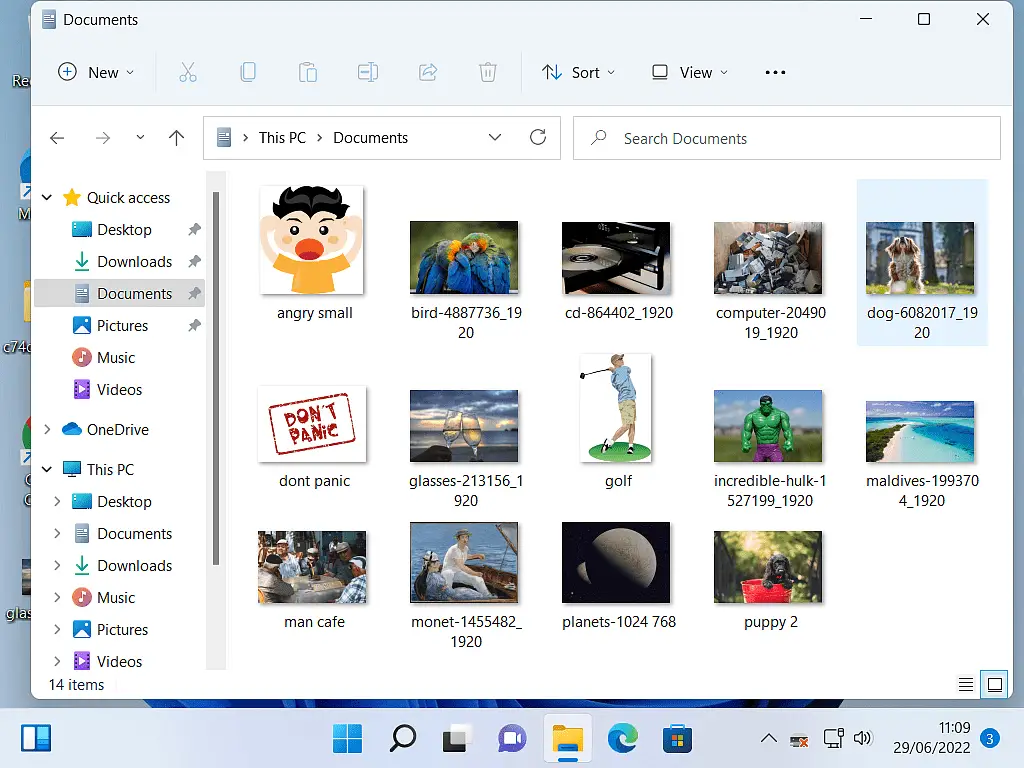
Nine times out of ten this is all it takes. Windows is showing you a list because that is the view the folder happens to be set to, and you can change it in two clicks.
- Open the folder with your pictures in it.
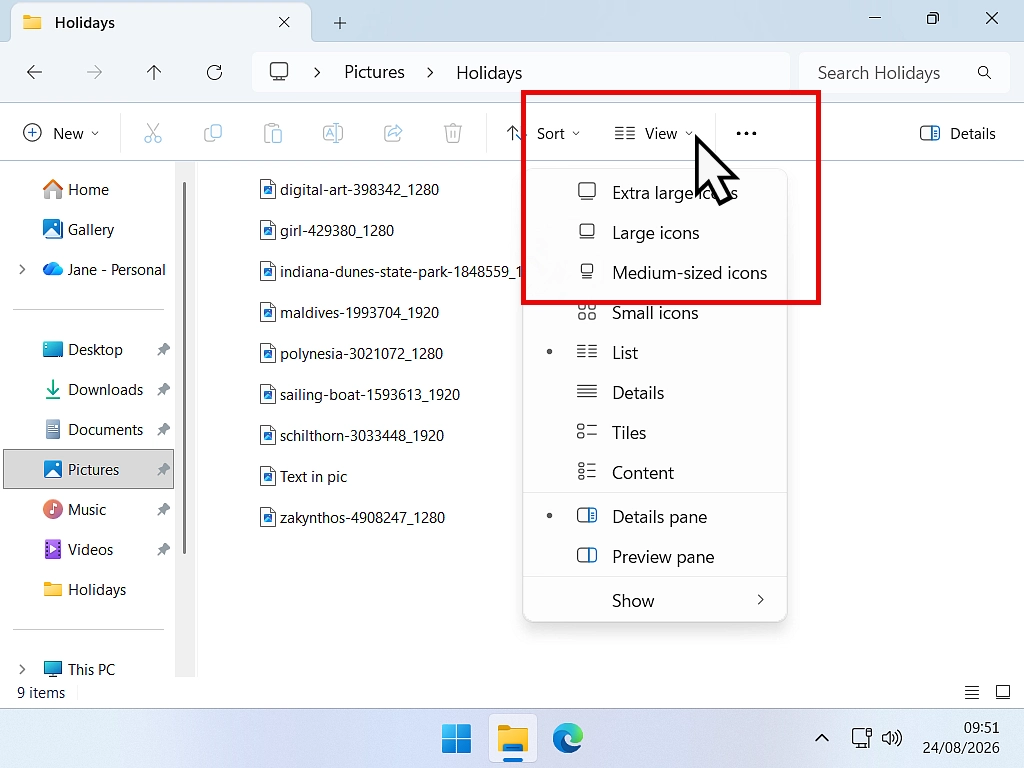
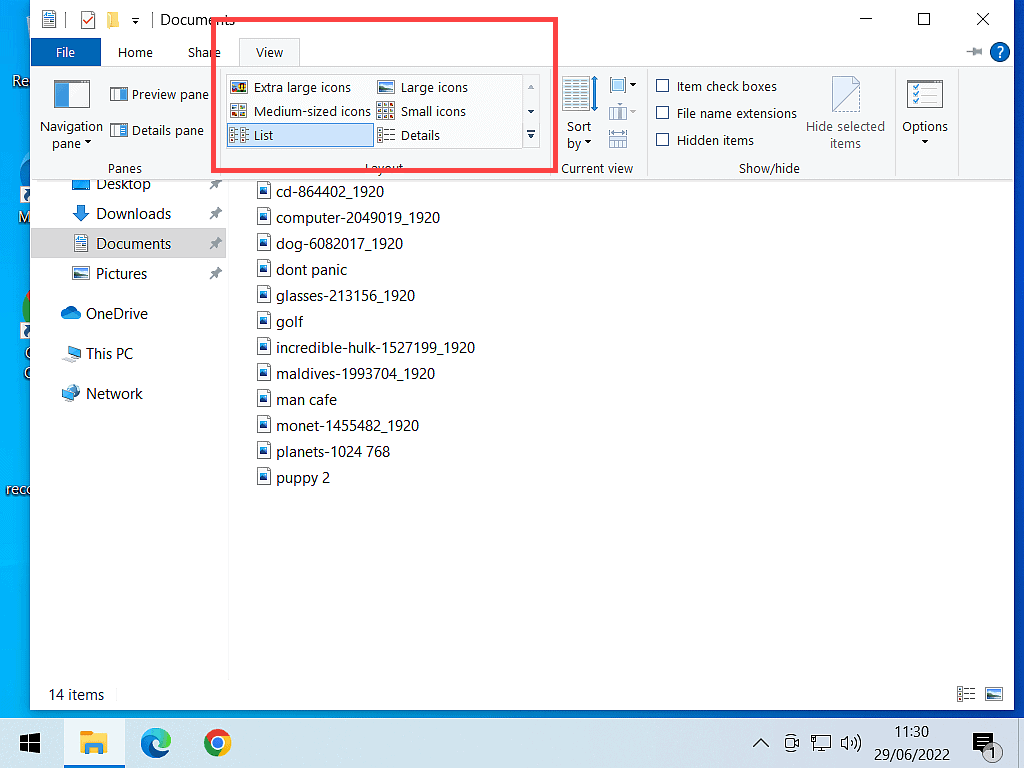
- Click View at the top of the window.
- Click Extra large icons, Large icons or Medium icons.
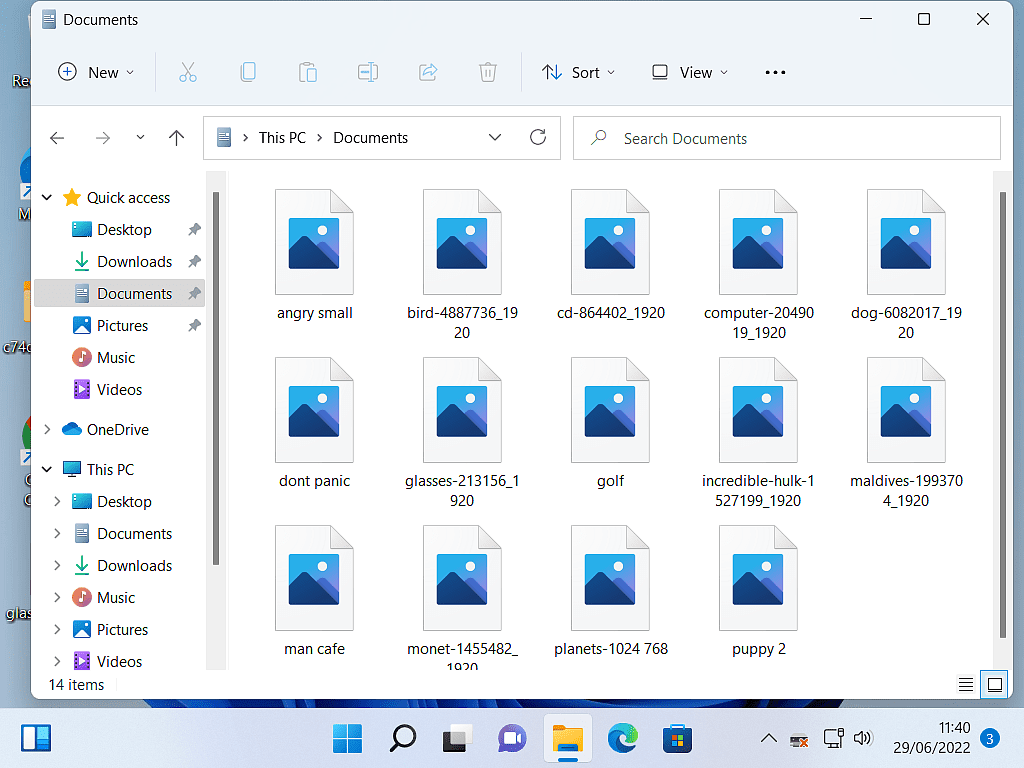
Your pictures should appear straight away. Large icons is usually the sweet spot, big enough to recognise a photo without having to scroll for an hour.
If that worked, you’re done. But if you’re still looking at blank icons rather than your pictures, carry on, because that is a different problem with a different fix.
Still Getting Icons? There Are Two Settings, Not One
This is where most guides let you down, and it is why so many people think they have done it wrong.
Windows has two separate switches that control whether you see pictures or icons. Either one being wrong is enough to stop your thumbnails appearing. If you’ve followed instructions elsewhere and it still hasn’t worked, it will almost certainly be the second one.
Check both. Neither is dangerous and both take about twenty seconds.
Setting One, in Folder Options
- Open any folder.
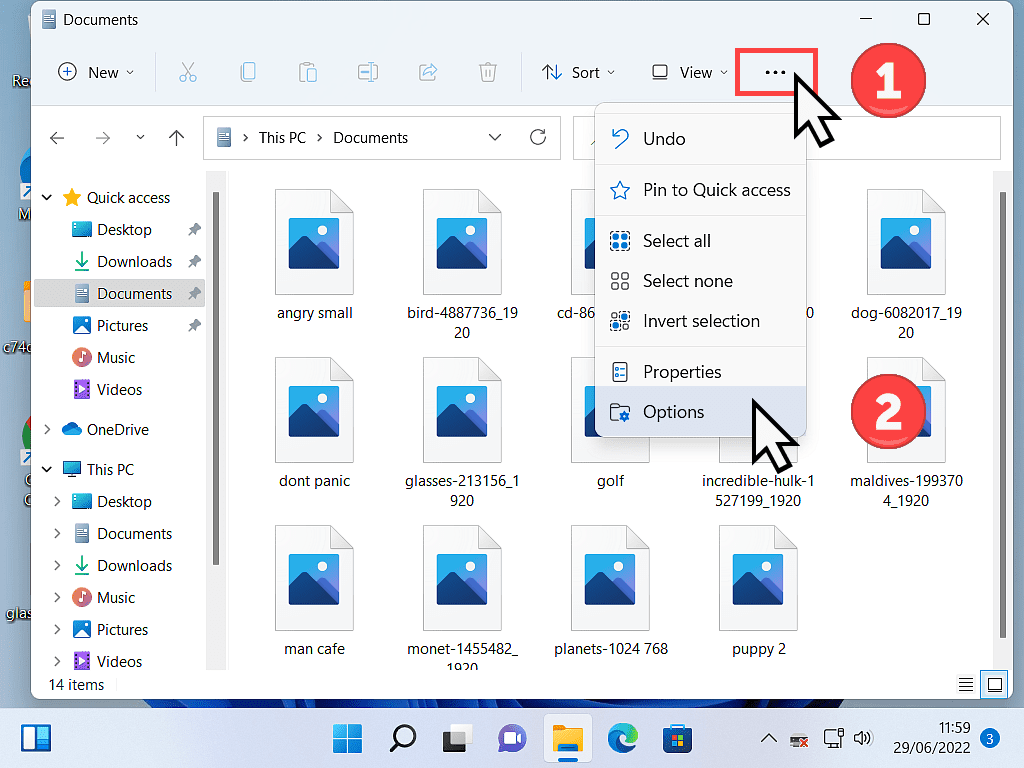
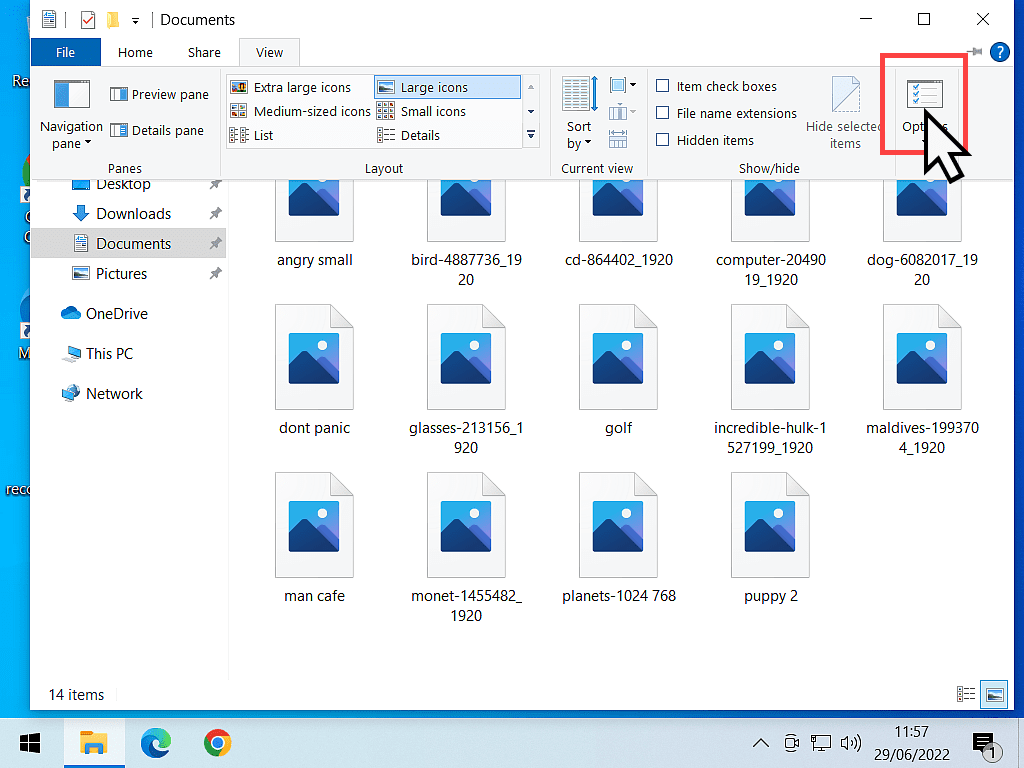
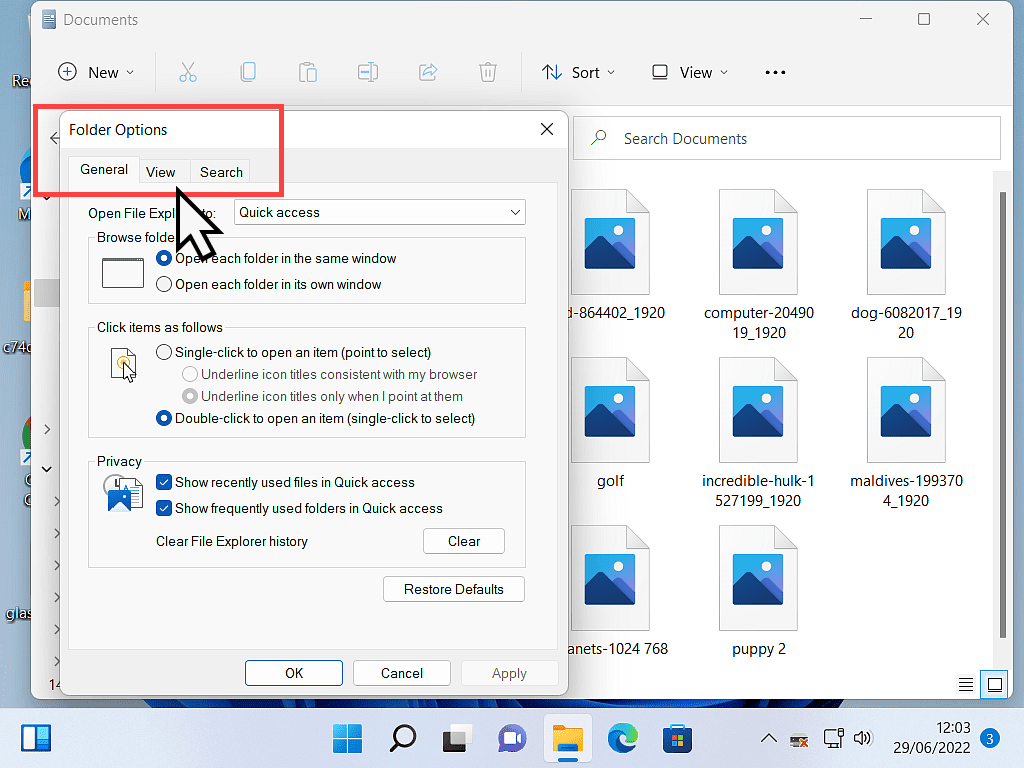
- In Windows 11, click the three dots at the top, then Options.
In Windows 10, click the View tab, then Options. - The Folder Options box will open, click the View tab.
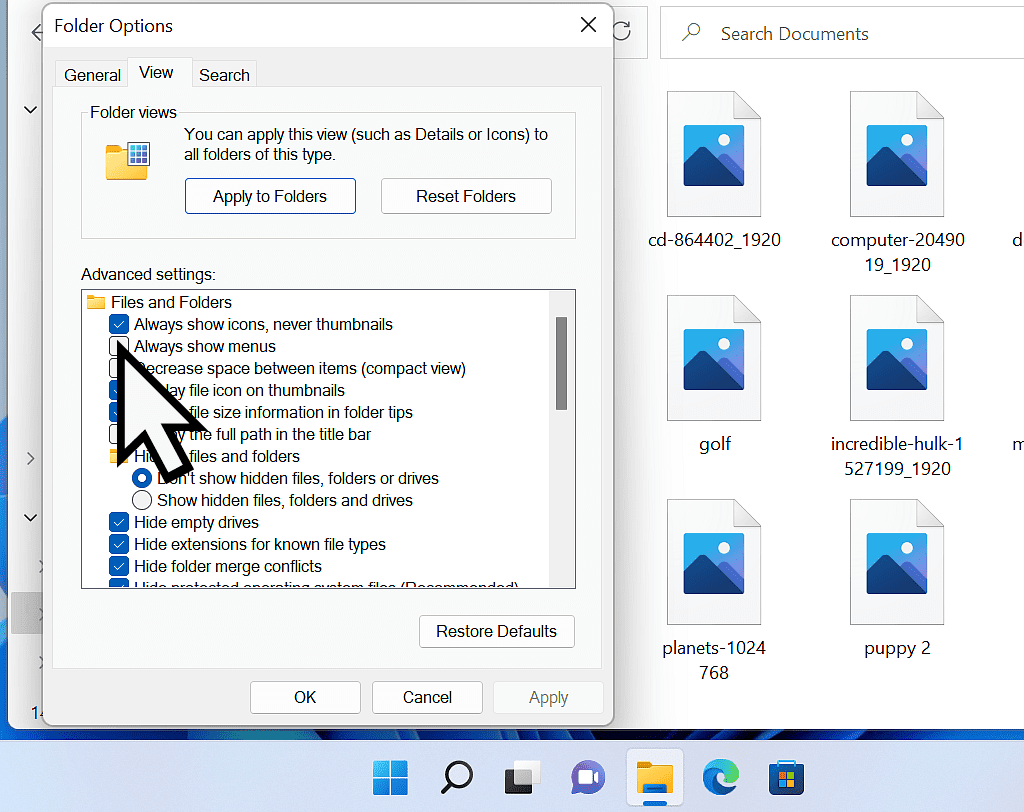
- Look at the very first line: Always show icons, never thumbnails. That’s the issue, icons not thumbnails.
- If it has a tick in it, click to take the tick out. You need to turn off this setting.
- Click OK.
Setting Two, Show Thumbnails Instead of Icons
This is the one hardly anybody mentions, and it’s buried somewhere you would never think to look.
- Hold the Windows key and press R.
- Type the command below and press Enter.
sysdm.cpl- Click the Advanced tab.
- Under Performance, click Settings.
- On the Visual Effects tab, scroll down the list and find Show thumbnails instead of icons.
- Make sure it has a tick in it. If it has not, click to tick it.
- Click OK.
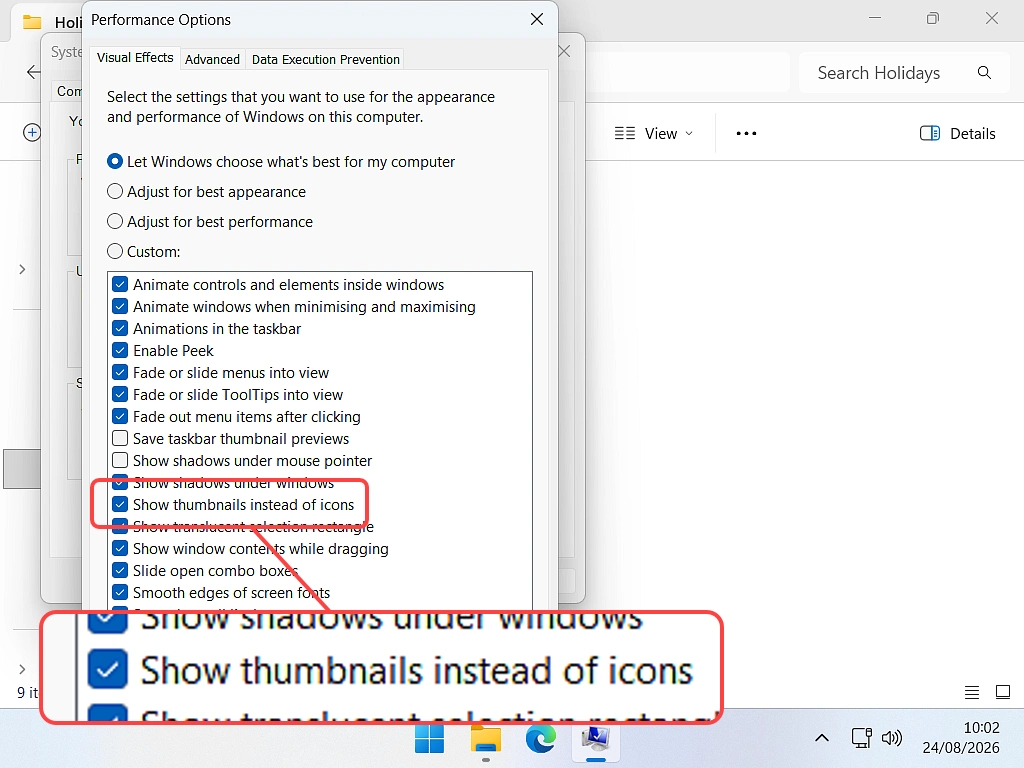
That is usually the missing piece. Note that it works the opposite way round to the first one: this one you want ticked, the Folder Options one you want unticked. Easy to get muddled, so check both carefully.
Why Would This Ever Be Turned Off?
Because it is on a list of visual effects Windows can switch off to make an older computer feel faster. If anyone has ever clicked Adjust for best performance on that screen, it turns off every effect in the list, this one included.
Plenty of people did that years ago on a slow machine and forgot all about it. Modern computers are quick enough that you will not notice the difference, so there is no reason to leave it off.
Both Settings Right and Still No Pictures?
Then it’s not a setting at all, it is the thumbnail cache.
Windows keeps a store of every thumbnail it has ever made, so it doesn’t have to rebuild them each time you open a folder. That store can get corrutped, and when it does you get blank icons, wrong pictures, or the same photo showing up for several different files.
Clearing it is completely safe. Windows just builds a fresh one, and none of your actual pictures are touched.
- Click Start and open Settings.
- Click System, then Storage.
- Click Temporary files.
- Untick everything except Thumbnails.
- Click Remove files.
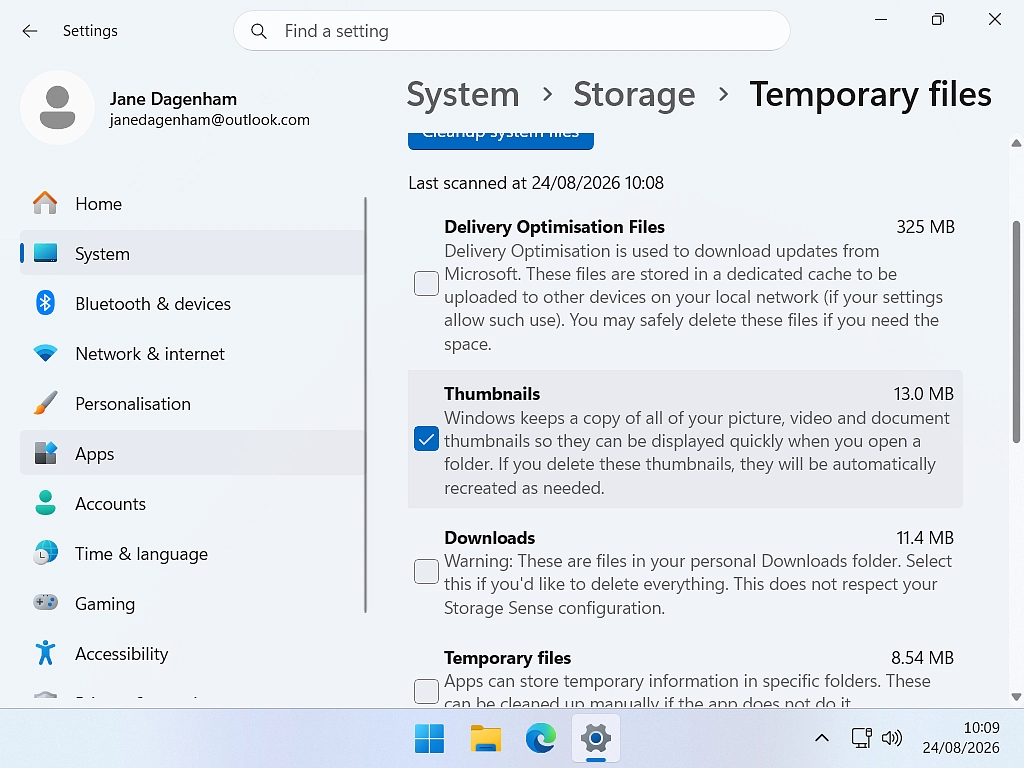
Open your pictures folder afterwards. It may take a few seconds longer than usual the first time while Windows makes the thumbnails again, and then everything should look right.
Untick Everything Else.
That Temporary files screen has a list of things Windows is offering to delete, and some of them are ticked already. One of them can be your Recycle Bin, and another can be the previous version of Windows.
You only want Thumbnails here. Take the ticks out of everything else before you click Remove files.
One last thing worth knowing. Thumbnails only work for file types Windows can actually read. Ordinary photos are fine, but some specialist formats, camera RAW files and design files for instance, will show a plain icon until you install the program that made them.
Seeing Thumbnails When You Open a File From a Program
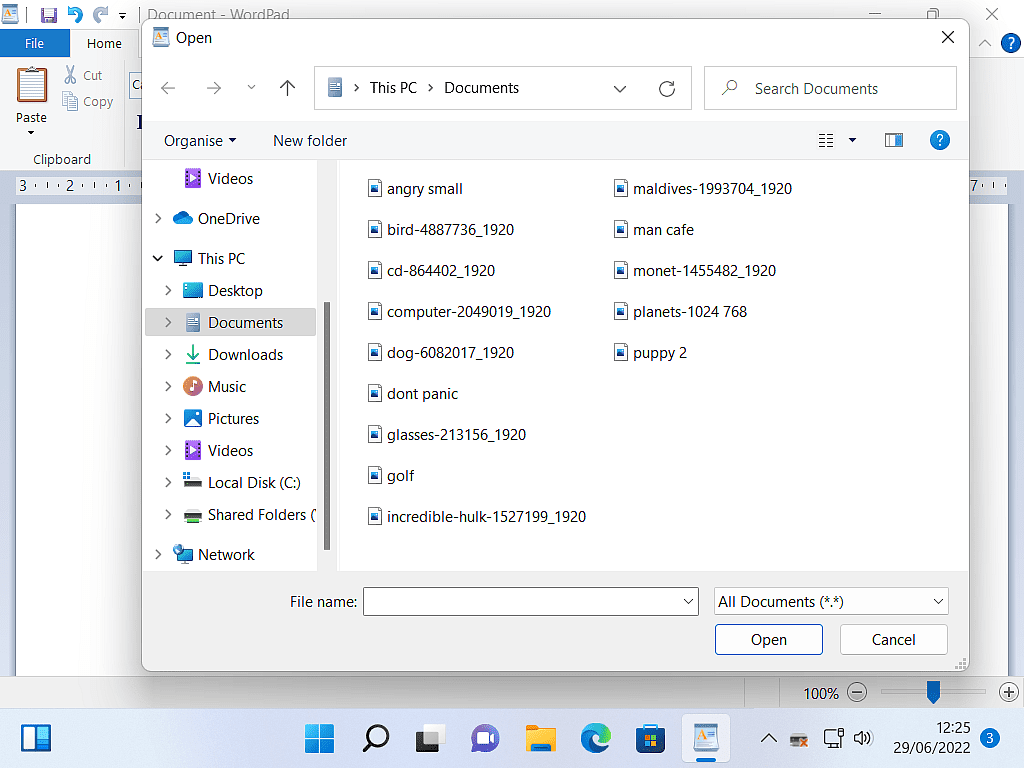
Slightly different situation but the same issue. You’re in a program, you click File and then Open to add a picture to something, and all you get is a list of names.
That little window has its own view setting, separate from File Explorer.
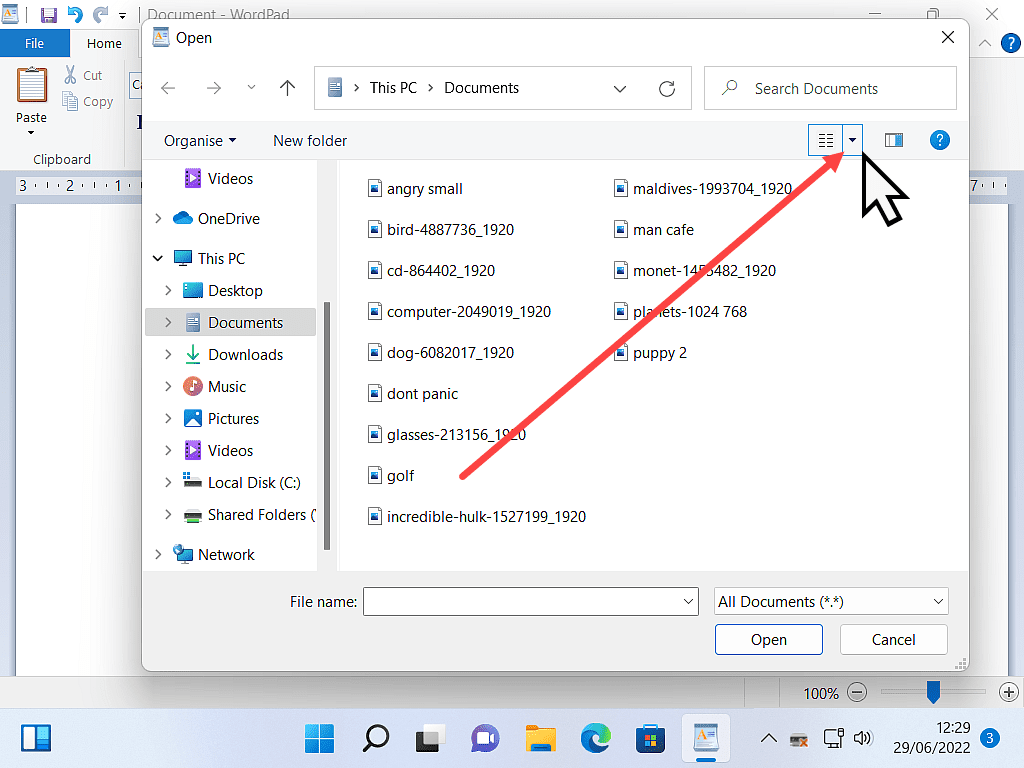
- Look for the Change your view button near the top right of the open box.
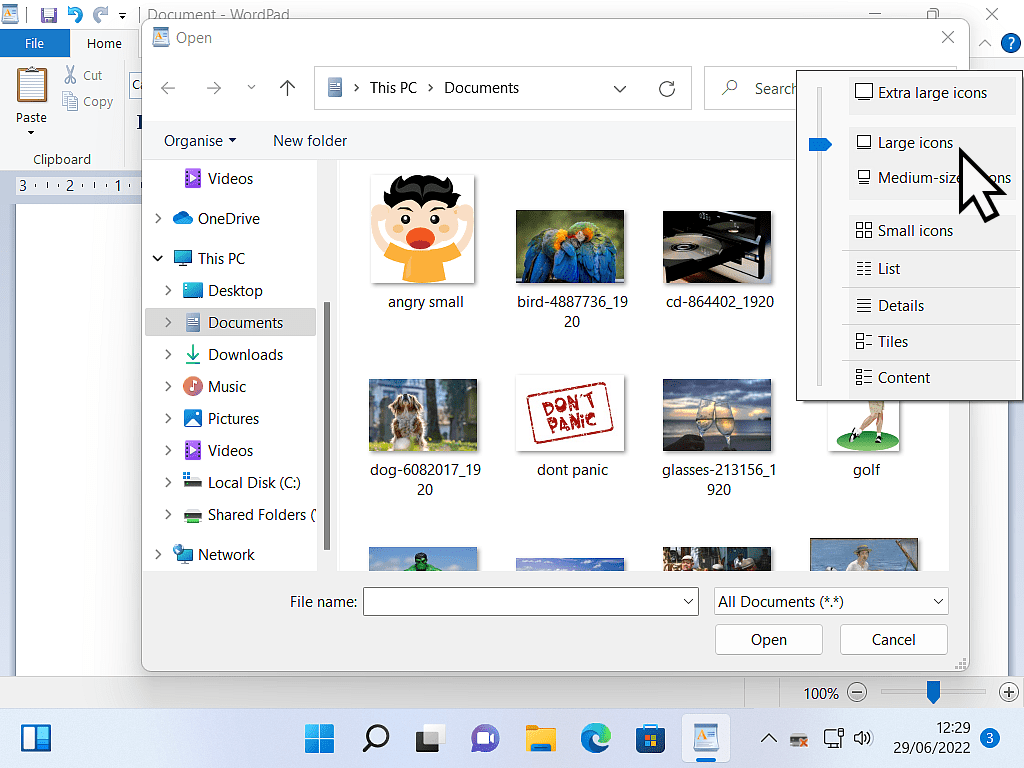
- Click the small arrow beside it.
- Choose Medium, Large or Extra large icons.
The button is tiny and easy to miss, but it is there. Windows remembers your choice, so you only have to do it once.
There is more on this in my guide to how to open files on a PC.
Thumbnails for File Types Windows Will Not Preview
Some files never show a picture no matter what you do because they’re in a file format that Windows doesn’t recognise. That is where a free Microsoft add-on comes in handy.
Microsoft PowerToys includes a set of File Explorer add-ons that teach Windows to preview file types it otherwise can’t, developer files and certain document formats among them. It’s free, it is genuinely made by Microsoft, and it is not something a laptop maker put there to earn a commission.
Worth knowing about if your folders are full of blank icons for anything other than ordinary photos.
What Microsoft PowerToys is and how to use it · How to install PowerToys, and is it safe
What Thumbnails Actually Are
Now that yours are working, a quick word on what they are, because it explains why Windows behaves the way it does.
A thumbnail is a very small copy of a picture. Windows makes one for each of your photos so it can show you a folder full of them at once. Shown at full size you would see one picture and spend your life scrolling.
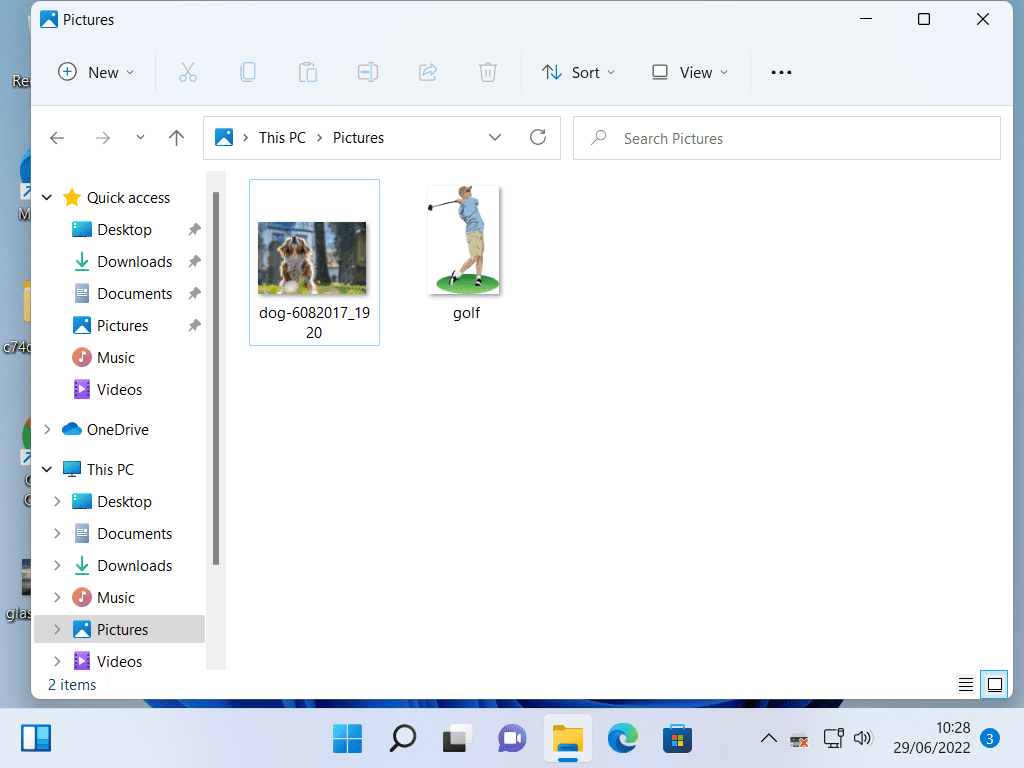
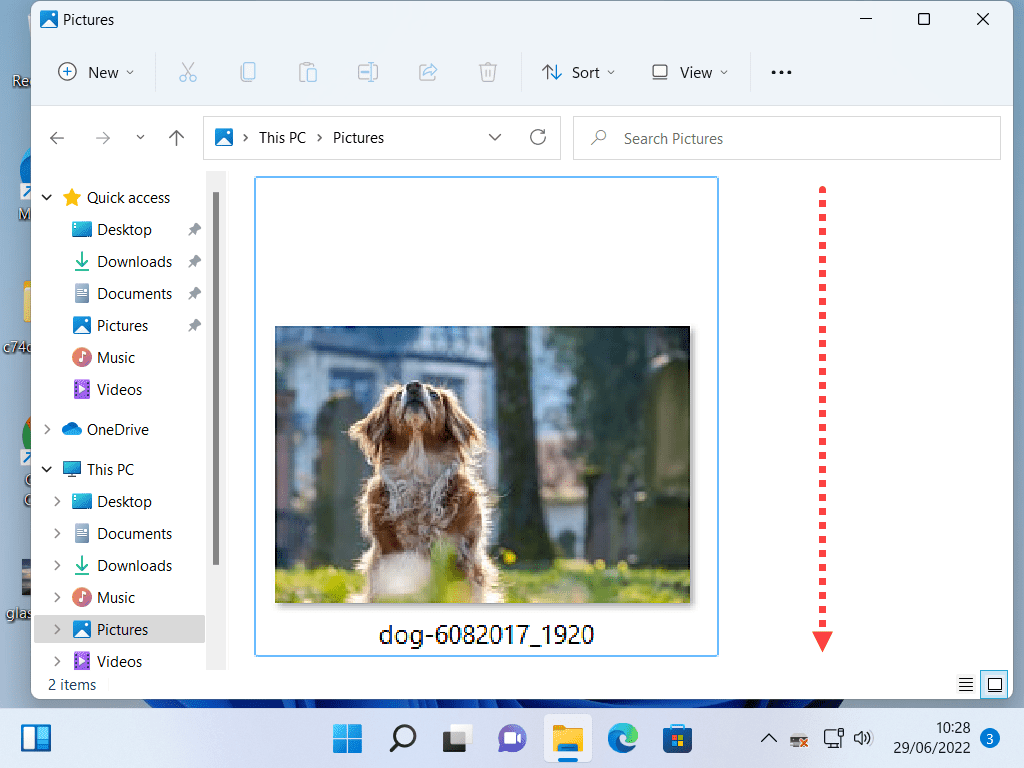
So Why Does Windows Show File Names Instead?
Two reasons, and both made a lot more sense twenty years ago than they do now.
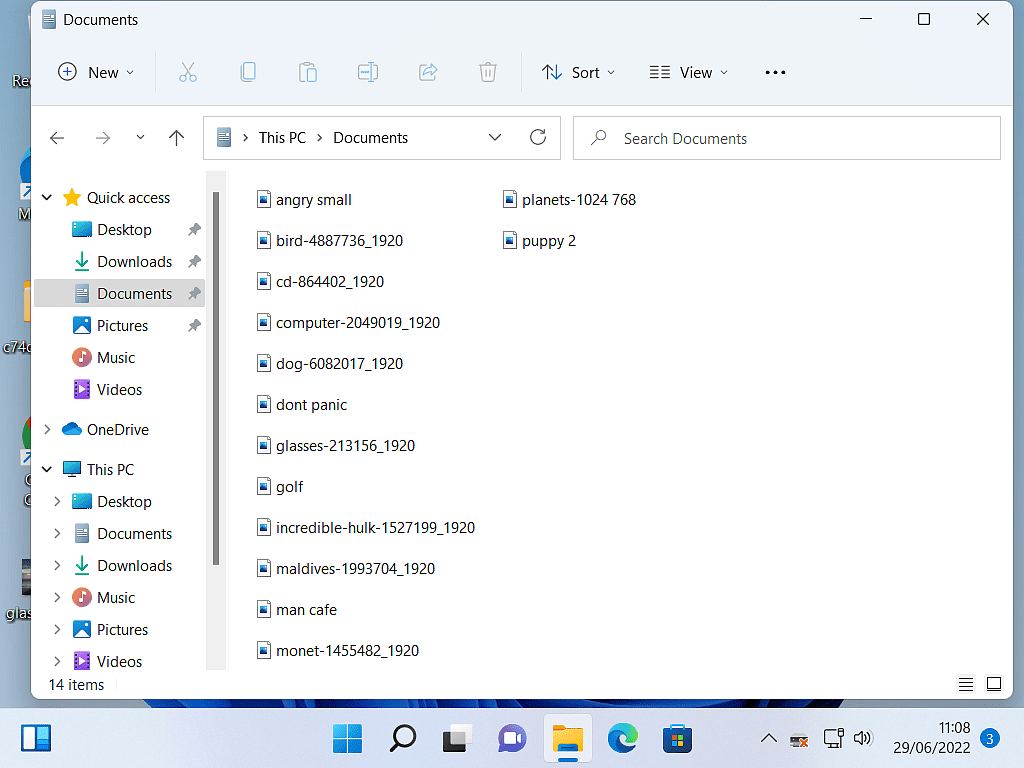
Speed. Reading a list of names off the drive is quicker than making a picture for every file. On a modern computer with a solid state drive the difference is barely noticeable, but the behaviour stuck.
Space. Names take up far less room on screen, so you see more at once. Fine for documents. Not much help when you are hunting for one photo out of four hundred.
Frequently Asked Questions
Q: How do I show thumbnails instead of icons?
A: Two settings control it. In Folder Options, on the View tab, take the tick out of “Always show icons, never thumbnails”. Then press the Windows key and R, type sysdm.cpl, go to Advanced, then Performance Settings, then Visual Effects, and make sure “Show thumbnails instead of icons” is ticked. One wants unticking and the other wants ticking.
Q: Why are my pictures showing as blank icons?
A: Either one of those two settings is wrong, or the thumbnail cache has become muddled. Check both settings first, then clear the cache from Settings, System, Storage, Temporary files.
Q: What is a thumbnail on a computer?
A: A very small copy of a picture that Windows makes so it can show you a whole folder of photos at once instead of one at a time.
Q: Is it safe to clear the thumbnail cache?
A: Completely. It only deletes the small copies Windows made for itself, never your actual pictures. Windows builds a new set automatically, so the first folder you open afterwards may take a couple of seconds longer.
Q: Why do some files still show an icon?
A: Windows can only make a thumbnail for file types it can read. Ordinary photos are fine. Camera RAW files, design files and some specialist formats need the program that made them installed before a preview will appear.
Q: Do I have to do this for every folder?
A: No. Both settings apply everywhere on the computer. The icon size you pick with the View menu is remembered per folder, so you may want to set that in a few places.
Q: Will showing thumbnails slow my computer down?
A: Not noticeably on anything made in the last decade. It was a real consideration on older machines with spinning hard drives, which is why the setting exists at all.
Summary
If your pictures are showing as a list of names, click View and pick Large icons. That is the whole fix for most people.
If you are getting blank icons instead, there are two settings to check and you need both. Take the tick out of Always show icons, never thumbnails in Folder Options, and put a tick in Show thumbnails instead of icons in Performance Options. Nearly every guide only mentions the first one, which is why people give up thinking they have done something wrong.
Both correct and still nothing? Clear the thumbnail cache. It is perfectly safe and it fixes the odd cases where the wrong picture shows up, or none at all.