
OneDrive is a cloud syncing tool built into both Windows 10 and Windows 11. It’s useful, but its two way sync is a double edged sword. Delete a file in one place and it disappears from everywhere. Delete it from the cloud, and it goes from your computer too.
That catches a lot of people out, and it’s why so many searches on this subject are worried rather than curious.
In this guide I’ll show you how to delete files from OneDrive without losing any of your data. How to take files out of OneDrive but keep them on your PC, how to do the opposite and clear space on your PC while keeping the cloud copies, what to do when OneDrive asks to delete your files, and how to get anything back that has already gone.
Table of contents
- If I Delete Files From OneDrive, Will They Be Deleted From My Computer?
- How to Delete Files in OneDrive
- How to Delete Files from OneDrive but Keep Them on Your PC
- How to Delete Files From Your PC but Keep Them in OneDrive
- Deleting Files from OneDrive Online
- Why Is OneDrive Asking to Delete My Files?
- Troubleshooting
- Frequently Asked Questions
- Summary
If I Delete Files From OneDrive, Will They Be Deleted From My Computer?
Yes. If a folder is being synced by OneDrive, deleting a file from the cloud deletes it from your computer as well. And it works the other way round too, delete it on your PC and it goes from the cloud.
That’s not a fault, it’s the whole point of a sync tool. The two copies are meant to match, so OneDrive keeps them matching. The trouble is that most people are thinking of it as a backup, where deleting one copy would leave the other one safe. OneDrive doesn’t work like that.
So before you delete anything, decide which of these you actually want.
- Gone from everywhere. You genuinely don’t want the file any more. Delete it in the normal way, either on your PC or online.
- Out of OneDrive, still on your PC. Much more common. Don’t delete it, move it to a folder OneDrive isn’t watching.
- Off your PC, still in OneDrive. You want your hard drive space back but you want to keep the file. That’s a different job again, and there’s a section on it further down.
Get that clear in your head first and the rest of this guide is easy. And if something has already vanished, don’t panic, there’s a good chance it’s recoverable. Skip to the recycle bin section.
How to Delete Files in OneDrive
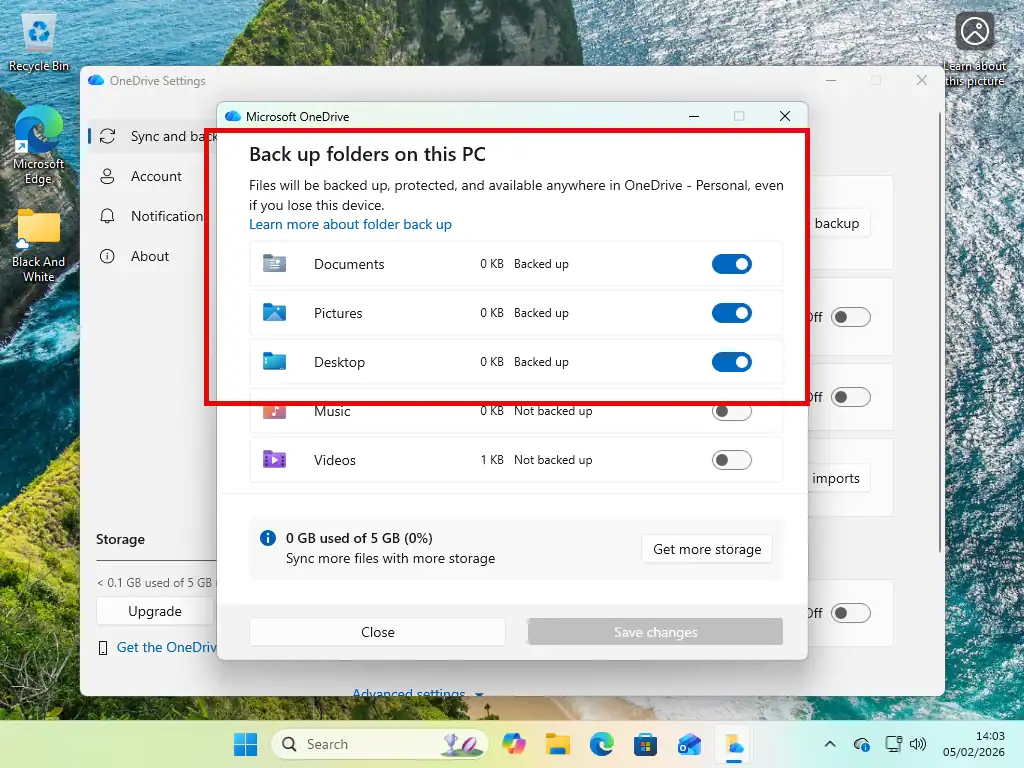
The files in your OneDrive cloud are linked to the files on your computer. By default OneDrive syncs everything in your Desktop, Documents and Pictures folders up to the cloud.
So deleting a file or folder from any one of those three folders will automatically delete it from OneDrive as well. You don’t have to do anything special, it just happens.
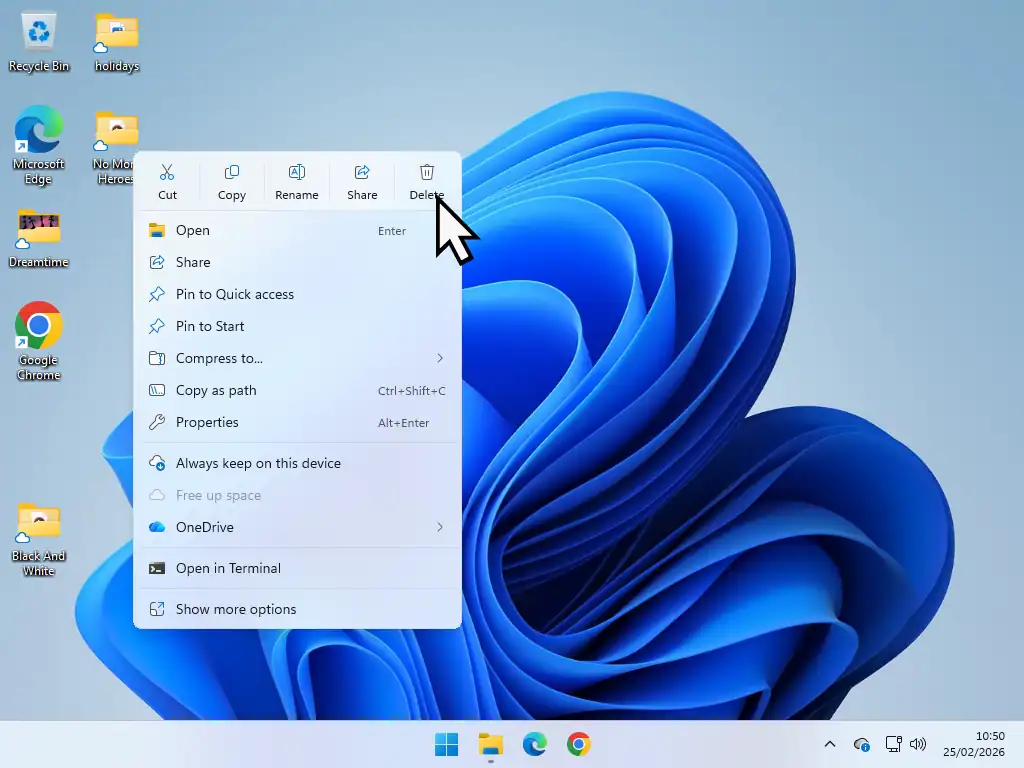
Delete Files From Everywhere
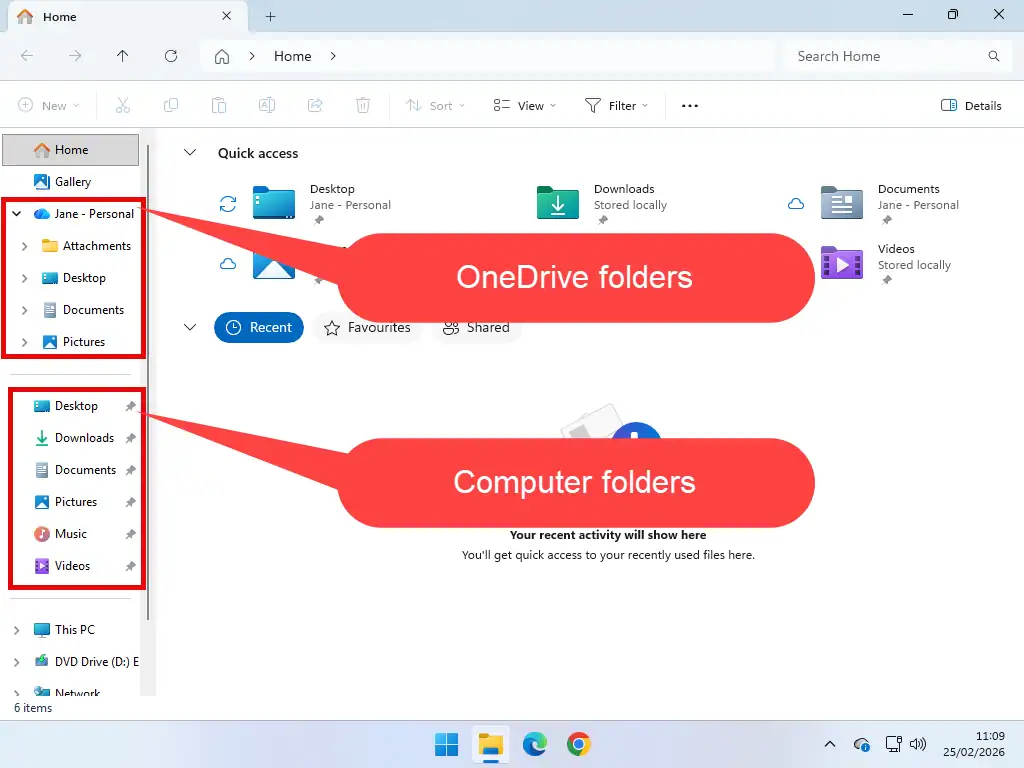
Where OneDrive gets confusing is when you open File Explorer. It looks as though your OneDrive folders are separate from your computer’s folders. They’re not. They’re the same folders.
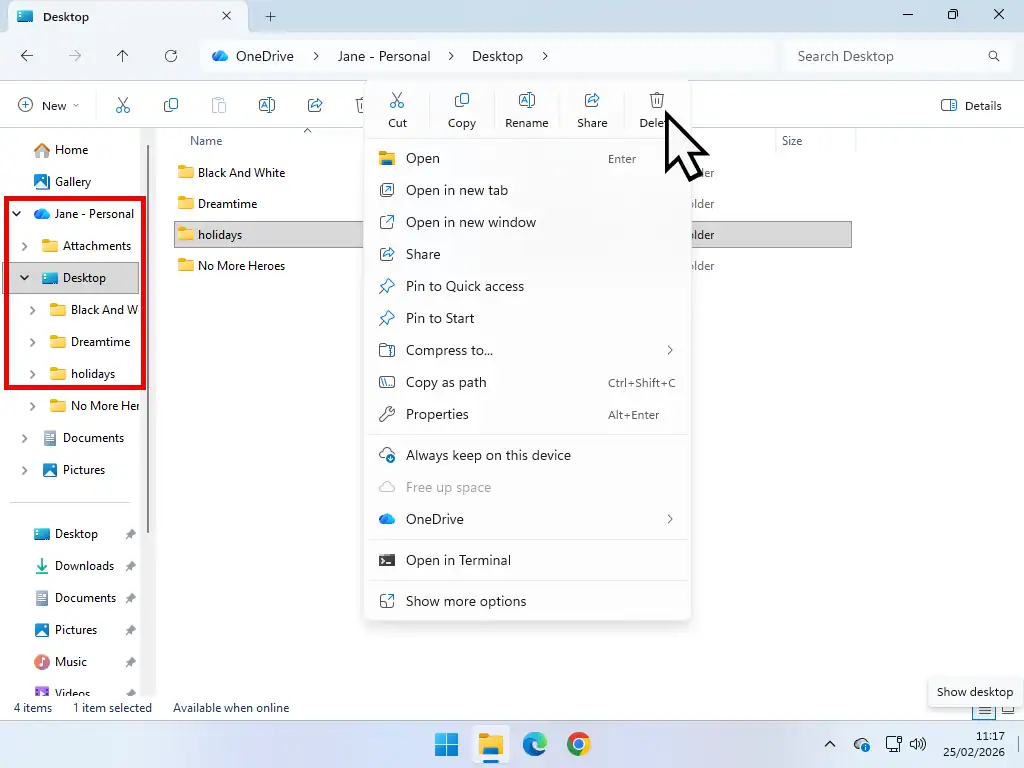
Your Documents folder and the Documents folder inside OneDrive are one folder shown in two places. Delete something from one and it’s gone from both, because there was only ever one of it.
This is how most people end up losing files. They think they’re tidying up the cloud copy and leaving the original alone. There is no original, there’s just the file.
How to Delete Files from OneDrive but Keep Them on Your PC
This is what most people actually want, and it’s the reason the straightforward Delete key causes so much grief.
There are plenty of reasons to want files out of OneDrive. The commonest is simply that it’s full, and 5 GB doesn’t go far, see what to do when OneDrive is full.
The trick is not to delete at all. Move the files instead, into a folder that OneDrive isn’t syncing. As far as OneDrive is concerned they’ve been removed, and as far as you’re concerned they’re still right there on your computer.
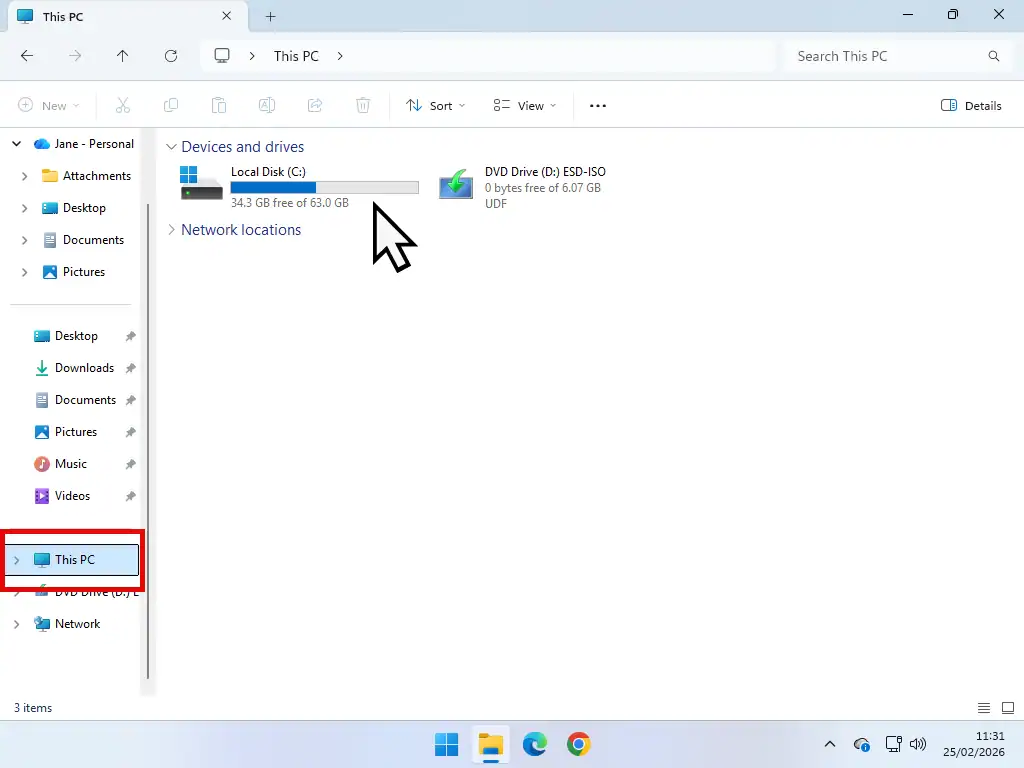
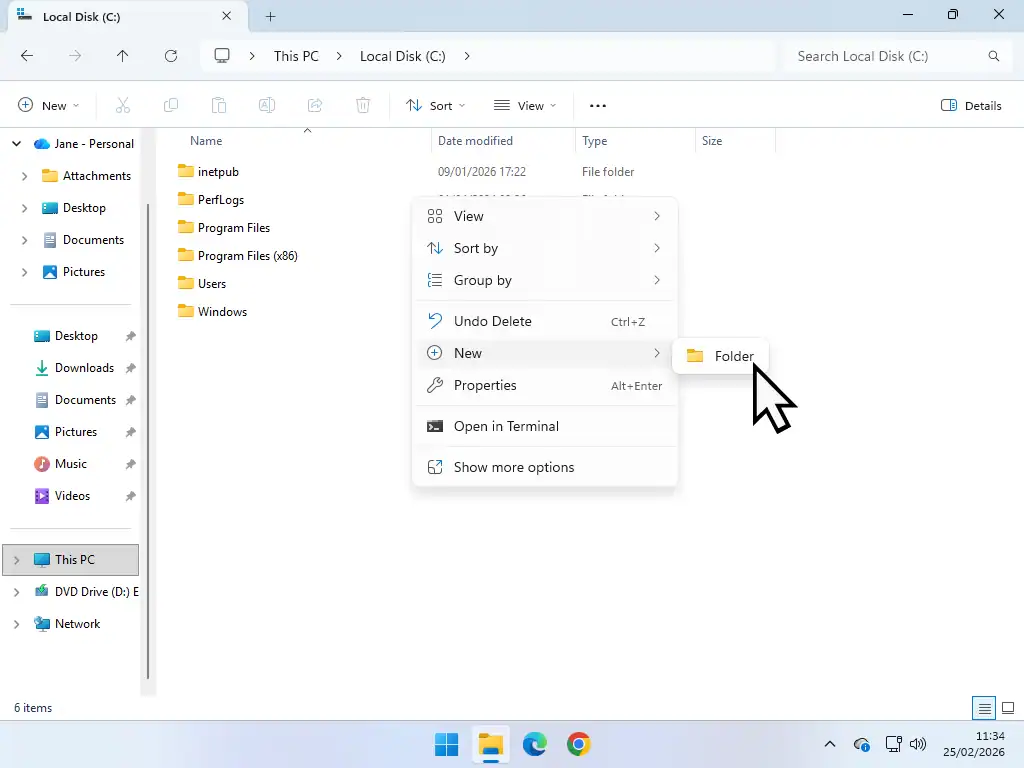
Assuming OneDrive is syncing your Desktop, Documents and Pictures folders, create a new folder on your C drive to keep everything you don’t want in the cloud.
- Open File Explorer and click This PC in the left hand panel. Double left click your system drive, usually the C drive.
- Create a new folder by pressing Ctrl and Shift and N together. Give it a name you’ll recognise, something like My Documents Offline or New Pictures.
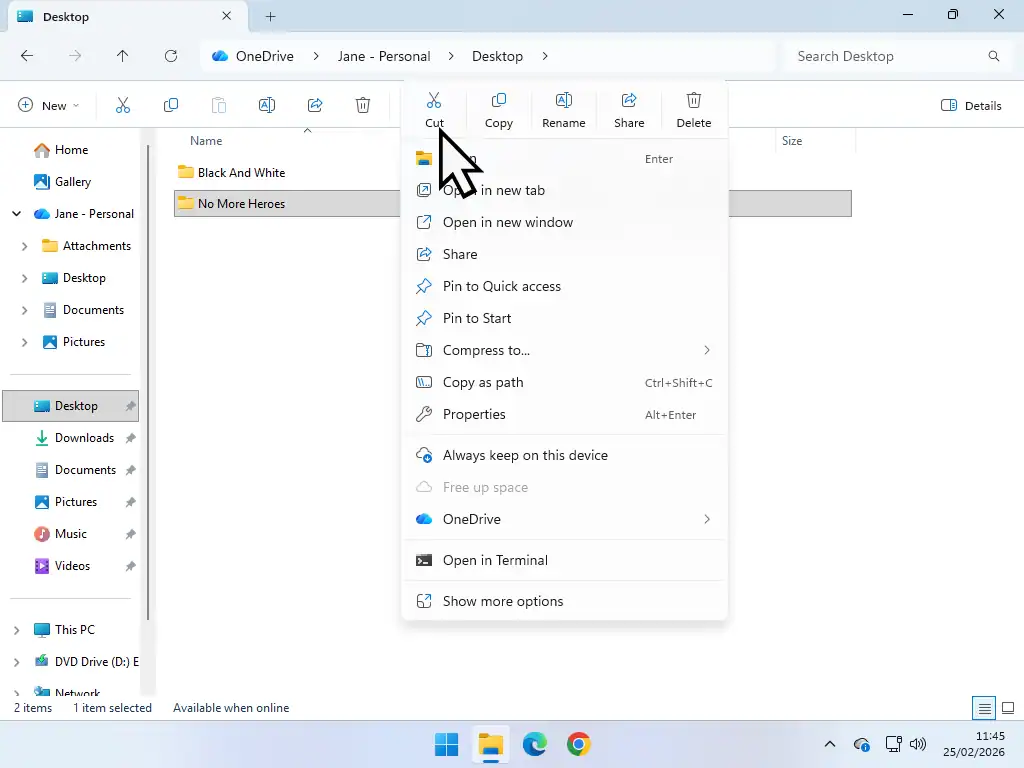
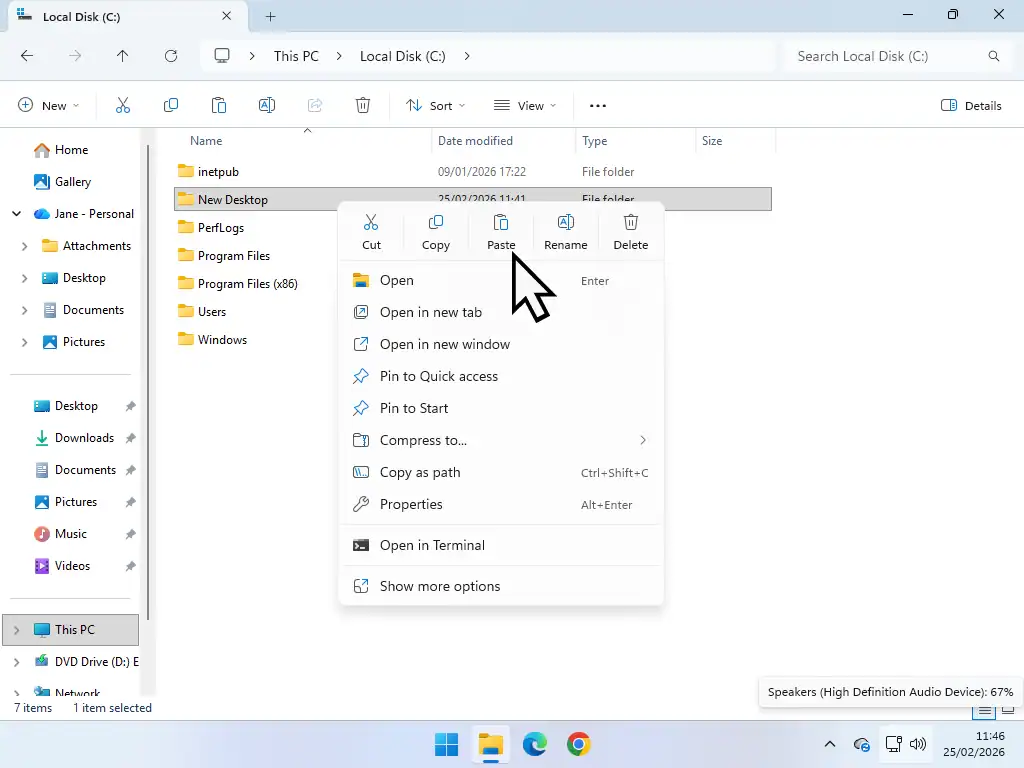
- Cut and paste the files and folders you want out of OneDrive into that new folder.
- Check the files have arrived in the new folder before you go any further.
Because the new folder isn’t being synced, anything you move into it disappears from OneDrive while staying on your PC. That’s exactly the result you were after.
Cut, Not Copy
Use Cut and paste, not Copy and paste. Copy leaves the original sitting in OneDrive, so you end up with two of everything and no more free space than you started with.
What you’re doing here is moving your files out of the synced folders and into one that isn’t watched. That effectively deletes them from OneDrive while keeping them on your computer.
Create a Shortcut
Your new folder is buried on the C drive, which makes it a nuisance to get to. A shortcut on the Desktop fixes that.
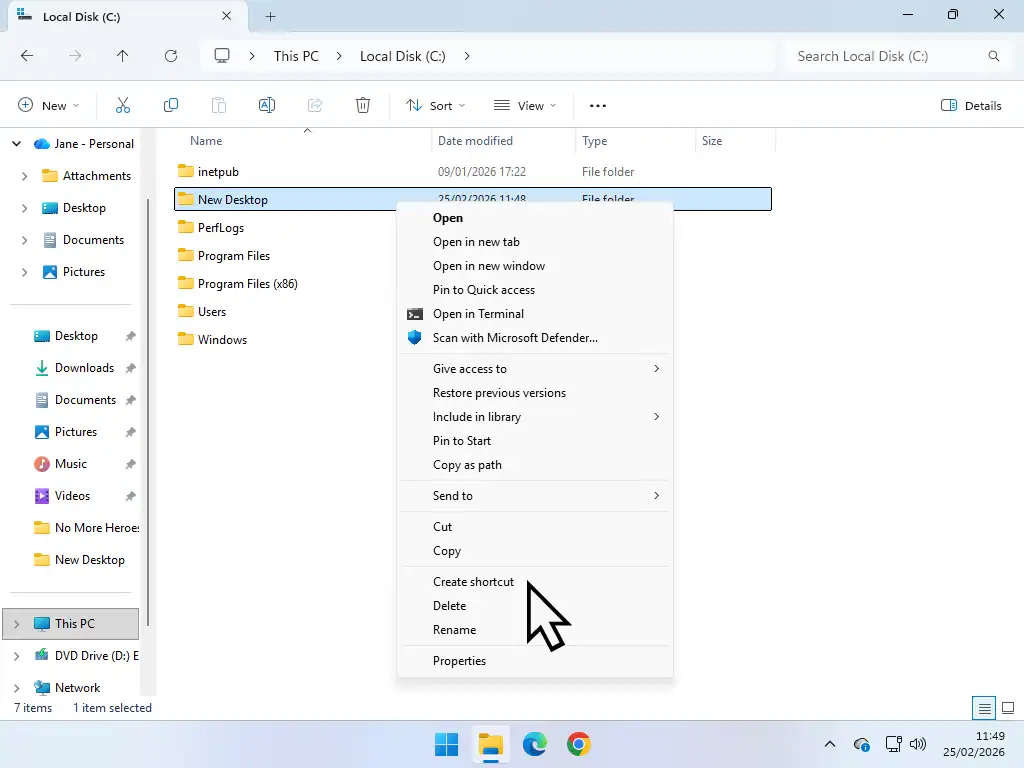
- Right click the new folder, then left click Create shortcut. In Windows 11 you may need to click Show more options first.
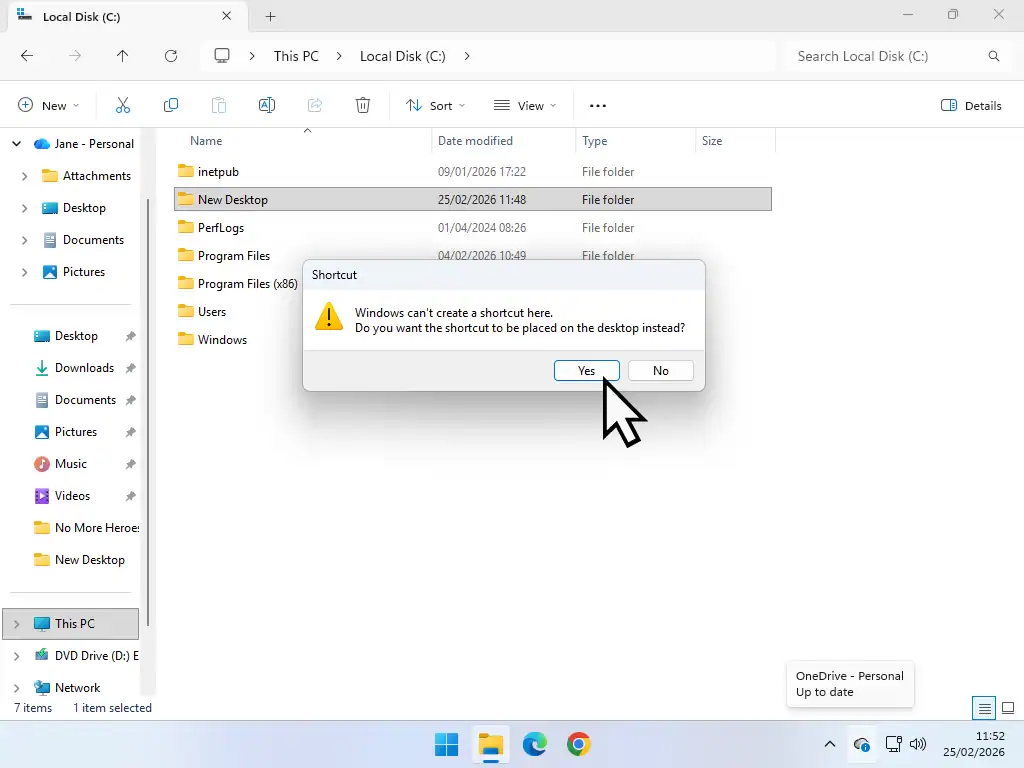
- Windows will say it can’t create a shortcut here and offer to put it on the Desktop instead. Click Yes.
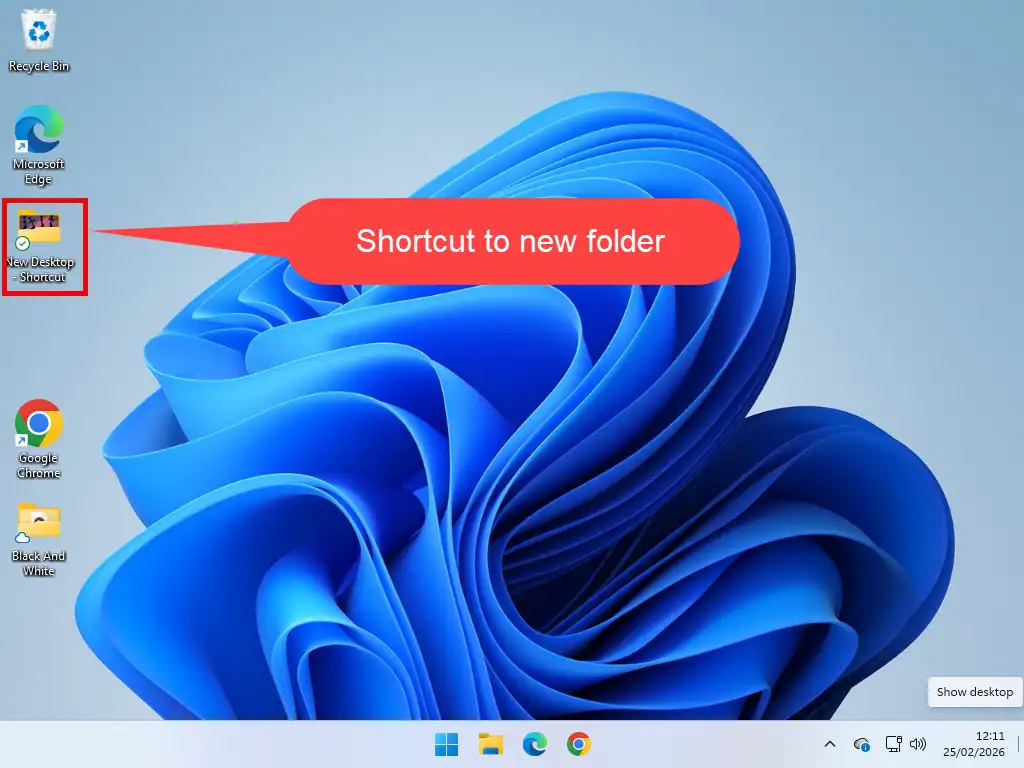
- Go back to your Desktop and you’ll find the shortcut waiting. You can also pin it to your Start menu or the taskbar.
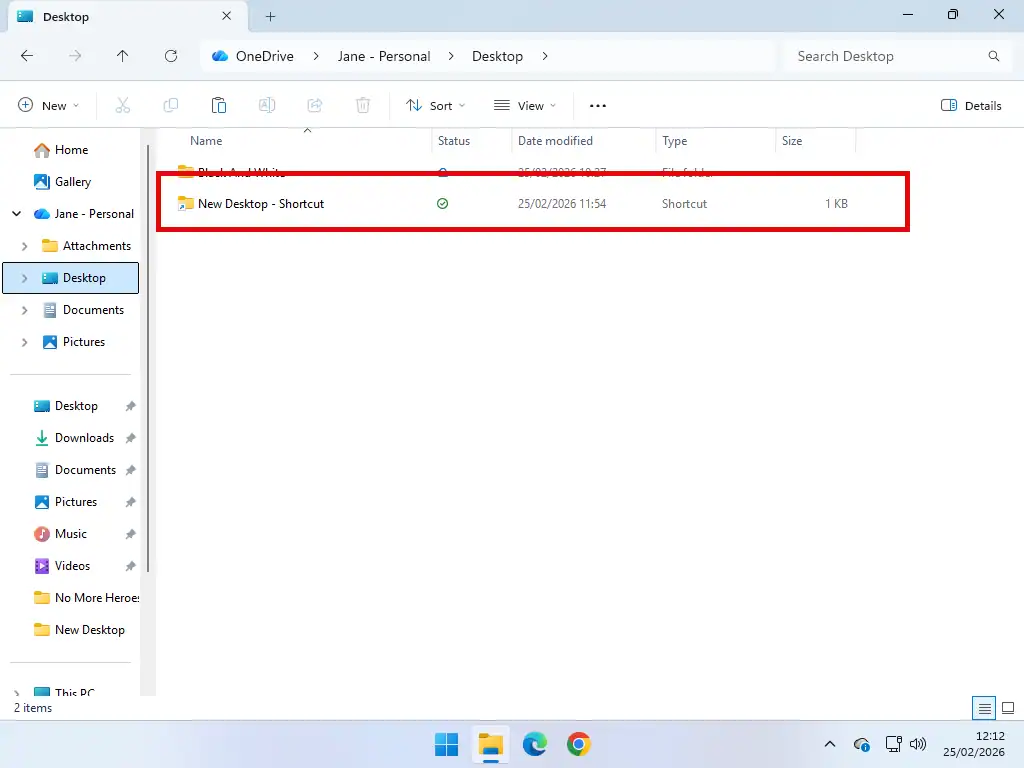
One thing that looks alarming and isn’t. Open File Explorer and you’ll see the shortcut has appeared inside OneDrive, because your Desktop is a synced folder. It’s only the shortcut that syncs, not the folder or anything in it. Everything you save into that folder stays off the cloud.
Pin to Quick Access in File Explorer
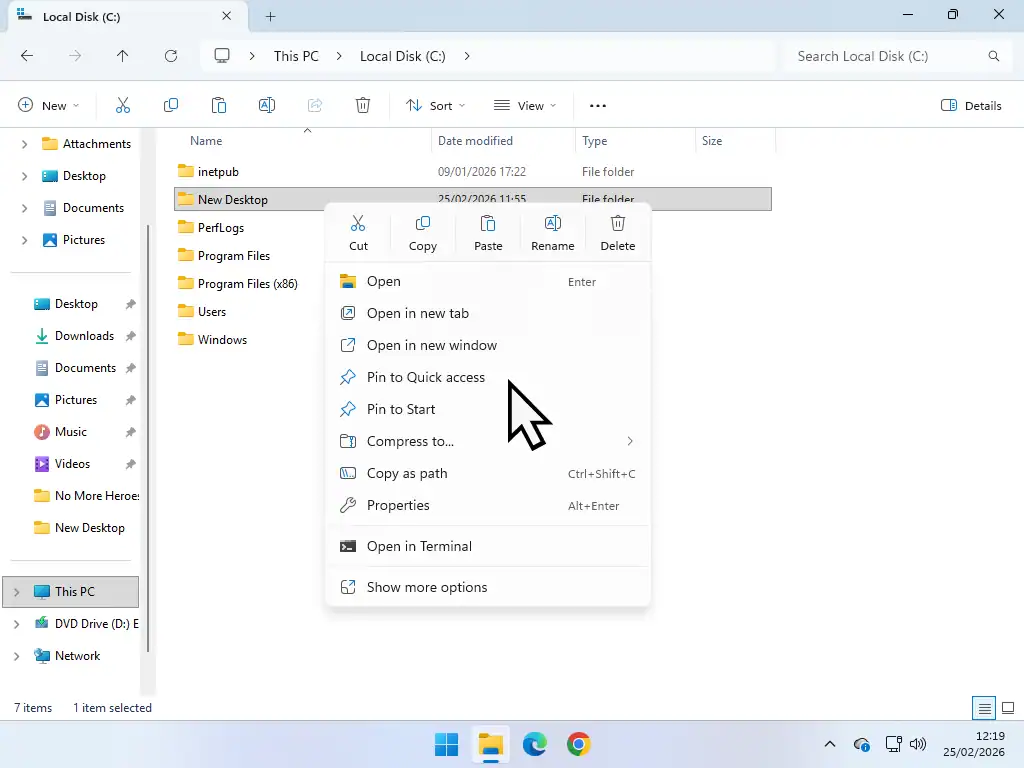
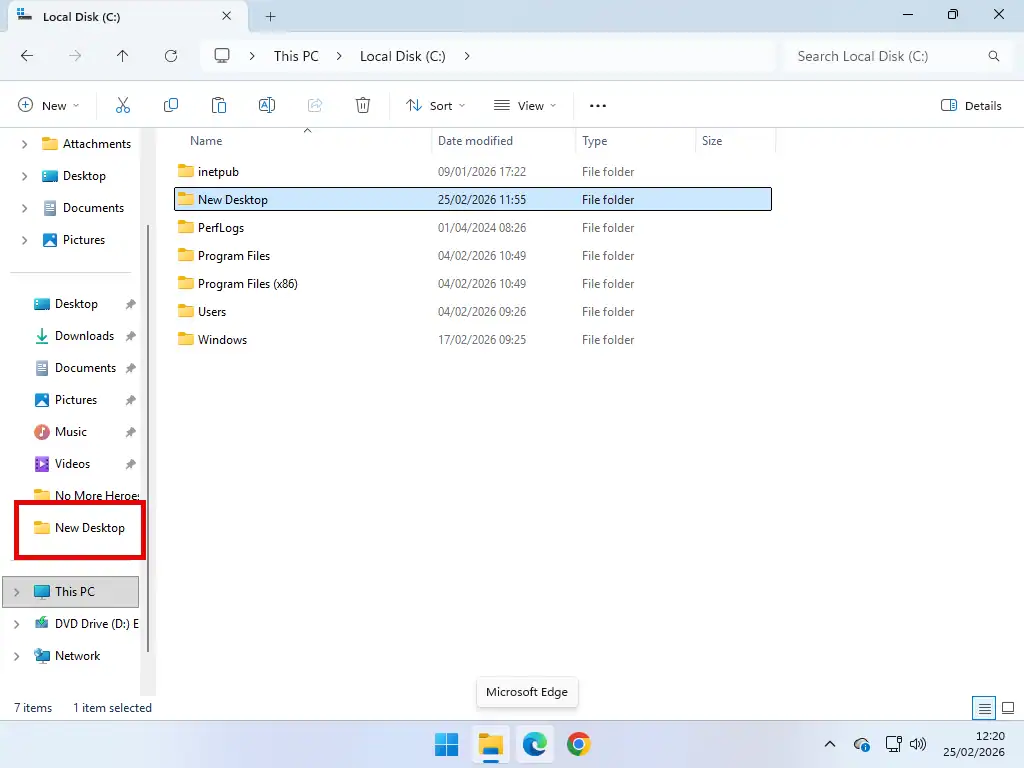
Worth doing as well, because this is where you’ll be opening it from most of the time. Right click the folder and left click Pin to Quick access.
Now it sits at the top of File Explorer alongside your other folders, and you have somewhere to save things that OneDrive will never touch.
How to Delete Files From Your PC but Keep Them in OneDrive
This is the same problem pointing the other way, and it comes up just as often. Your hard drive is filling up, but you don’t want to lose the files. You want them off the computer and safely in the cloud.
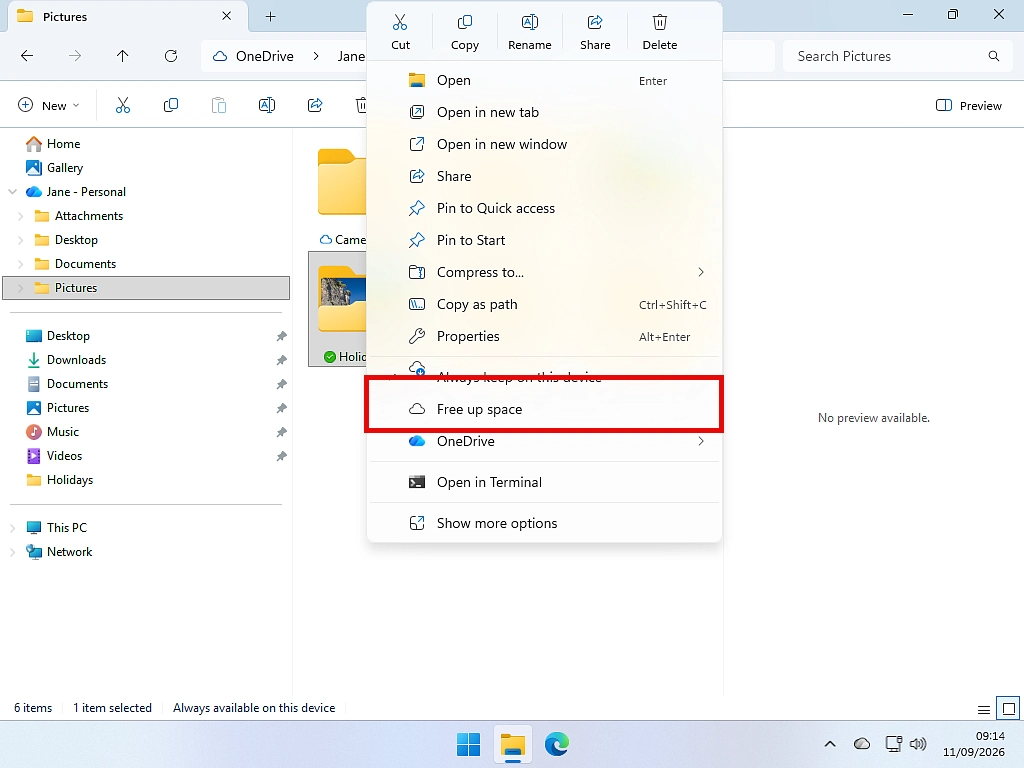
Don’t delete anything for this one. Windows has a proper tool for it called Free up space.
- Open File Explorer and go to the file or folder inside OneDrive.
- Right click it and left click Free up space. In Windows 11 you may need Show more options first.
- The symbol beside it changes to a blue cloud. The file is still listed, still openable, but it’s no longer taking up room on your hard drive.
Double click a blue cloud file and OneDrive downloads it again on the spot, so long as you’re online. When you’ve finished with it, free up the space again.
Now, the important warning, because the name of this option misleads a lot of people. Free up space does nothing whatsoever for a full OneDrive. It clears your hard drive, not your cloud storage. If you’re over your 5 GB limit, clicking it a hundred times won’t give you a single byte back online. That job is the section above, moving files out.
Deleting Files from OneDrive Online
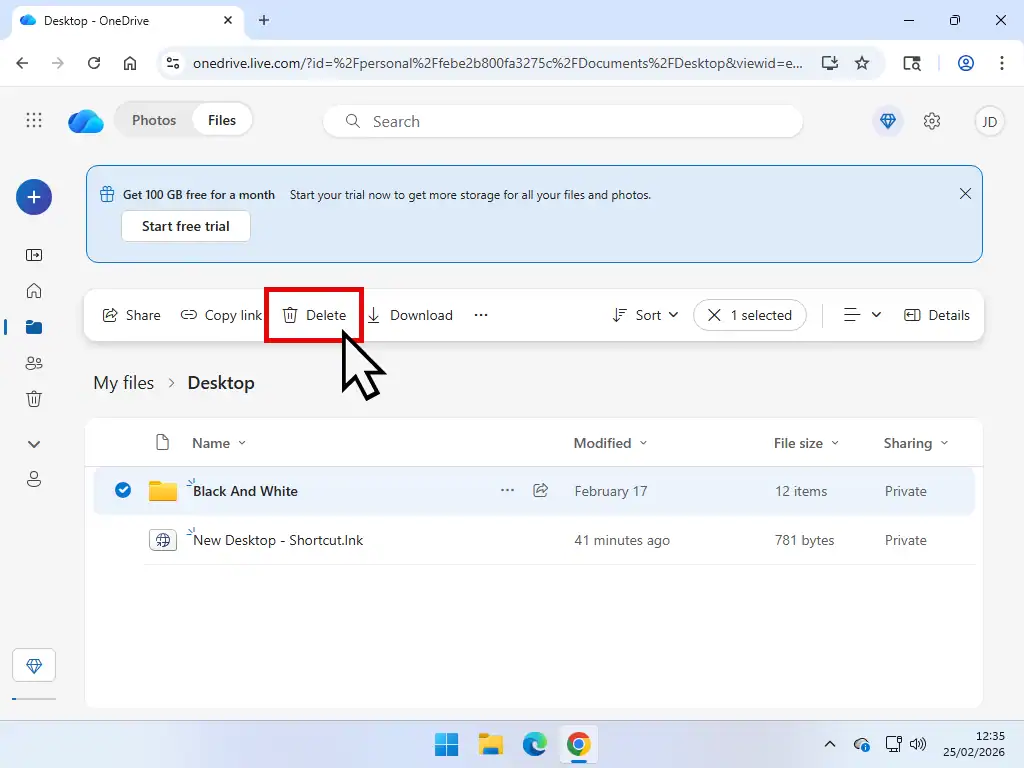
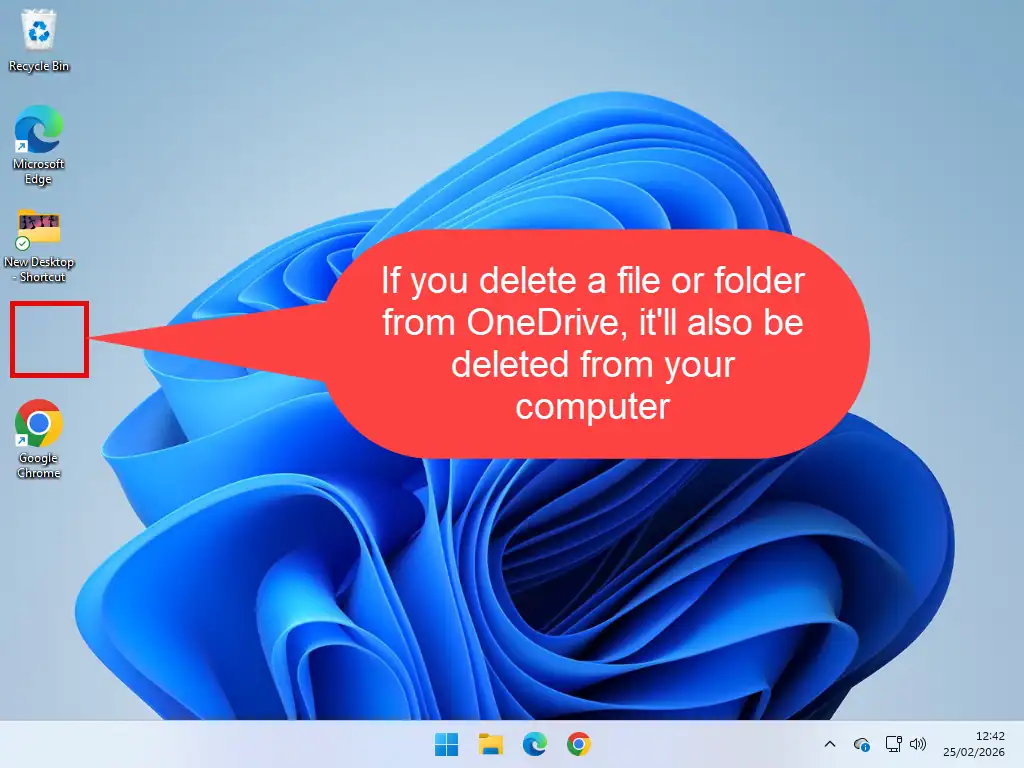
You can sign in to OneDrive in a web browser and delete files from there. Do be careful though, because the files will be deleted from your computer as well. If that’s not what you meant, go back and use the moving method above instead.
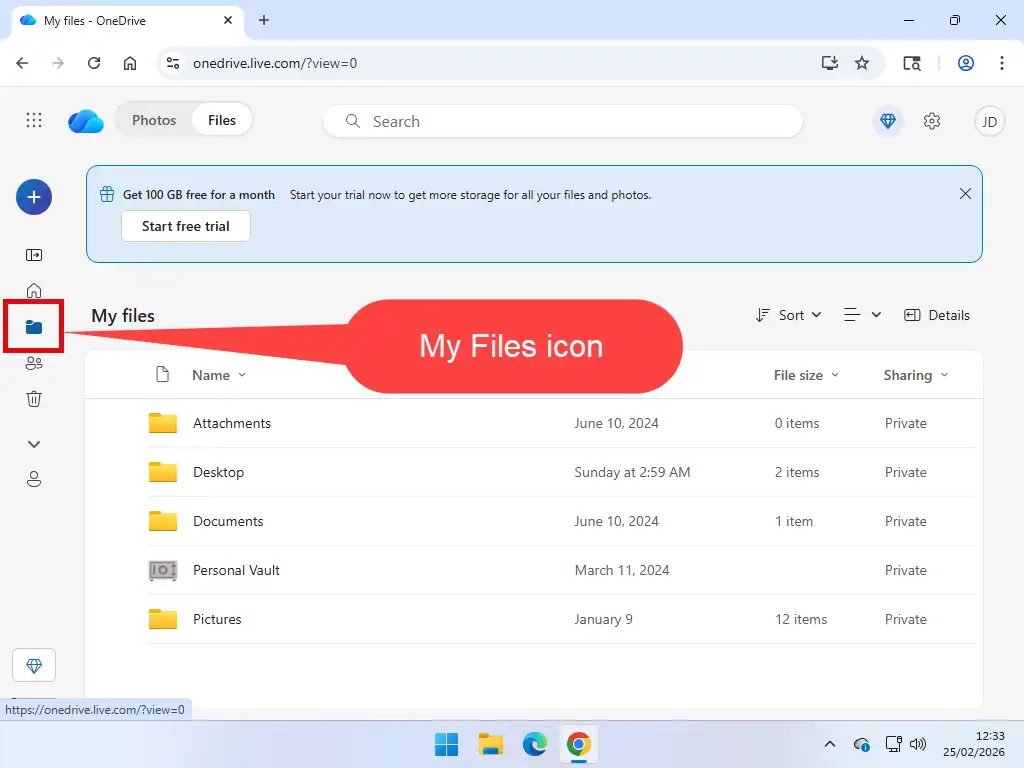
To delete files and folders online, sign in at onedrive.com and then:
- Click My files in the left hand panel.
- Select the file or folder you want gone, then click Delete on the toolbar.
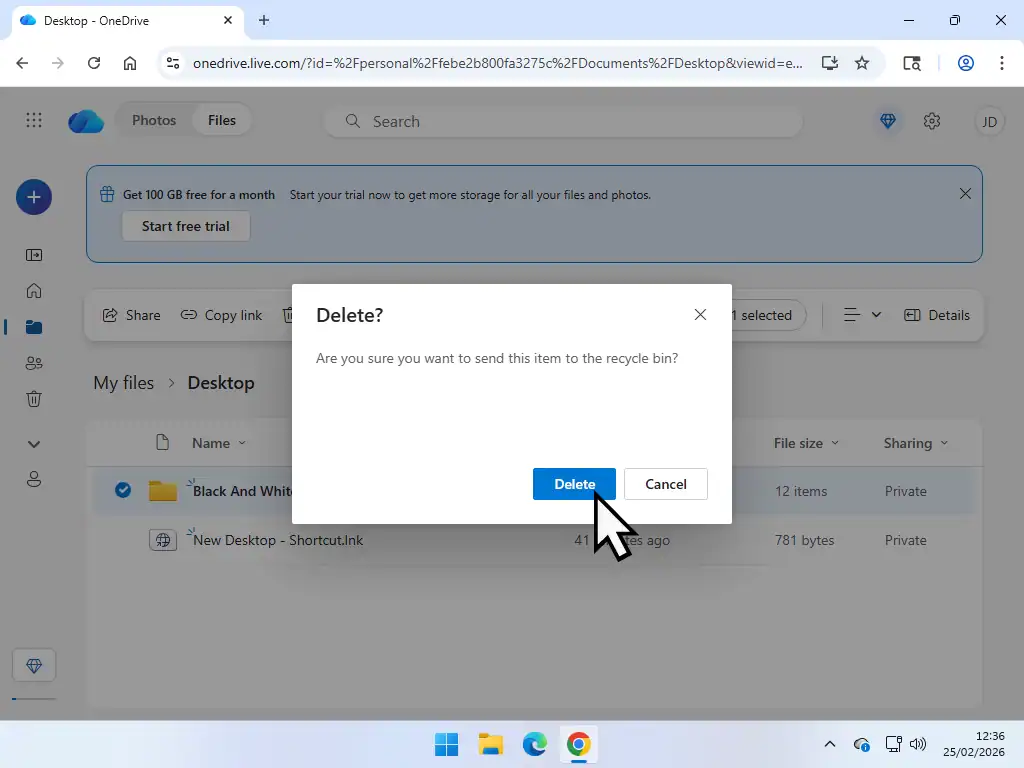
- Click Delete again on the confirmation popup.
Remember that OneDrive is a sync tool. Any change you make here is passed on to every device connected to the account, not just the computer in front of you. If you have a laptop and a phone signed in too, the file goes from those as well.
OneDrive Recycle Bin
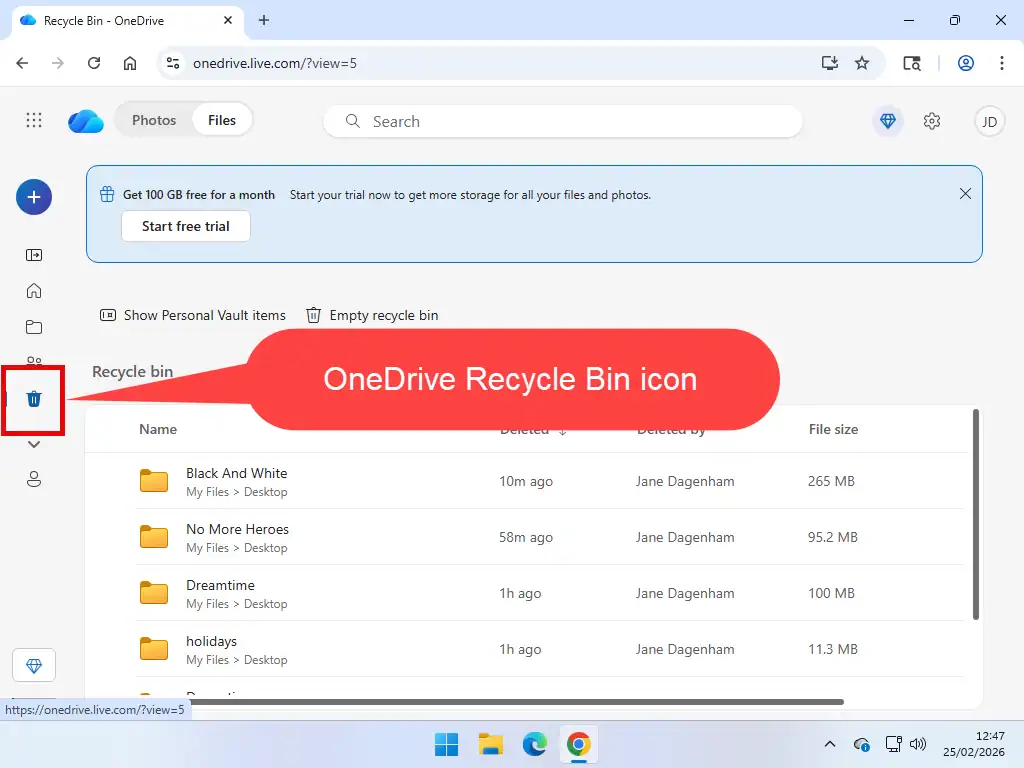
OneDrive has its own recycle bin, separate from the recycle bin on your computer. Anything you delete goes in there first, and on a personal OneDrive account it stays for 30 days before being removed for good.
Those 30 days are your safety net. If you’ve deleted something by mistake, this is where it will be.
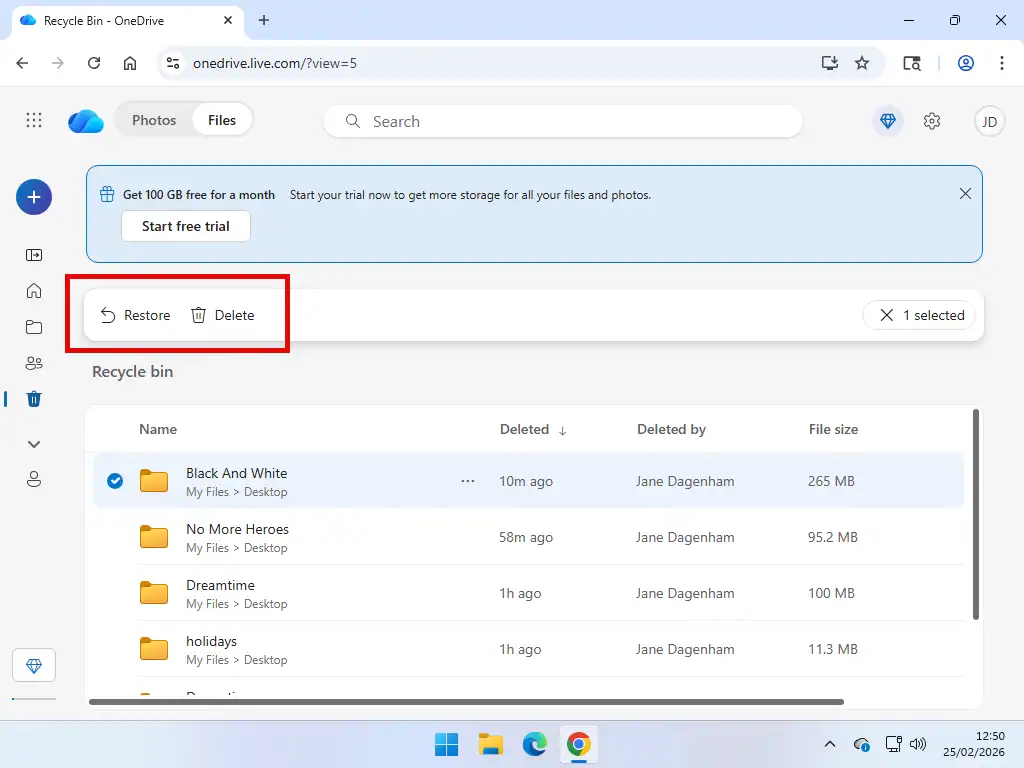
- Sign in to OneDrive and click Recycle bin in the left hand panel.
- Select the file or folder, then click Restore to put it back, or Delete to get rid of it permanently.
Restore puts the file back exactly where it was, and because OneDrive syncs, it reappears on your computer too within a minute or so.
There’s a second thing worth knowing about this bin. Everything sitting in it still counts against your 5 GB storage. So if you’re deleting files to free up space, the space doesn’t actually come back until you empty the bin as well.
Why Is OneDrive Asking to Delete My Files?
This one worries people, and understandably so. You go to turn something off in OneDrive and it starts talking about deleting your files. It feels like you’re being asked to agree to lose everything.
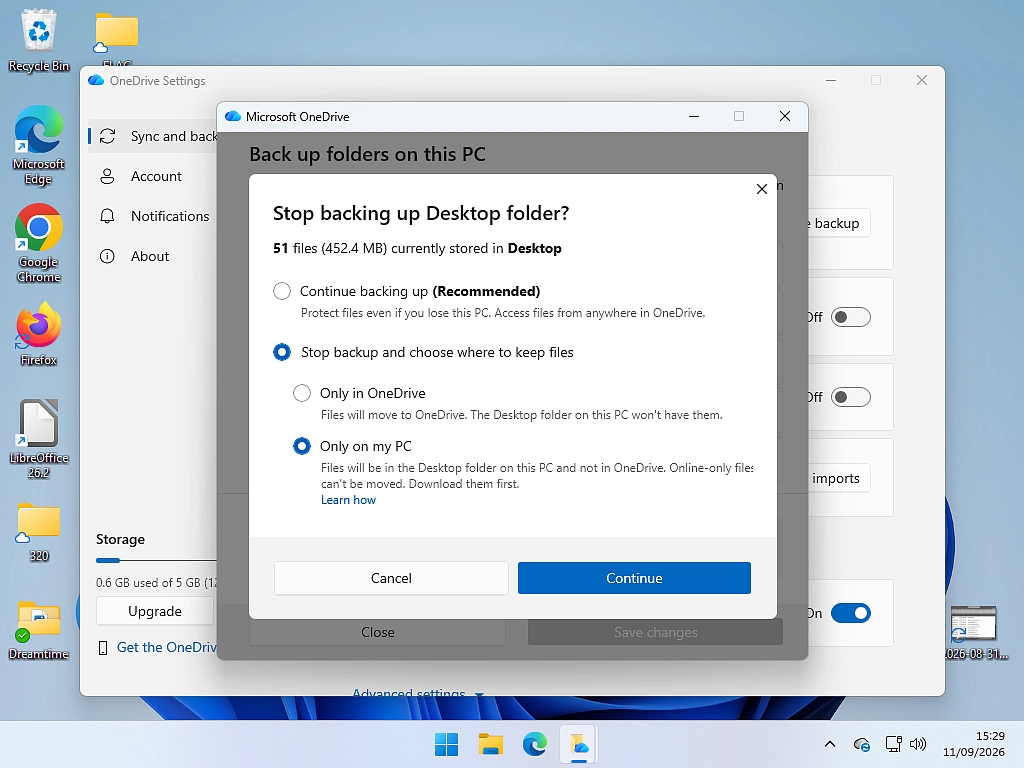
You’re not. OneDrive is asking a fair question badly. When you stop syncing a folder, or unlink your PC, there are about to be two separate copies of your files where before there was one shared copy. OneDrive wants to know which copy you want to keep, the one on your computer or the one in the cloud.
The answer for nearly everybody is keep them on this PC. Look for the option along the lines of “Only on my PC” or “Keep files on this device” and choose that one. Your files stay put, OneDrive simply stops watching them.
The option to remove the local copies exists for people who are short of hard drive space and happy to keep everything online. It is not the default answer and you don’t have to take it.
If You Already Clicked the Wrong One
Don’t panic. Removing the local copies doesn’t touch what’s in the cloud, so your files are still sitting in OneDrive online. Sign in at onedrive.com and download them back down to your computer.
Microsoft put it plainly, you won’t lose files or data by removing OneDrive from your computer, because you can always get at them by signing in to OneDrive.com.
And if a file really has gone from both places, the recycle bin above is the next stop. You have 30 days.
Troubleshooting
Why Can’t I Delete Files from OneDrive?
Usually one of three things. The file is open in another program, so close it and try again. The file is still uploading, so let OneDrive finish first, you can watch it from the cloud icon on the taskbar. Or your storage is over the limit and the account has gone read only.
That last one is a nasty little trap, being too full to tidy up. Try deleting from onedrive.com in a browser rather than from File Explorer, and there’s more on getting out of it in what to do when OneDrive is full.
I Deleted Files and They Came Back
Another device signed in to the same account still had them, and put them back. A phone or a second computer will happily re-upload files you deleted somewhere else if it hadn’t finished syncing when you deleted them.
Delete them once more with the other devices online and connected, and it should stick the second time.
I Deleted Files but My Storage Is Still Full
The recycle bin. Deleted files sit there for 30 days and go on using your storage the whole time. Empty it and the space comes back.
Then give it a couple of hours, because Microsoft don’t update the storage figure straight away.
Can I Delete the Shortcut I Made?
Yes, and it’s safe. A shortcut is only a signpost, deleting it doesn’t touch the folder it points at or anything inside it.
Same goes for unpinning it from Quick access. Right click and left click Unpin from Quick access, and the folder itself carries on exactly as it was.
Frequently Asked Questions
Q. If I delete files from OneDrive, will they be deleted from my computer?
A. Yes, if the folder is being synced. OneDrive keeps both copies matching, so deleting one deletes the other. To take files out of OneDrive but keep them on your PC, move them to a folder that isn’t synced instead of deleting them.
Q. How do I delete files from OneDrive but keep them on my PC?
A. Don’t delete them, move them. Create a folder on your C drive that OneDrive isn’t syncing, then cut and paste your files into it. They vanish from OneDrive and stay on your computer.
Q. Why is OneDrive asking to delete my files?
A. It isn’t deleting anything on its own. When you stop syncing a folder or unlink your PC, OneDrive asks which copy you want to keep. Choose the option that keeps them on your PC and nothing is lost.
Q. Did OneDrive delete my files?
A. Almost certainly not permanently. Check the OneDrive recycle bin at onedrive.com, where deleted files are kept for 30 days. Also check whether the files are still in the cloud but no longer downloaded to your PC.
Q. How long do deleted files stay in the OneDrive recycle bin?
A. 30 days on a personal OneDrive account. After that they’re removed permanently and can’t be recovered.
Q. I deleted files but my OneDrive storage is still full. Why?
A. Deleted files sit in the OneDrive recycle bin and keep using your storage until you empty it. Empty the bin, then allow up to two hours for the figure to update.
Q. Does “Free up space” delete my files from OneDrive?
A. No. It removes the copy on your hard drive and leaves the file in the cloud, so it’s the right choice when your PC is full. It does nothing at all for a full OneDrive.
Q. How do I delete files from OneDrive on the website?
A. Sign in at onedrive.com, click My files, select what you want gone and click Delete. Remember it will disappear from your computer and any other device signed in to the account.
Summary
Deleting files from OneDrive without losing any data is trickier than it should be. Microsoft sell OneDrive as a backup and it really isn’t, it’s a sync tool, and that’s where all the confusion comes from. Whatever you delete from OneDrive is also deleted from the synced folders on your computer.
The one thing to take away is this. If you want files out of OneDrive but still on your PC, move them, don’t delete them. Everything else on this page follows from that.
Personally I think Google Drive for desktop is a better choice for syncing files to the cloud. You get more storage for free and complete control over which folders are synced.
Related Posts
What to do When OneDrive is Full
You only get 5 GB of free storage space on OneDrive, and it fills up faster than you would think.
Outlook.com Not Sending or Receiving Emails
If your Outlook email has stopped sending and receiving, a full OneDrive is very often the cause.
How to Share a Folder in OneDrive
Sending photos and documents to other people, setting permissions, and stopping the share afterwards.
How to Setup FreeFileSync
Back up files and folders offline, with nothing going to the cloud. Sync to a second internal drive, an external USB drive, or across your home network to another PC.
Change Monitor Brightness in Windows
No brightness slider for your desktop monitor? You’re not going mad. Windows usually doesn’t give you one.
Here’s how to change the brightness of any external monitor from Windows itself. Free, and no fiddly buttons.
You can find this and other related step by step guides in – At Home Computer Guides