
OneDrive is Microsoft’s cloud storage service. It gives you somewhere on the internet to keep your files, and it can make the same files appear on your desktop PC, your laptop, your tablet and your phone. With a Microsoft account you get 5 GB of free storage. That isn’t much, but used carefully it can be enough.
You didn’t really choose OneDrive. It comes built into Windows 10 and Windows 11, Microsoft push it hard during setup, and it pops up asking to protect your files long after that. So it’s worth ten minutes understanding what it actually does.
Here’s my argument, and it’s the reason this lesson exists. Microsoft present OneDrive as a backup. It isn’t one. In its default setup it’s a sync tool, and a sync tool behaves very differently from a backup in one important way. Read on and I’ll show you what OneDrive is, what it does, and how to set it up so it doesn’t cost you your files.
What Is OneDrive
At its simplest, OneDrive is cloud storage. Think of it as a hard drive in the sky. Instead of your files only existing on the computer in front of you, they’re also held on Microsoft’s servers, which is what people mean by “the cloud”.
Because they’re on the internet rather than locked inside one machine, you can:
- Get at them anywhere. Open your documents on your phone, a tablet, or somebody else’s PC, from anywhere with an internet connection.
- Share things easily. Send somebody a link to a folder of photos rather than emailing them one at a time. They click the link and the folder opens. There’s a full guide on that, how to share a folder in OneDrive.
- Sync automatically. Change a file on your laptop and the change appears on your desktop PC without you doing anything. This is the useful one, and it’s also the dangerous one. I’ll come back to it.
Where Is OneDrive On A PC
There are three ways to get to OneDrive on your computer.
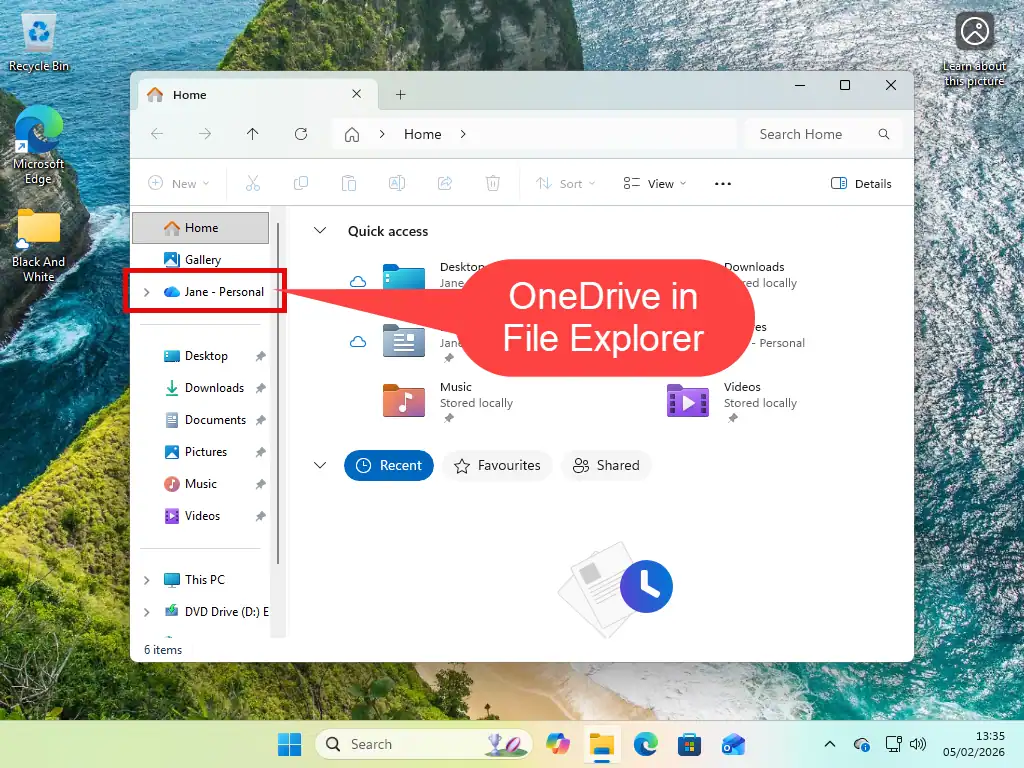
- Open File Explorer by pressing the Windows key and E together. OneDrive is in the navigation panel down the left hand side.
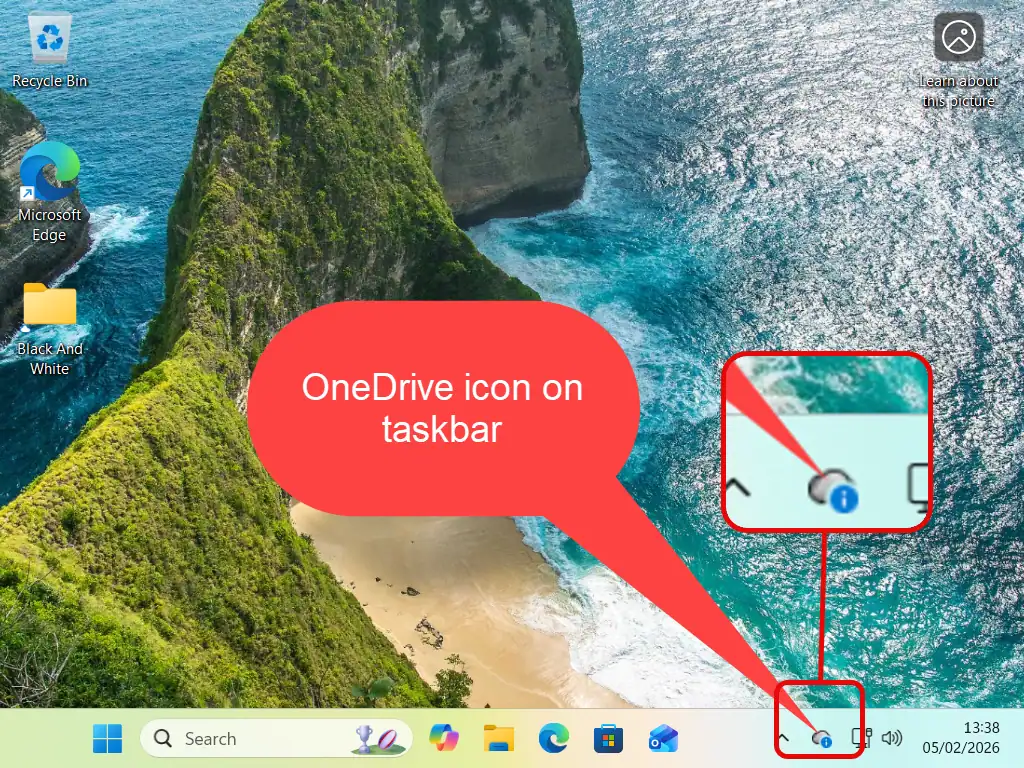
- Look at the right hand end of your taskbar for the grey cloud icon. You may need to click the little arrowhead first to show the hidden icons.
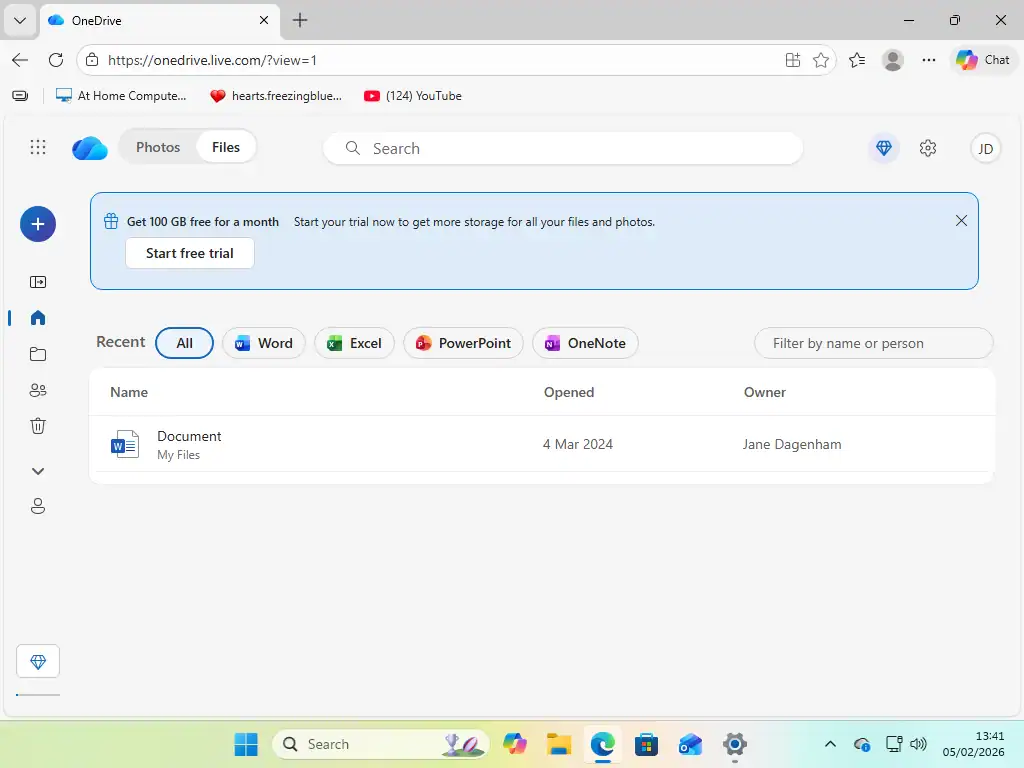
- Open a web browser, go to onedrive.com and sign in with your Microsoft account.
All three are looking at the same OneDrive, just from different directions. That’s worth remembering, because it’s the root of a lot of confusion later on.
How Does OneDrive Work On A PC
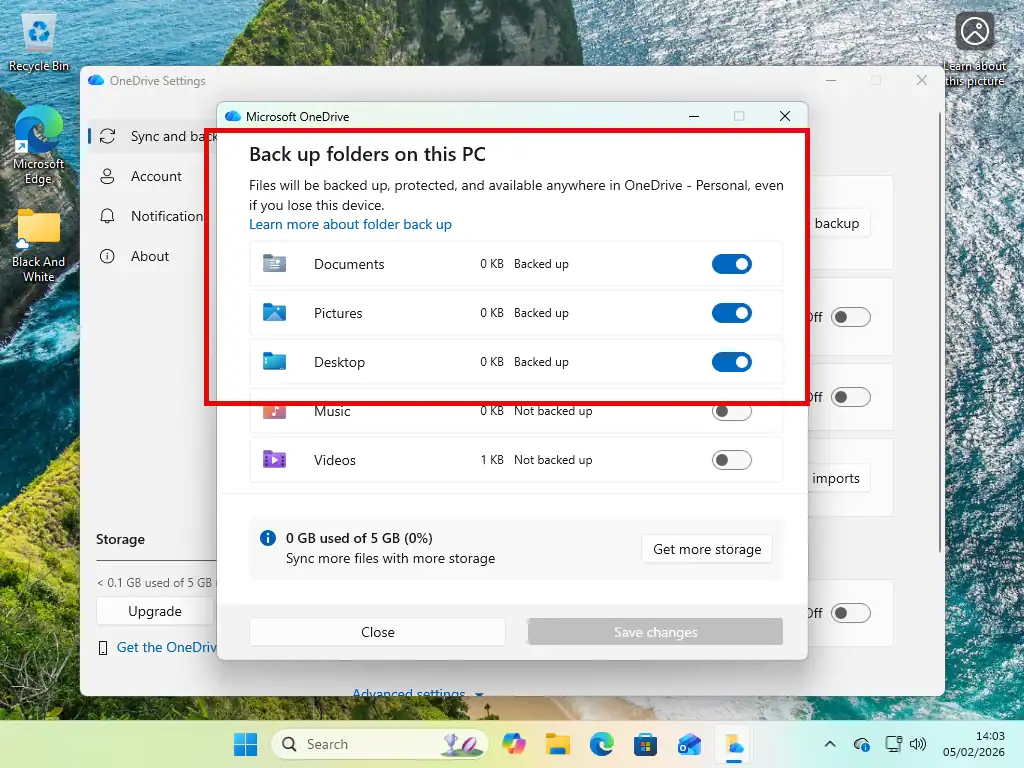
In its default setup, OneDrive syncs three folders to Microsoft’s servers automatically. Your Desktop, your Documents and your Pictures.
You don’t have to do anything to make this happen and there’s nothing to remember. Save a file into any of those three folders and it goes up to the cloud on its own. Which sounds excellent, and for syncing it genuinely is.
Notice which three folders those are, though. Between them they hold nearly everything a home user owns. Hold that thought, it matters later.
Syncing Across Devices
Anything you create or save in those folders becomes available on every device where you’re signed in with the same Microsoft account.
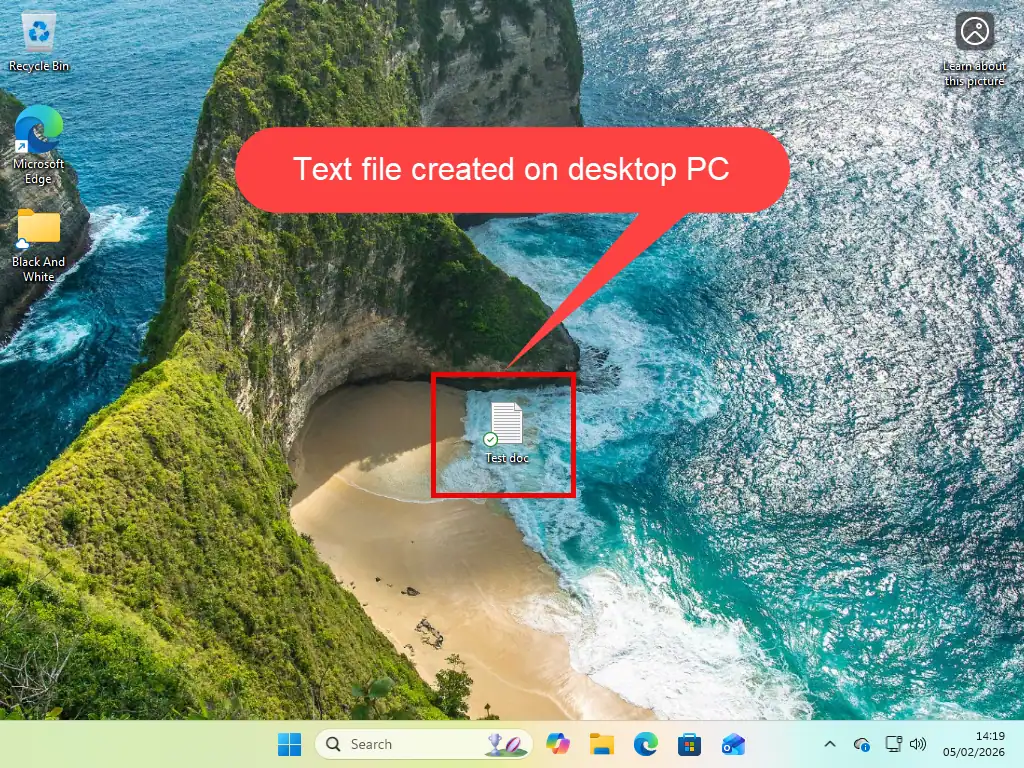
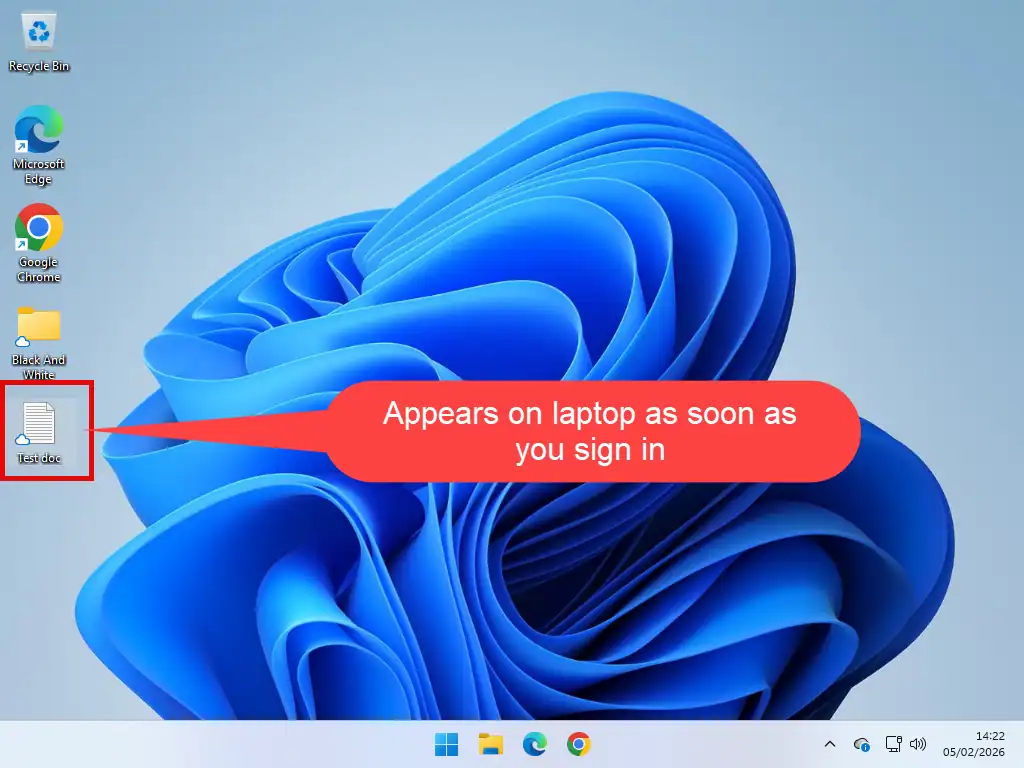
Save a file on your desktop PC and it appears on your laptop as soon as you sign in there. Change it on the laptop and the change comes back the other way. You can have OneDrive on a phone, a tablet or a Mac too, and they all join in.
That’s all syncing means. Two or more folders are kept identical, and every file and subfolder inside one is passed along to the others. At this job OneDrive is genuinely very good.
Why OneDrive Is Not A Backup
This is the part I most want you to take away from this lesson.
Microsoft advertise OneDrive as a way to protect your files. The splash screen even says so. But a sync tool and a backup are not the same thing, and treating one as the other is how people lose photographs they can never get again.
A Backup Keeps A Second Copy. A Sync Tool Doesn’t
A proper backup takes a copy of your files and puts it somewhere separate. The copy sits there, untouched, doing nothing, until the day you need it. If the original is damaged or deleted, the copy is still fine. That’s the entire point of it.
OneDrive doesn’t do that. It keeps two places matching. There’s no spare copy standing by, because whatever happens to one side happens to the other. That’s not a criticism of OneDrive, it’s just what syncing is. The problem is only that Microsoft sell it using the word backup.
Two things follow from that, and both of them catch beginners out.
Danger One, Delete It Once And It’s Deleted Everywhere
Delete a file from your Documents folder and it doesn’t just leave your computer. It’s removed from OneDrive too, and from your laptop, and your phone, and anywhere else signed in to that account.
Windows does warn you about this. The trouble is the warning talks about deleting from “all devices” or “everywhere”, and if you’re thinking of OneDrive as a backup, that sentence doesn’t sound alarming at all. You think you’re tidying up one copy and the safe copy stays put. There is no safe copy. There’s one file shown in several places.
This is the single most common way people lose files to OneDrive, and it’s worth reading how to delete files from OneDrive before you delete anything at all. There’s a safe way to take files out of OneDrive and keep them on your PC, and it isn’t the Delete key.
There Is A Safety Net
If you have already deleted something you shouldn’t have, don’t panic. OneDrive has its own recycle bin online and it holds deleted files for 30 days. Sign in at onedrive.com, click Recycle bin, and you can put things back.
Thirty days is generous, but it is not forever. Check sooner rather than later.
Danger Two, It Fills Up And Then Things Start Breaking
Remember which folders OneDrive takes by default. Desktop, Documents and Pictures.
You get 5 GB free. A few hundred photos from a modern phone will use that up on their own, never mind years of holiday snaps. So for an awful lot of home users OneDrive isn’t nearly full, it’s completely full, and often within weeks of buying the computer. Nobody chose to upload all those photos, OneDrive simply took the folder they were sitting in.
A full OneDrive is not a quiet problem either. Your files go read only, syncing stops, and, the one that really catches people, your Outlook.com email stops sending and receiving, because Microsoft share one storage allowance across both.
If that’s already happening to you, what to do when OneDrive is full walks through it properly, including how to clear space without losing anything.
Losing Access To Your Microsoft Account
Everything in OneDrive lives inside your Microsoft account. Forget the password and get locked out, and you’re locked out of your files at the same time.
Microsoft do have an account recovery process, so this isn’t automatically the end of the world. But it can take days, it asks questions you may not be able to answer, and it doesn’t always succeed. That’s a long time to be without your own documents.
Which is the same lesson again from a different angle. Keep a copy of your files somewhere that doesn’t depend on an account, a password or an internet connection.
OneDrive Status Symbols
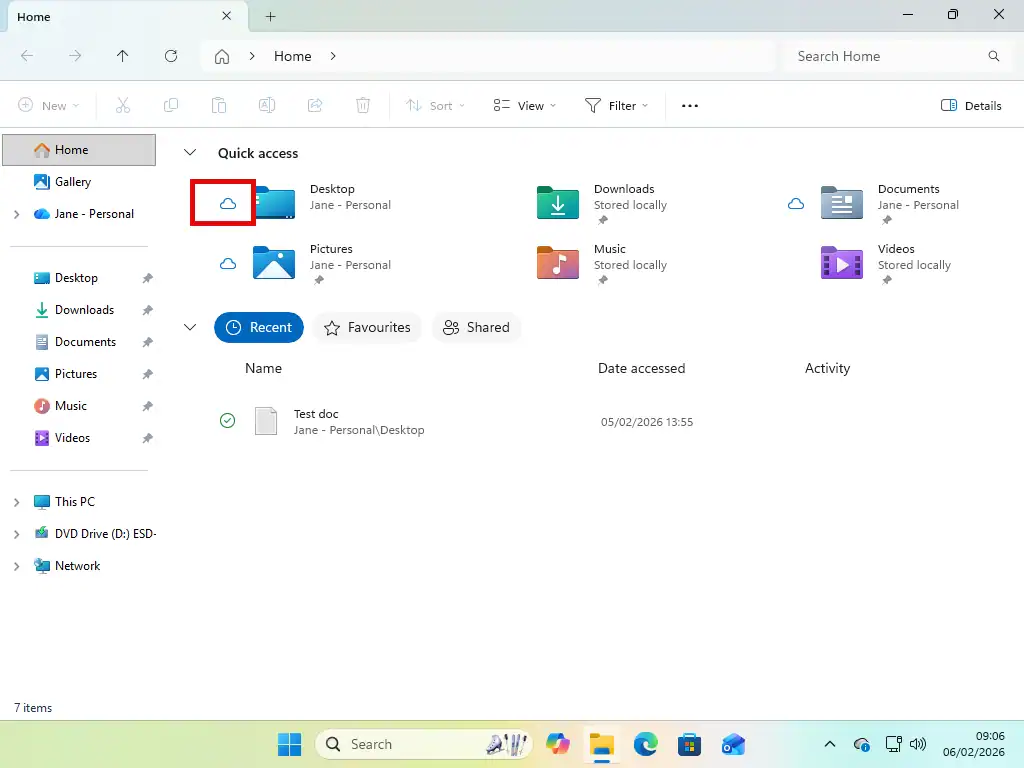
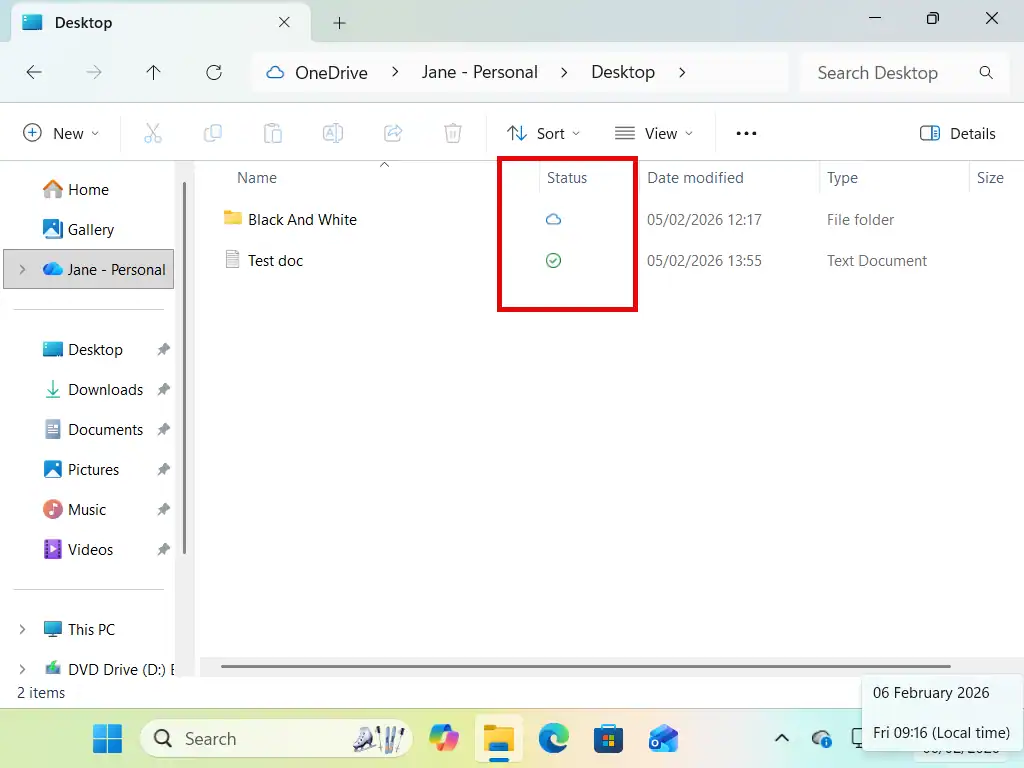
OneDrive puts a small symbol beside every file and folder telling you where it’s actually stored. Learning these three is the quickest way to know whether your files are safe on your computer or only sitting in the cloud.
- Blue cloud. The file is online only. It is not on your computer. Open it and OneDrive downloads it first, so you’ll need an internet connection. No connection means no file until you’re back online.
- Green tick, white background. The file has been downloaded and is on your computer right now, usually because you opened it recently. It will stay there, but it isn’t permanent. If you use Free up space, or Windows decides it needs the room, it goes back to being online only.
- White tick, solid green background. Always keep on this device. The file is stored on your computer and in the cloud, permanently, and Windows will leave it alone. This is the one you want.
So a blue cloud beside your Documents folder means those files are not on your computer at all, whatever File Explorer makes it look like.


Change This One Setting To Protect Your Files
If you’re going to use OneDrive, and most people effectively have to, this is the setting that makes it safe. It takes about a minute.
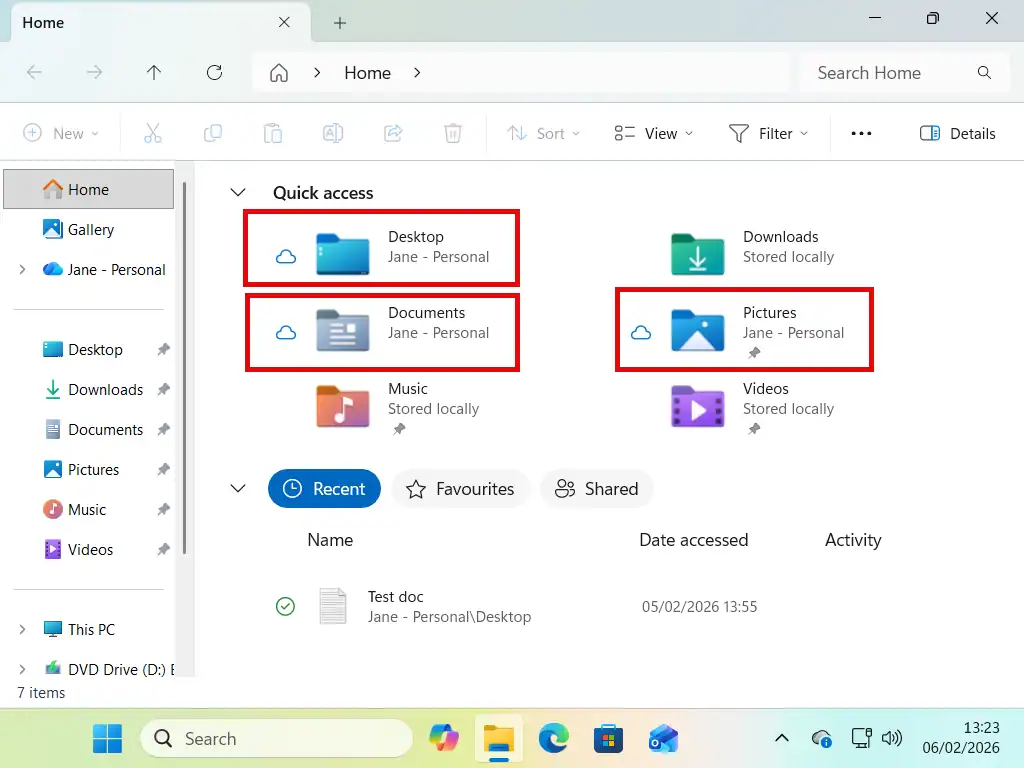
By default OneDrive leaves your files online only, with the blue cloud symbol. Change that and Windows keeps a permanent copy on your computer as well, so you always have your files whether or not you have internet, and whatever happens to your account.
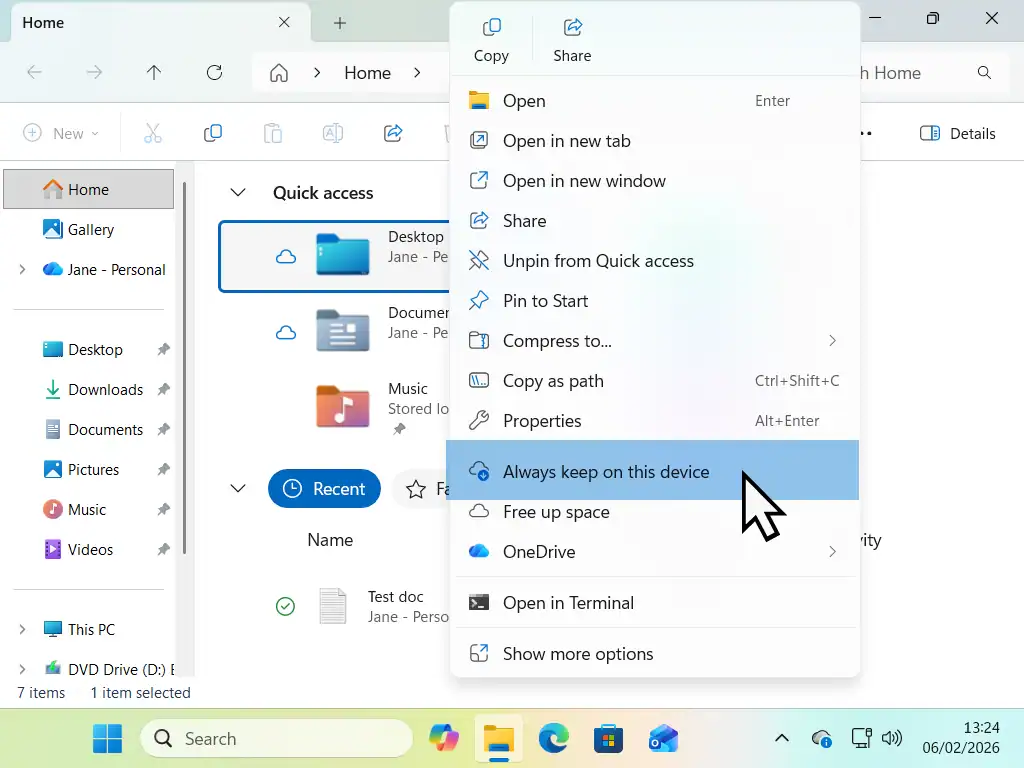
- Open File Explorer with the Windows key and E, then right click a folder inside OneDrive. Those are the ones with a OneDrive symbol beside them.
- Left click Always keep on this device. In Windows 11 you may need to click Show more options first.
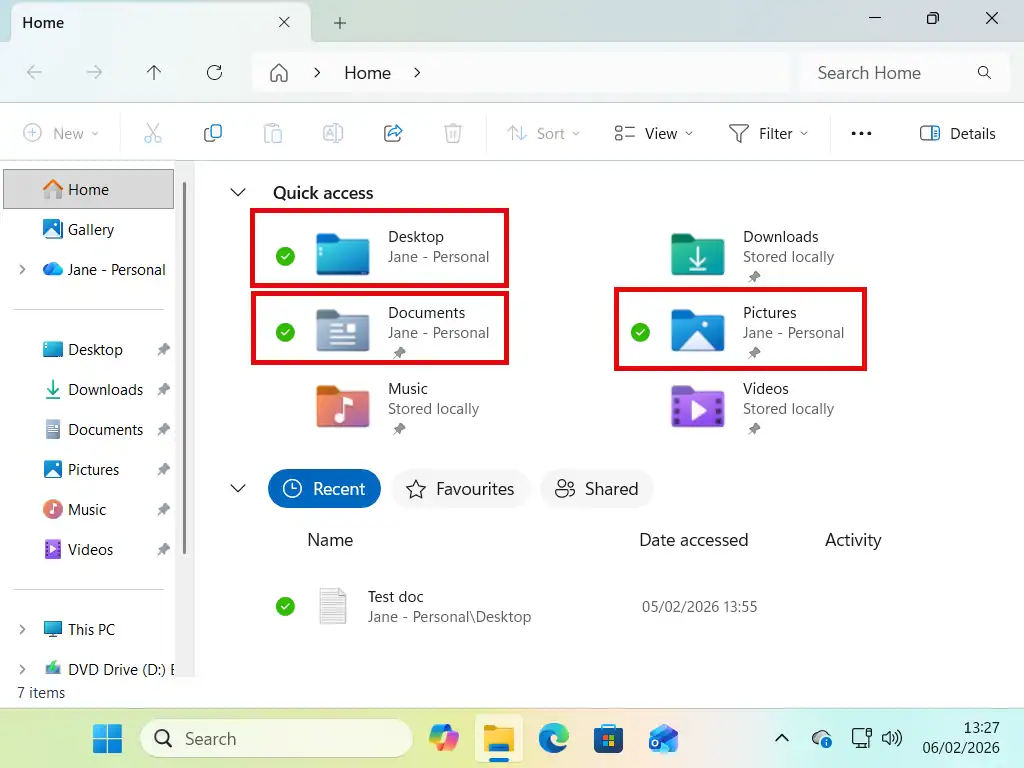
- Close the folder and open it again, and the white tick on a green background appears.
- Do the same for each of your OneDrive folders.
OneDrive now starts downloading everything from the cloud onto your computer. It isn’t moving the files, it’s copying them, so you end up with your files in both places. Depending on how much is up there and how quick your connection is, it can take a while.
One thing to watch. This uses hard drive space, which is the whole point, so if your computer is short of room you may want to do it folder by folder rather than all at once.
Quick Tip
Once you’ve done this, test it. Turn your wifi off and open a few files. If they open, they’re genuinely on your computer. If they won’t, they’re still online only and something didn’t take.
Two minutes, and you’ll know for certain rather than hoping.
Summary
OneDrive does a genuinely good job of syncing your files across your devices. Where it goes wrong is the word Microsoft keep using for it.
It is not a backup. There’s no spare copy sitting safely to one side, so delete a file in one place and it’s gone from all of them, and because your Desktop and Pictures folders are included by default, that 5 GB fills up far quicker than anyone expects.
Use it, by all means. Just turn on Always keep on this device so your files live on your computer as well as in the cloud, and keep a real backup somewhere else. FreeFileSync is free and copies to a USB drive or another PC on your network, with nothing going to the cloud at all.
If you do want to use OneDrive properly, how to setup OneDrive to backup your files takes you through setting it up so it does what you want and nothing you don’t.
That is the end of the Beginner Computer Course.
Thirty seven lessons. If you have worked your way through them, you can now:
- Find your way around Windows, and set it up to suit you
- Find, save, open, copy and organise your files
- Use a web browser, change your search engine and download things safely
- Install programs you want, and get rid of the ones you do not
- Send and receive email, including attachments
- Spot a scam, keep Windows updated and keep your files backed up
- Turn your PC off properly, and put things right when they go wrong
That is not a small list. It covers very nearly everything a home computer asks of you.
Want the new guides as they come out?
I add new guides most weeks, and I send one email a month with the new ones plus anything else worth knowing about. No nonsense, and you can leave whenever you like.
Where to go from here
Three directions. Pick whichever sounds most like you. Every guide is written in plain language with screenshots to help you along the way.
Make Windows work the way you want
Now that you know your way round, there is a free set of tools from Microsoft that makes a lot of everyday jobs quicker. Nothing frightening, and nothing you cannot undo. Microsoft PowerToys
Get your devices talking to each other
If you have more than one computer in the house, or a printer that everybody needs to use, the next thing worth setting up is a home network. I have a five step guide to setting one up.
Create your own calendar
Download my free calendar templates. Edit them by adding your own important dates and pictures. Grid style calendar and Photo style calendar
Virtual Machines
The single safest way to do anything on a computer is by using a virtual computer. Whatever it is, surfing the web, installing software, changing settings, do it a virtual machine first. See if it works. Don’t risk your “real” computer.
There are different ways in which to get started and they are all free. Why I use virtual machines