
You can copy and paste text from virtually any type of document, web page or email.
It’s especially useful for entering serial numbers into software you’ve purchased, email addresses, web page addresses, and whenever you want to quote from other sources in a document.
In this guide I’ll show you every way to copy and paste text on a Windows 10 or Windows 11 PC. The mouse method, the right-click method, and the keyboard shortcuts that will make you faster once they become second nature.
I’ll also cover how to paste without formatting, how to copy and paste on a laptop with no mouse attached, how to see your clipboard history, and what to do if copy and paste stops working.
Table of contents
- How to Copy and Paste Text: The 3 Basic Steps
- How to Select the Text You Want to Copy
- How to Copy the Selected Text
- How to Paste Text
- How to Cut and Paste Text
- How to Copy and Paste on a Laptop or Without a Mouse
- How to View Your Clipboard History in Windows
- Copy and Paste Not Working? Here’s How to Fix It
- Frequently Asked Questions
- Summary
How to Copy and Paste Text: The 3 Basic Steps
The great advantage of copying text is that, contrary to popular belief, computers don’t make mistakes.
If you copy a serial number, for instance, regardless of how long and complex that number is, your computer will reproduce it exactly. No silly typos, no lower case instead of capitals, no characters missed out. But I’m getting ahead of myself.
There are 3 actions involved in copying and pasting any piece of text, and we’ll go through each one individually.
- Select the text. Just like when copying a file or folder, you have to tell the computer exactly what it should copy. Which word, which sentence, which paragraph. You do that by selecting the text.
- Copy the selected text. Once the text is selected, you copy it to the computer’s clipboard.
- Paste the text. Place the text you’ve just copied wherever you need it, by pasting it.
How to Select the Text You Want to Copy
When you want to copy a piece of writing, you first have to select it.
Selecting text is simply a way of telling the computer which words, sentences, or paragraphs you want to work with. To select text with your mouse, move your pointer to either the very beginning or very end of the text you want to copy.
Hold down the left mouse button and, keeping it held down, slowly swipe over the words you want. As you move your mouse, you’ll see the text becoming highlighted.
Release the mouse button once all the text you want to copy is highlighted.
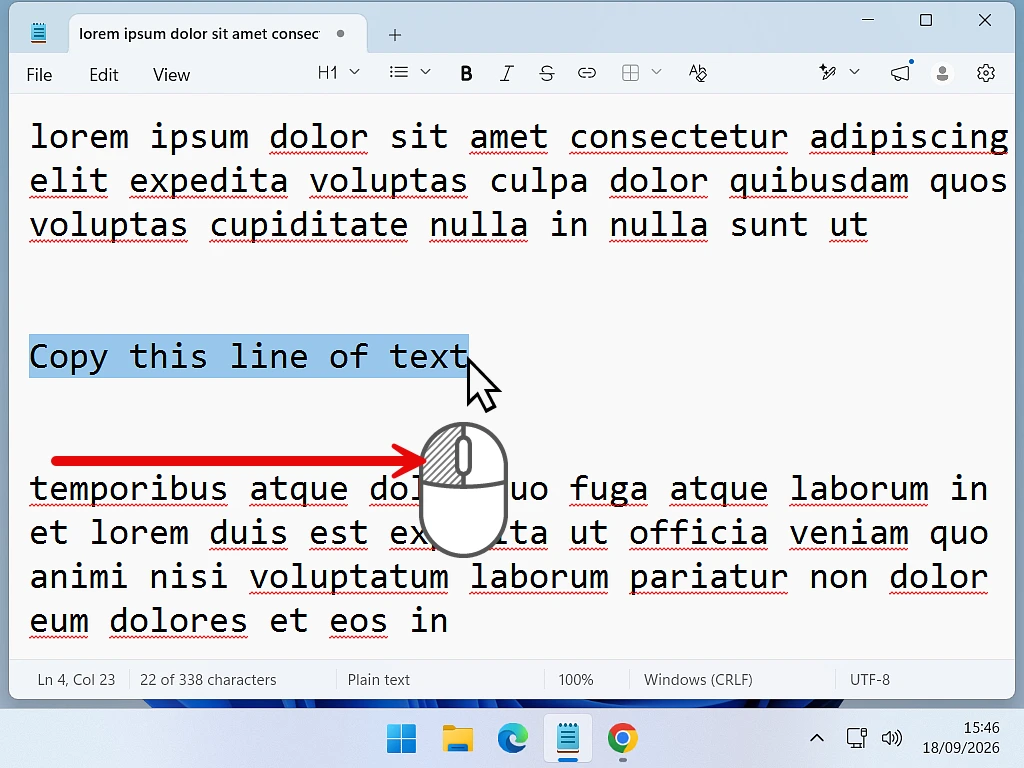
Selecting Text with a Click
If you want to select just a single word, hover your mouse pointer over it and double left-click. You’ll see the word become highlighted.
To select a whole paragraph, hover your pointer over any word in it and triple left-click. Try it on this page to see how it works. Double click for a single word, triple click for a paragraph.
Select All Text at Once (Ctrl + A)
If you want to select everything on the page or in the document in one go, click anywhere inside the text first, then press CTRL + A on your keyboard.
It’s much faster and easier than dragging your mouse over a long document, and it works in almost every app. Web browsers, Word, Notepad, email, you name it.
Again you can try it on this webpage. Press CTRL + A and the whole page will become highlighted (selected). Then just click anywhere on the page to deselect and carry on with the lesson.
How to Copy the Selected Text
Once you’ve got the text selected, you need to copy it.
The good news is that it’s exactly the same as copying a file or folder, which we covered earlier in the course.
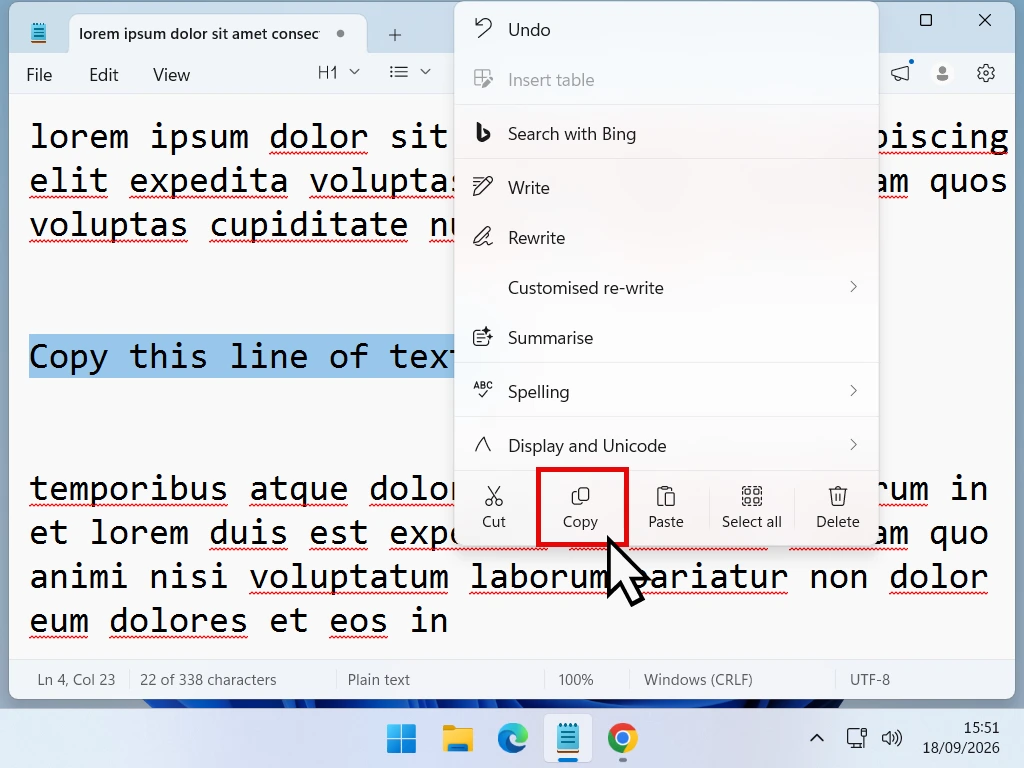
With the text selected, right-click once on it. On the menu that opens, left-click COPY, or the copy symbol if you’re on Windows 11.
However, the easiest way to copy selected text is the keyboard shortcut CTRL + C.
Quick Tip
If you prefer using the right-click method with your mouse, then right-click directly onto the text you’ve selected.
In some applications it doesn’t matter where you right-click, but in others it does, particularly when you’re copying from a web page.
So make it a golden rule to always right-click directly onto the text you’ve selected. It’ll always work.
How to Paste Text
Now that you’ve copied the text to the computer’s clipboard, you need to paste (or place) it wherever it needs to go.
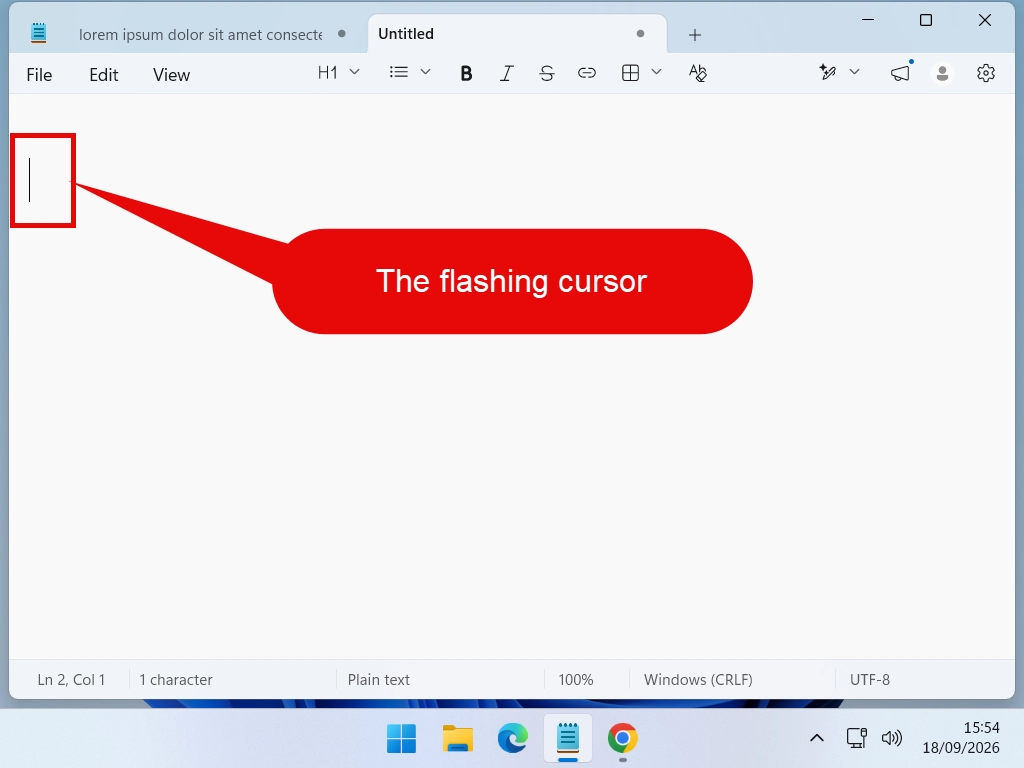
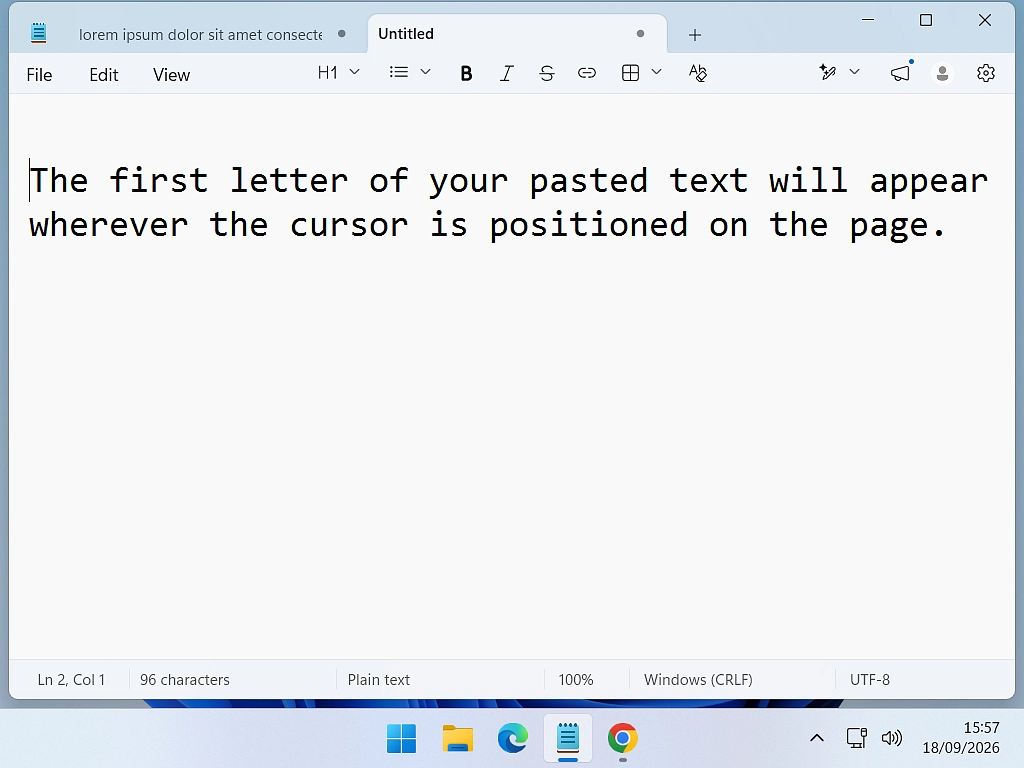
Usually you’ll be pasting it into another document, so that’s where we’ll start. When you paste text (or images, for that matter) into a document, it goes in wherever the flashing cursor is on the page.
So position the flashing cursor where you want to insert your copied text. Then either right-click and left-click PASTE (or the paste icon on Windows 11), or use the keyboard shortcut CTRL + V.
How to Paste Text Without Formatting
Sometimes when you paste text, it brings the original font, size and colour (known as the formatting) along with it, which can look completely out of place in your document.
To paste just the plain text, with none of the original formatting, use CTRL + SHIFT + V instead of the normal paste shortcut.
This is especially handy when you’re copying text from a web page or a PDF into an email or a Word document, and you want it to match the formatting already there rather than sticking out.
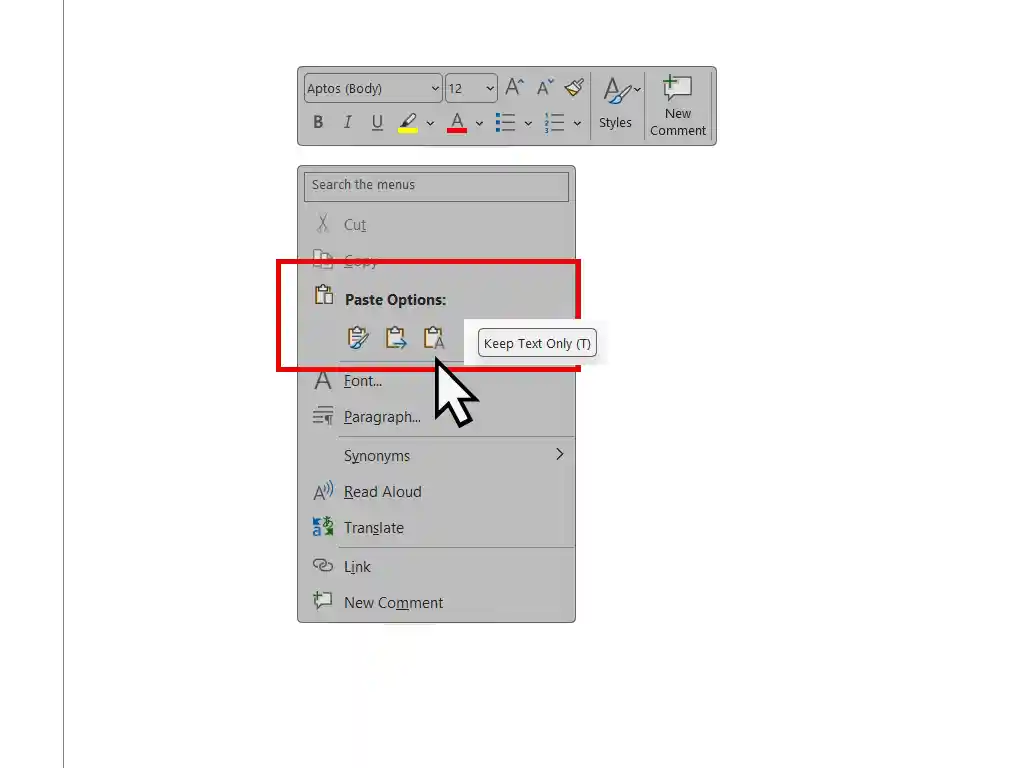
If you’re using Microsoft Word specifically, you can also right-click where you want to paste and choose the Keep Text Only option from the paste icons that appear.
How to Cut and Paste Text
If you’re writing a document, you’ll often find you want to move a sentence or paragraph, maybe higher up, or lower down the page.
You could retype the whole thing where you want it to appear, or better you could simply cut and paste it instead. It’s a great time saver.
When you cut and paste text, it moves from its current position to the new position in the document.
To cut and paste text, select the word, sentence or paragraph, just as you did earlier. Then either right-click the selected text and left-click CUT, or use the keyboard shortcut CTRL + X.
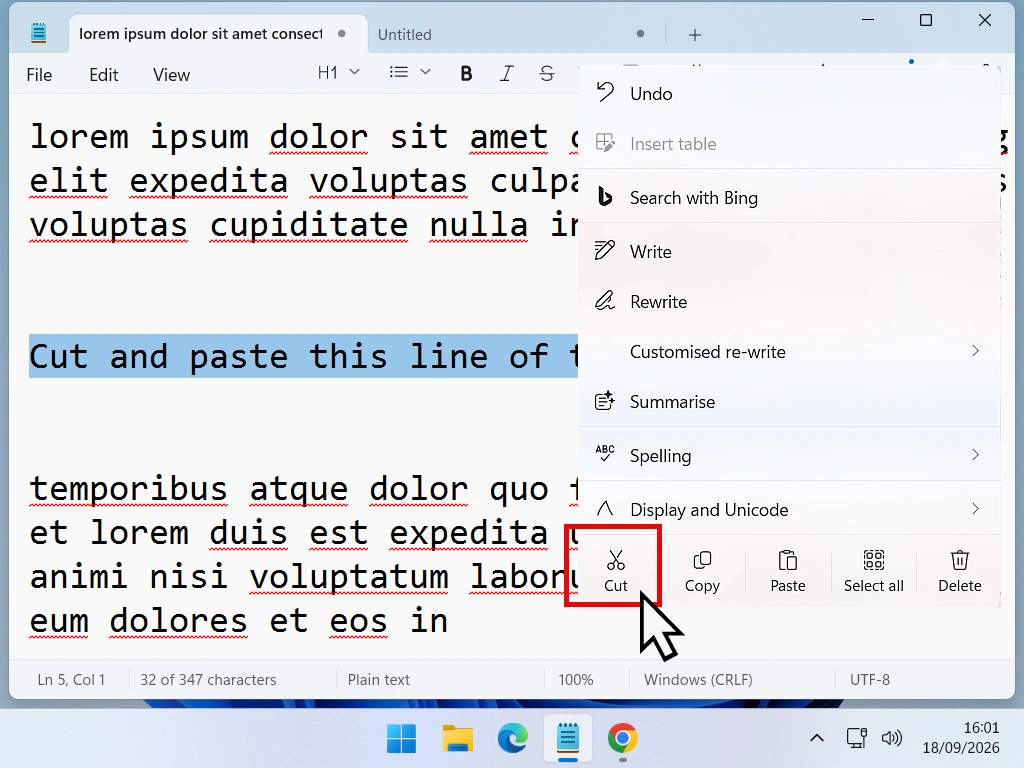
Note that whenever you cut text, a single word, a sentence, or a whole paragraph, it disappears completely from your document.
That’s a little different from cutting a file or folder, which simply becomes dimmer or faded.
Having a paragraph suddenly vanish can feel disconcerting, especially if you’ve laboured over it for an hour, but it’s entirely normal.
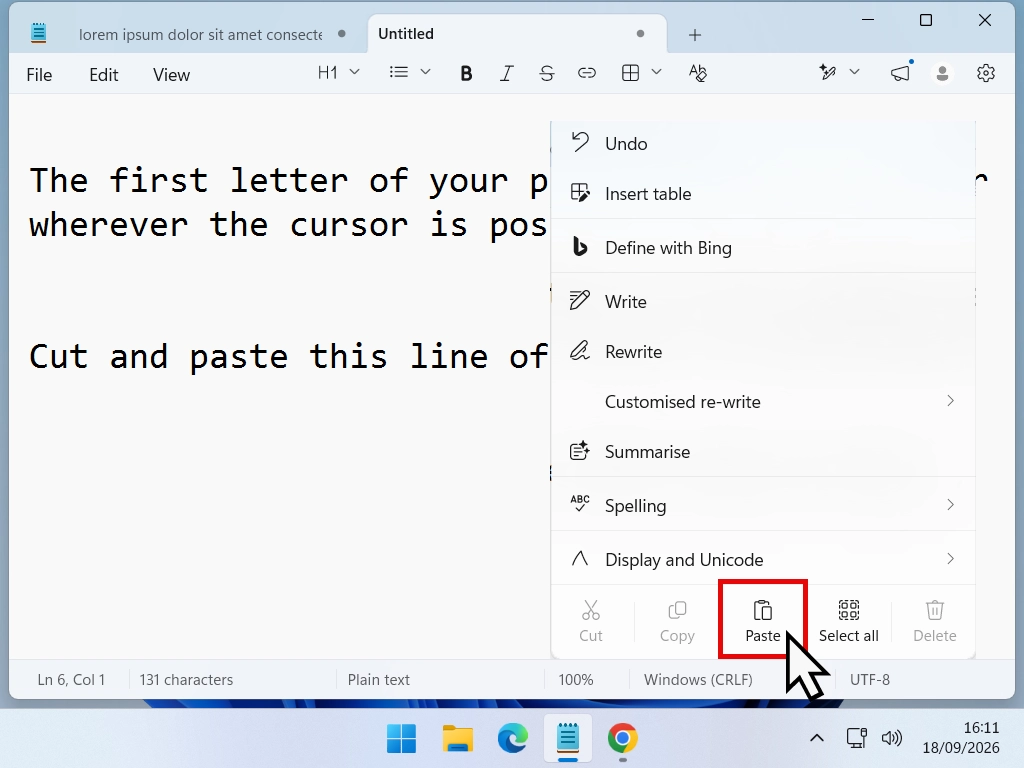
Now position your cursor where you want the cut text to appear in your document. Then either right-click and left-click PASTE, or press CTRL + V on your keyboard.
How to Copy and Paste on a Laptop or Without a Mouse
If your mouse stops working, or you’re on a laptop with no mouse plugged in, or you’d simply rather keep your hands on the keyboard, you can copy and paste text without touching a mouse at all.
Using the Keyboard Only
- Move to the start of the text using the arrow keys.
- Hold down SHIFT and press the arrow keys to highlight the text. Holding Shift and pressing the right or left arrow selects one character at a time. Adding CTRL as well (Shift + Ctrl + arrow) selects a whole word at a time, which is quicker for longer passages.
- Once the text you want is highlighted, press CTRL + C to copy it.
- Move the cursor to where you want the text to go, using the arrow keys or the Tab key to jump between fields.
- Press CTRL + V to paste it.
This method works in almost every Windows app, and it’s worth knowing even if you normally use a mouse. It’s the method that keeps working when your mouse or trackpad doesn’t.
Using a Laptop Touchpad
A touchpad does everything a mouse does, it just takes a bit of getting used to.
To select text, press and hold the left corner at the bottom of the touchpad, then slide a finger across the pad to sweep over the words. On most laptops you can also double-tap and hold, then slide, which some people find easier than holding the button down.
To right-click, either press the bottom right corner of the touchpad, or tap with two fingers at once. The two-finger tap is the one most people never discover, and it’s much easier than aiming for the corner.
Quick Tip
Selecting text on a touchpad is genuinely fiddly, and it catches everybody out at first. If a sweep keeps going wrong, use the keyboard method above instead. Shift and the arrow keys will get the job done every time.
How to View Your Clipboard History in Windows
Here’s a feature a lot of people don’t know exists: Windows can remember more than just the last thing you copied. Whenever you copy or cut an item, Windows places it in a special part of its memory called the clipboard.
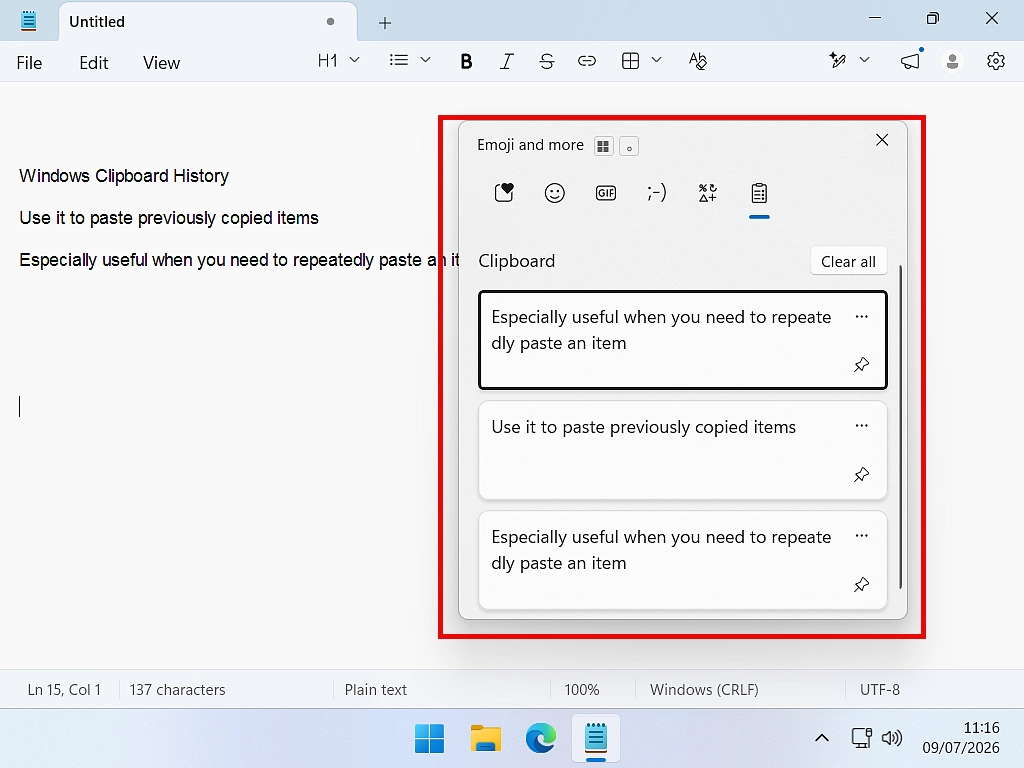
Press Windows key + V and a small panel will pop up showing a history of everything you’ve recently copied (or cut). Not just text, but images too.
If nothing appears the first time, Windows will ask you to turn Clipboard History on. Click Turn on and it’ll start keeping a running list from that point.
This is great for when you need to enter the same text repeatedly throughout a page. Or for those times when you’ve copied something new before pasting the previous item, and would otherwise have had to go back and find it again.
Copy and Paste Not Working? Here’s How to Fix It
If CTRL + C and CTRL + V suddenly stop doing anything, work through these in order.
- Check you actually selected the text first. It sounds obvious, but pasting nothing is the single most common cause. If nothing was highlighted, there was nothing to copy.
- Make sure you’re clicking into the right box before pasting. Click once inside the destination field or document so the cursor is flashing there, then try pasting again.
- Try the right-click menu instead of the shortcut. If right-click Copy and Paste work but the keyboard shortcut doesn’t, another program may be capturing that key combination. Restarting the computer usually clears this.
- Some websites and apps block pasting into certain fields, often for security reasons. Password fields are a common example. If right-click paste is greyed out, that’s usually why, and there’s no way around it from your end.
- If nothing works anywhere, restart the computer. This clears a stuck clipboard, which is a surprisingly common cause of copy and paste breaking.
Frequently Asked Questions
Q. What is the keyboard shortcut for copy and paste?
A. Copy is Ctrl + C and paste is Ctrl + V on Windows (Cmd + C and Cmd + V on a Mac). Cut is Ctrl + X.
Q. How do I copy and paste without a mouse?
A. Use Shift + arrow keys to select the text, Ctrl + C to copy it, then move the cursor with the arrow or Tab key and press Ctrl + V to paste it.
Q. How do I copy and paste on a laptop?
A. Exactly the same way as on a desktop PC. Ctrl + C to copy and Ctrl + V to paste. To select text with the touchpad, press and hold the bottom left corner and slide a finger across the pad. To right-click, tap with two fingers at once.
Q. Why does my pasted text look different from the rest of the document?
A. Pasting normally brings the original font and formatting with it. Use Ctrl + Shift + V to paste as plain text instead, which matches the formatting already in your document.
Q. How do I see what I’ve copied previously?
A. Press Windows key + V to open Clipboard History, which lists your recent copies so you can paste an earlier one instead of just the last item.
Summary
Copying and pasting text is very easy once you get the hang of it. Try to use the keyboard shortcuts CTRL + C to copy and CTRL + V to paste. Awkward at first, but much quicker than the mouse once it becomes second nature.
And now you know a few extras most guides leave out. CTRL + SHIFT + V to paste without formatting, Windows key + V for your clipboard history, the two-finger tap on a laptop touchpad, and how to do the whole thing without a mouse at all.
Next Lesson
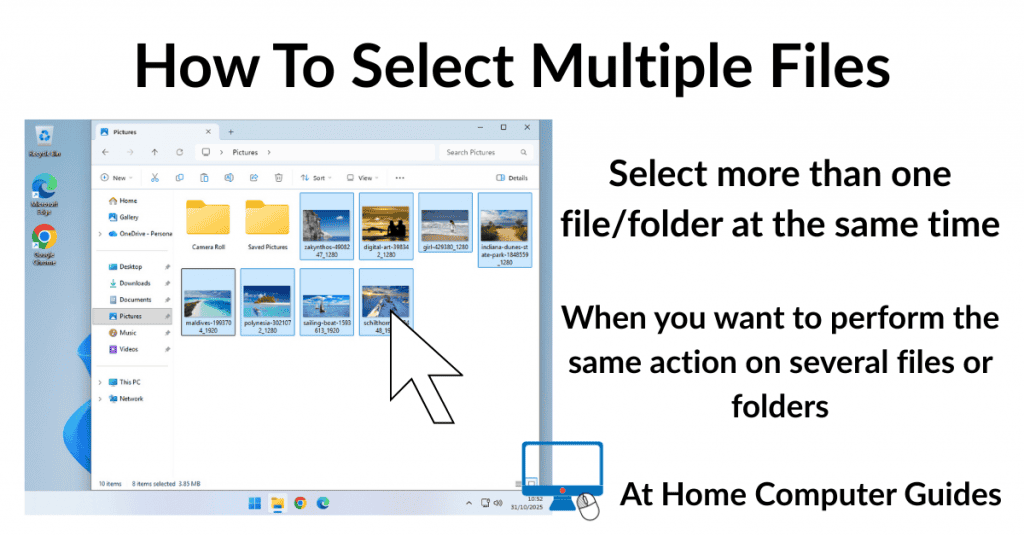
Select Multiple Files and Folders at the Same Time
Super charge your workflow by selecting more than just one file or folder.
Course Progress – 13 of 37 done.
Part of the At Home Beginner Computer Course.
Previous Lesson
Cut and Paste in Windows
Use Cut and Paste to move files and folders quickly.