
Want to install Windows without a Microsoft account? You still can. Microsoft has taken the option off the setup screens and closed several of the old workarounds, but one simple command still does the job.
In this guide I’ll show you how to set up Windows 11 with a local account (also called an offline account), the one thing you must do to make it work, and what to try if it doesn’t. I’ll also cover installing Windows 10 without a Microsoft account, which is easier still.
It doesn’t matter whether you’re doing a clean install from a USB drive or setting up a new laptop or PC for the first time. The account screen is the same, and so is the way around it.
Not sure what the difference is between the two types of account? I’ve explained the different Windows user accounts in a separate guide.
The Short Version
1. Start Windows 11 setup and connect to the internet when it asks. It won’t go any further without it.
2. When you reach the Unlock your Microsoft experience screen, disconnect from the internet. Unplug the network cable, or turn off your router if you’re on Wi-Fi.
3. Press Shift + F10, type the command below and press Enter.
start ms-cxh:localonly4. Create your local account, then reconnect to the internet when you reach the desktop.
Windows 10: disconnect from the internet during setup and the local account option appears.
Table of contents
- Can You Still Install Windows 11 Without a Microsoft Account?
- How to Install Windows 11 Without a Microsoft Account
- How to Install Windows 10 Without a Microsoft Account
- What You Lose (and Keep) With a Local Account
- Troubleshooting: When Setup Still Asks for a Microsoft Account
- Frequently Asked Questions
- Summary
Can You Still Install Windows 11 Without a Microsoft Account?
Yes, but there’s no longer an option for it on screen. Windows 11 Home and Windows 11 Pro both expect you to connect to the internet and sign in with a Microsoft account during setup.
The way around it is a short command called start ms-cxh:localonly. I tested it in November 2026 on a fresh download of Windows 11 (version 26H2) and it works just fine.
You’ll read online that it has stopped working. In my experience there are two reasons people think that.
- They were still connected to the internet. Windows 11 needs an internet connection to get setup started, but you have to disconnect before you run the command.
- They had a faulty download. One release of the Windows 11 download wouldn’t open the Command Prompt when you pressed Shift + F10. Nothing happened at all. I ran into this myself. The next release put it right, and the command has worked since.
Several other tricks really have gone, so you can ignore any guide that still recommends them.
- The fake email trick, where you typed an address such as no@thanks.com, stopped working in 2024.
- The bypassnro command has been removed from the newest version of Windows 11.
- The “Learn more” link trick, found in September 2026, was shut down within a month.
Microsoft has said it would like to remove the start ms-cxh:localonly command as well, and has already blocked it in some test versions of Windows 11. That hasn’t reached the version you and I download, but it’s the reason I’ve included two other methods below.
How to Install Windows 11 Without a Microsoft Account
Here are three methods, starting with the simplest. Method 1 is the one to use. The other two are there in case it ever stops working for you.
Method 1: The start ms-cxh:localonly Command
This is the simplest and easiest way to set up Windows 11 with a local account. You press two keys, type one line, and Windows 11 opens the local account screen.
It’s the same command for Windows 11 Home and Windows 11 Pro, whether you’re doing a clean install or setting up a new PC or laptop.
There’s one thing you must get right. Windows 11 needs the internet to get setup started, but you have to disconnect from the internet before you run the command. If you’re still online, it won’t work.
- Start setup as normal and connect to the internet when Windows 11 asks you to. It won’t let you carry on without it.
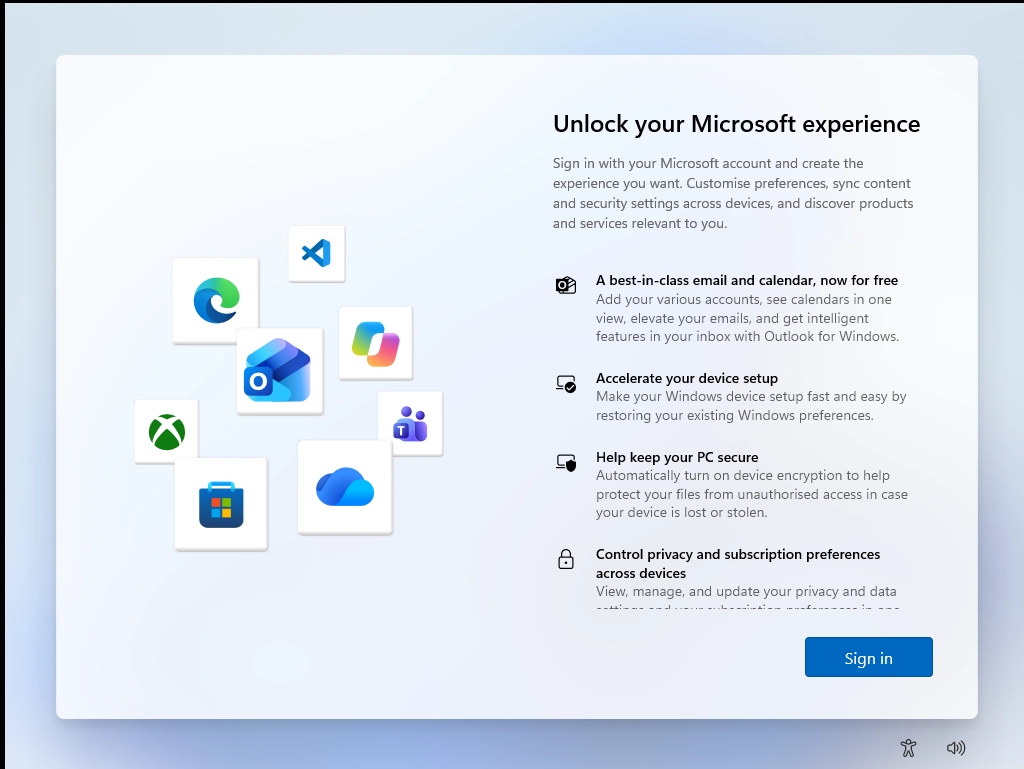
- Keep going until you reach the Unlock your Microsoft experience screen. Don’t click Sign in.
- Disconnect from the internet. If you’re using a network cable, unplug it. If you’re on Wi-Fi, the easiest thing is to turn off your router.
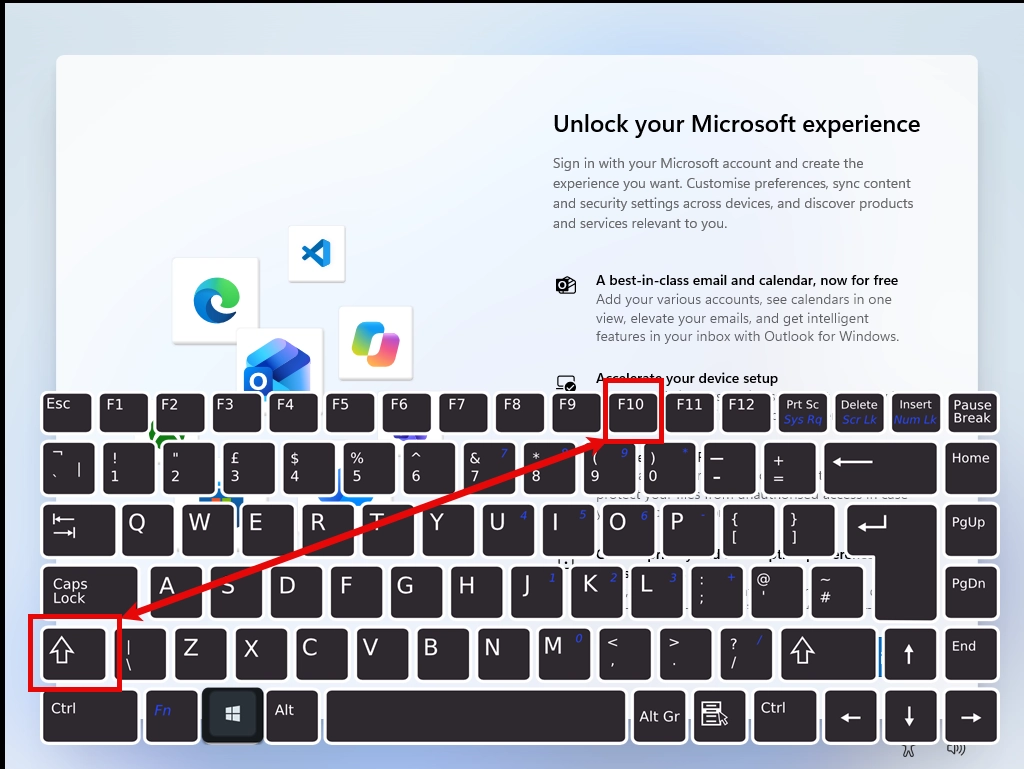
- Press Shift + F10 on your keyboard. On some laptops it’s Fn + Shift + F10. A black Command Prompt window opens.
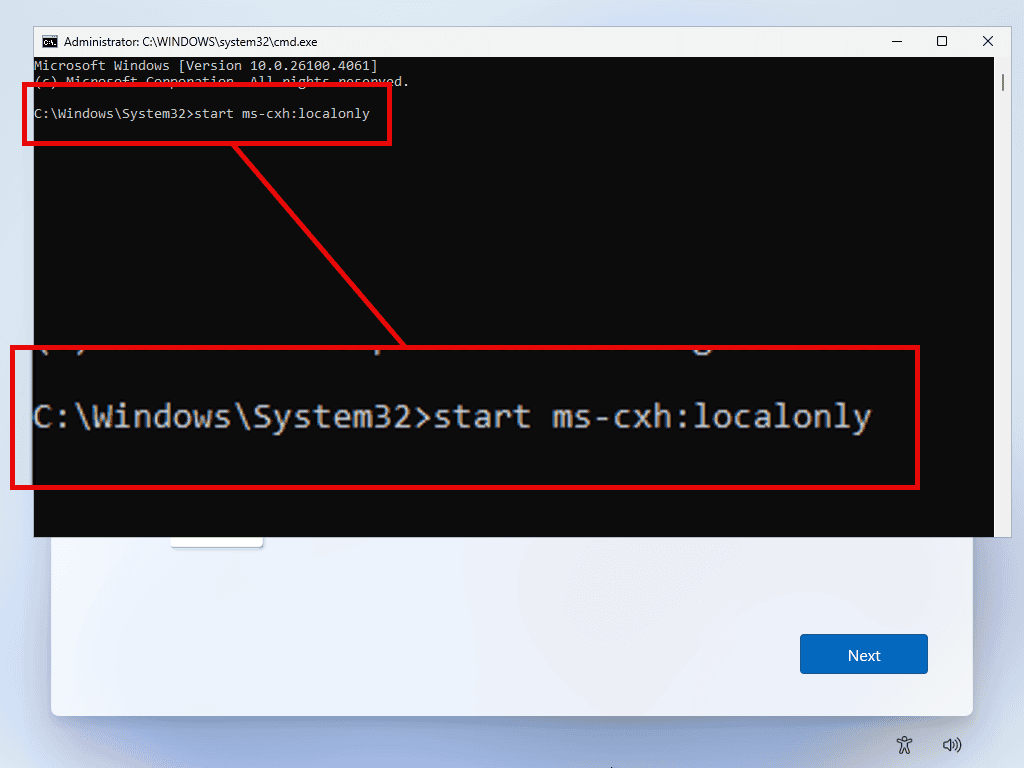
- Click inside the window, type the command below exactly as shown and press Enter.
start ms-cxh:localonlyType It Carefully
The command is easy to get wrong. It’s start, then a space, then ms-cxh:localonly with a hyphen and a colon.
It isn’t “ms-chx”, and it isn’t “start cxh localonly” or “start ms cxh” either. If you’ve half remembered it from somewhere, the line in the box above is the full command.
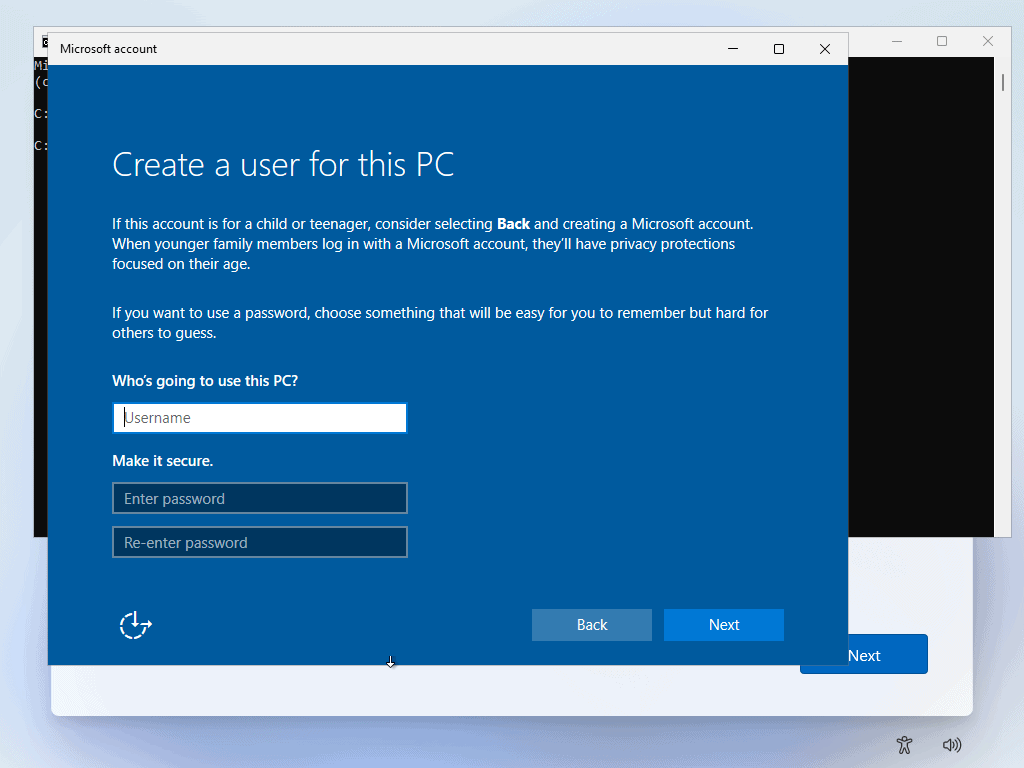
A box opens asking for a name and password for this PC. Fill it in, click Next, and Windows 11 carries on with a local account. Happy days.
When you reach the desktop, reconnect to the internet. Plug the network cable back in or turn your router back on.
Don’t Worry About Turning the Router Off
It only needs to be off for around five minutes, and most home routers benefit from a restart anyway. It’s much easier than trying to switch Wi-Fi off from inside Windows setup.
If you can’t get to the router, you can disconnect from the Command Prompt instead. After you press Shift + F10, type the command below and press Enter. Then type the start command as before.
ipconfig /releaseMethod 2: Make Your Install USB With Rufus
If Method 1 doesn’t work for you, or you’d rather have everything sorted before you start, this is the next best option. It’s for a clean install from a USB drive, and it works for Windows 11 Home and Pro.
Rufus is a free program that makes bootable USB drives. When it makes a Windows 11 drive, it can add a small settings file that tells setup to offer a local account.
It works well and it’s reasonably easy to do. If you haven’t used Rufus before, don’t let that put you off. There are only a few buttons to click, and I’ll go through them one at a time.
A USB drive made with Microsoft’s own Media Creation Tool won’t do this. It has to be made with Rufus.
You’ll need a USB flash drive of at least 8 GB. Everything on it will be erased, so copy off anything you want to keep.
- Go to the Windows 11 download page on Microsoft’s website and use the Download Windows 11 Disk Image (ISO) option. Choose English International as the language if you want UK English.
- Download Rufus from rufus.ie and open it. There’s nothing to install.
- Plug in your USB drive and check that it appears under Device.
- Click SELECT and choose the Windows 11 ISO file you downloaded.
- Click START.
- A box called Windows User Experience opens. Tick Remove requirement for an online Microsoft account.
- If you like, also tick Create a local account with username and type the name you want to use.
- Click OK, confirm that the drive can be erased, and wait for Rufus to finish.
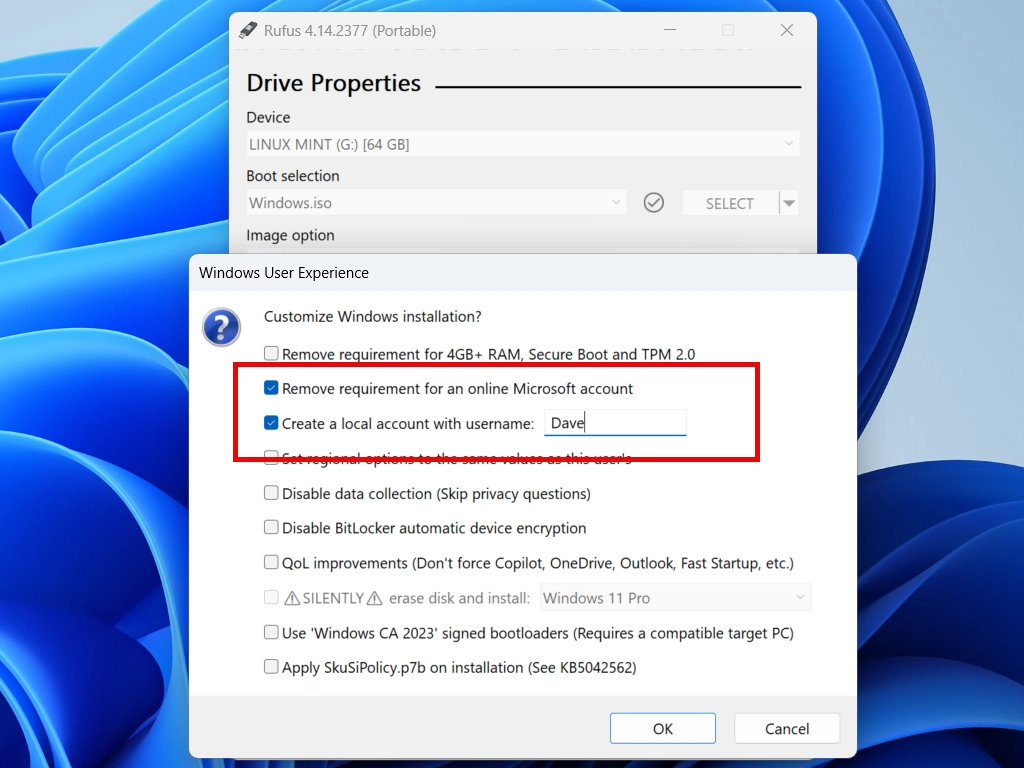
Now boot your PC from the USB drive and install Windows 11 in the usual way. If you need help with that part, follow my guide on how to install Windows 11.
Stay Offline During Setup
This is the part that catches people out. The Rufus option only works if the PC isn’t connected to the internet when setup reaches the account screen.
Unplug the network cable and don’t join a Wi-Fi network. When setup asks you to connect, choose I don’t have internet, then Continue with limited setup.
If you asked Rufus to create the local account for you, it won’t have a password. Add one when you reach the desktop by going to Settings › Accounts › Sign-in options › Password and clicking Add.
Method 3: Domain Join Instead (Windows 11 Pro, If All Else Fails)
Windows 11 Pro has one more way to create a local account during setup. It’s meant for office computers that will be joined to a company network.
It works, but I’d only use it if the first two methods have failed. You’re telling Windows 11 that this PC belongs to an organisation, and that can cause problems later on.
- Windows may expect a work or school account when you later try to sign in with your personal Microsoft account. People have run into this when trying to activate Windows 11 Pro, and the advice they were given on Microsoft’s own support forum was to reinstall Windows and choose personal use.
- There’s no setting that changes a PC from work or school back to personal use afterwards.
- On some PCs, clicking Domain join instead simply loops back to the Microsoft sign in screen.
If you still want to use it, here are the steps.
- Work through setup as normal until you reach the How would you like to set up this device? screen. Windows 11 Home doesn’t show this screen.
- Select Set up for work or school and click Next.
- On the sign in screen, click Sign-in options.
- Click Domain join instead.
- Type a name for your account and click Next, then create a password and answer the three security questions.
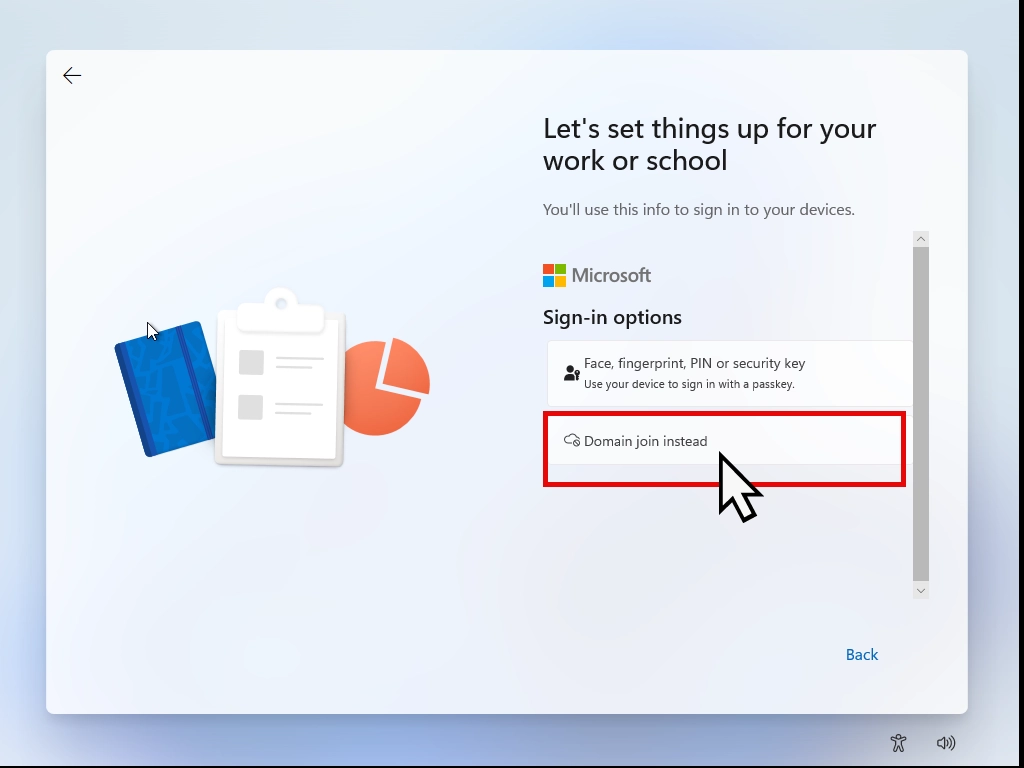
Windows 11 finishes setup with a local account. Your PC isn’t actually joined to anything.
Already Signed In With a Microsoft Account?
If you’ve already set up Windows 11 with a Microsoft account, you don’t need to reinstall. You can change it to a local account in Settings › Accounts › Your info by clicking Sign in with a local account instead.
I’ve covered this step by step, with screenshots, in how to switch from a Microsoft account to a local account.
Check for Device Encryption First
When you sign in with a Microsoft account, Windows 11 can switch on device encryption and save the recovery key to that account. Switching to a local account doesn’t turn it off.
Before you switch, either turn device encryption off or make a note of the recovery key. My guide to device encryption on Windows Home editions shows you how to do both.
Practise in a Virtual Machine First
If you’d like to see how these methods behave before trying them on a real PC, you can install Windows 11 as a virtual machine in VirtualBox or VMware Workstation Pro.
How to Install Windows 10 Without a Microsoft Account
Windows 10 is far less fussy. The local account option is still there, it’s just hidden when the PC is online.
The steps depend on whether you’re using Windows 10 Home or Windows 10 Pro. Neither is difficult, but they are different.
Install Windows 10 Home Without a Microsoft Account
With Windows 10 Home, all you need to do is disconnect your computer from the internet.
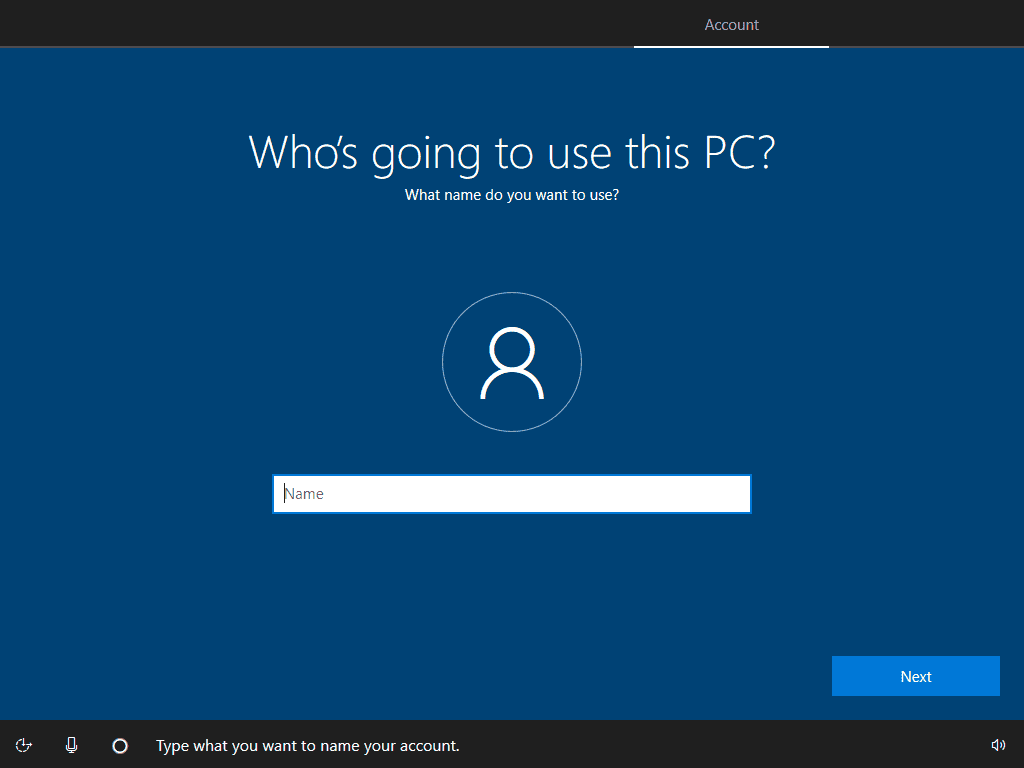
The easy way is never to connect in the first place. When setup asks you to join a network, choose I don’t have internet, then Continue with limited setup, and Windows 10 goes straight to the local account screen.
If you’ve already connected, you’ll reach the Let’s add your account screen. There’s no local account or offline account option on it, and whatever you click, you have to create or sign in with a Microsoft account.
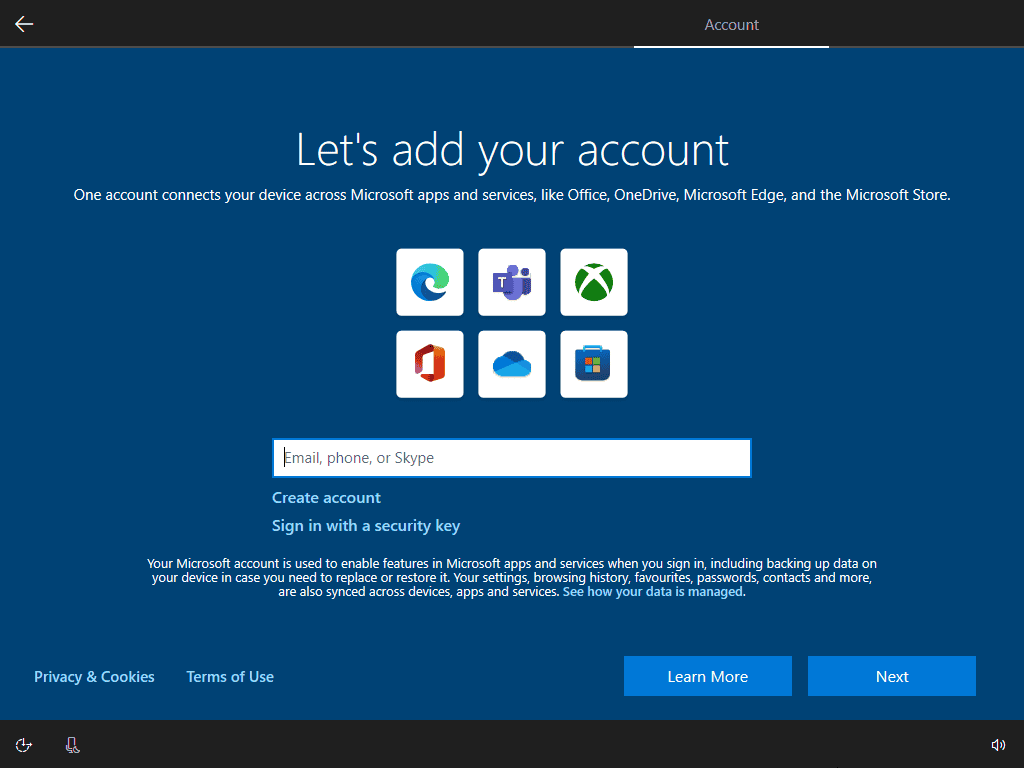
It’s at this point that you disconnect. If you’re using a network cable, just unplug it. If you’re connected by Wi-Fi, it’s probably best to turn off your router for a few minutes.
If you can’t do either of these, use the Command Prompt instead. Press Shift + F10, type the command below and press Enter, then close the window.
ipconfig /release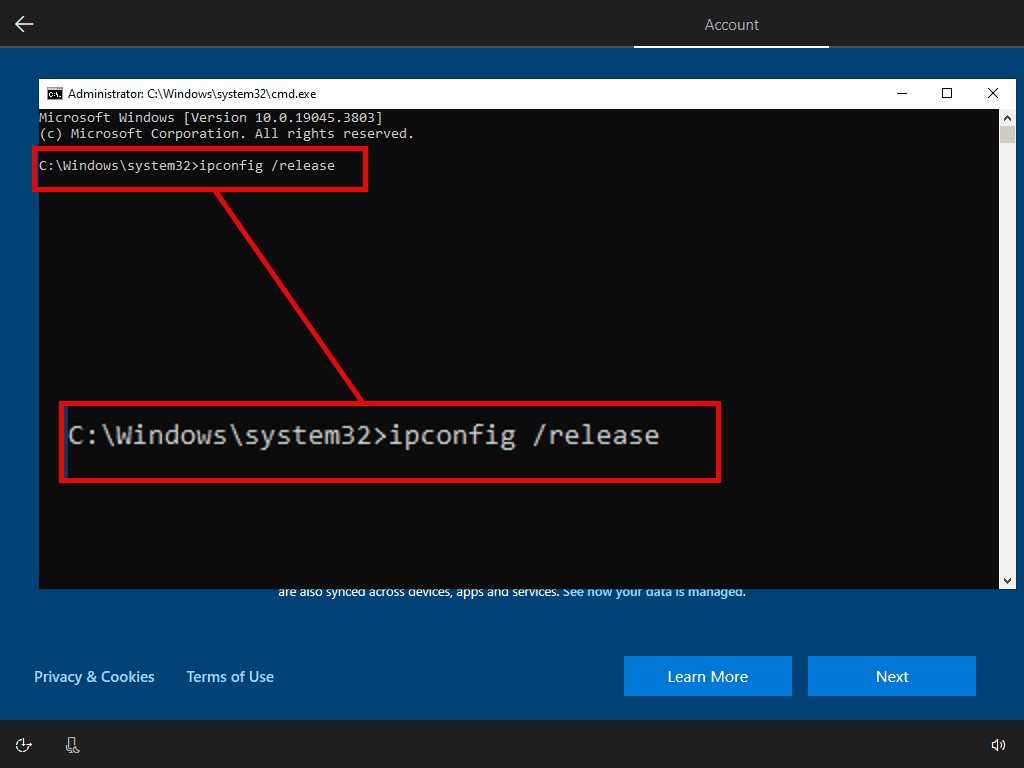
However you disconnected, go back to the Let’s add your account screen and click the Back arrow in the top left hand corner.
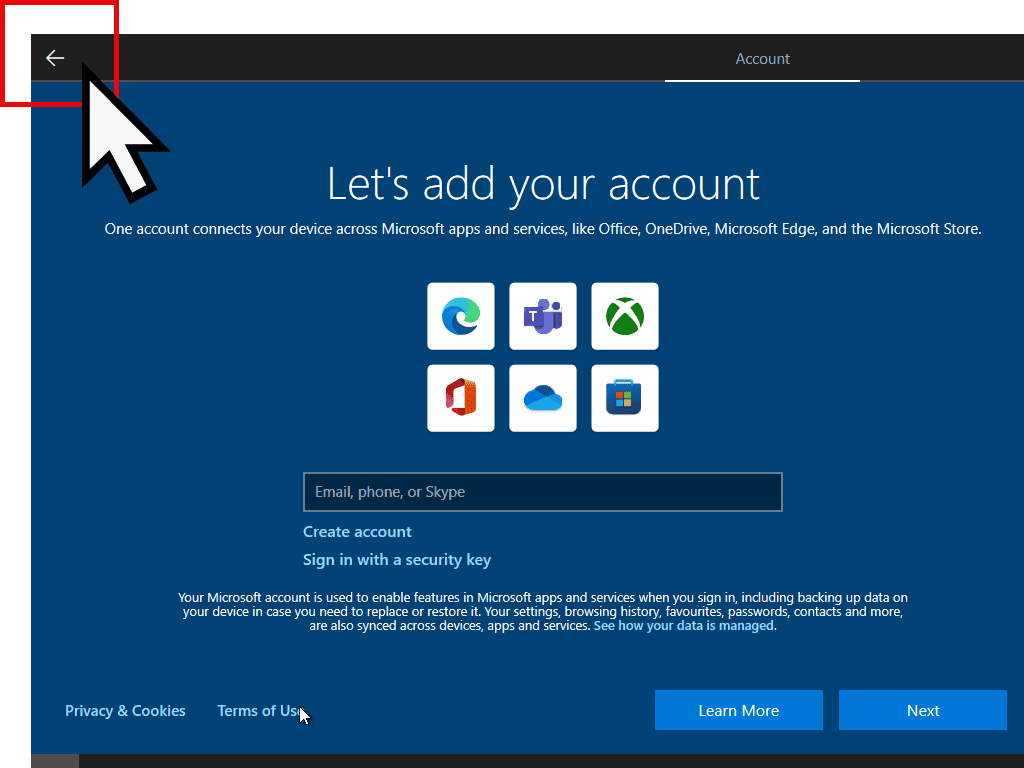
The screen reloads, and this time it offers you a local account. Brilliant.
Install Windows 10 Pro Without a Microsoft Account
Windows 10 Pro still gives you the option on screen, so there are no tricks involved.
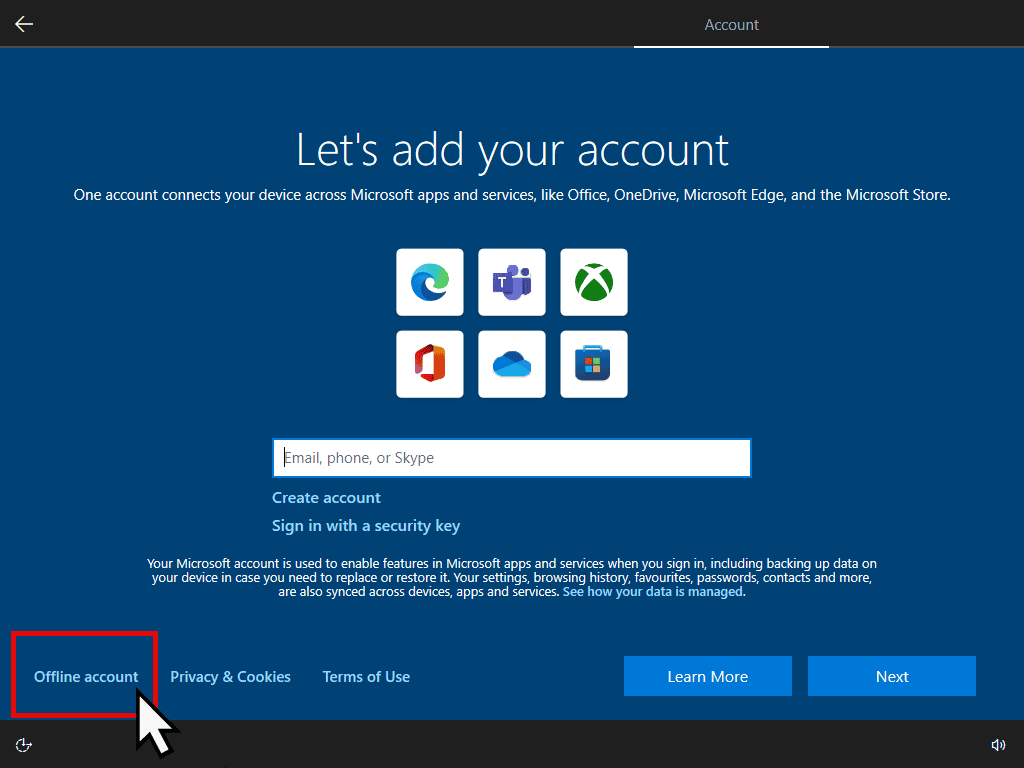
- When you reach the Let’s add your account screen, click Offline account in the lower left hand corner.
- The next screen tries to change your mind. Click Limited experience, again in the lower left corner.
- Type a name for your account, set a password and carry on with setup.
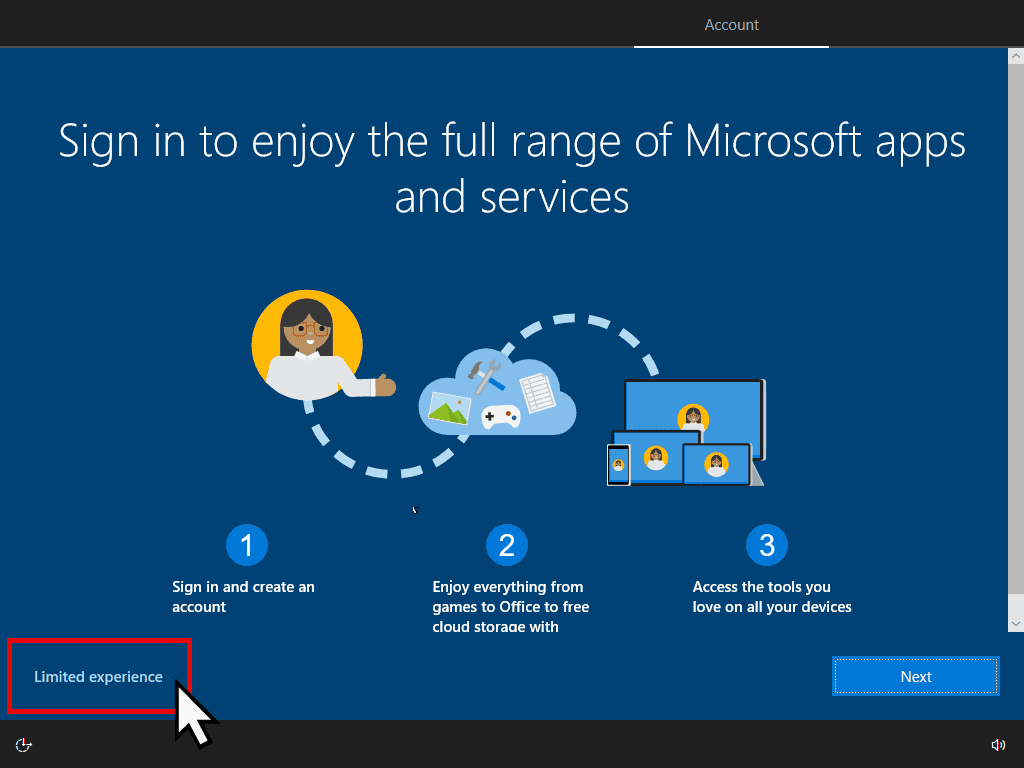
These steps are the same if you’re installing Windows 10 as a virtual machine in VirtualBox or VMware Workstation Pro.
Windows 10 Security Updates Need a Microsoft Account
Support for Windows 10 ended in October 2025. Microsoft’s Extended Security Updates programme keeps the security updates coming until October 2027, but you have to sign in with a Microsoft account to enrol.
You can still install Windows 10 with a local account today and sign in when you enrol. I’ve explained how it works in my guide on how to install Windows 10.
What You Lose (and Keep) With a Local Account
A local account lives only on your PC. That’s the attraction, but it’s worth knowing what you give up.
- OneDrive backup and sync won’t start on their own. You can still sign in to the OneDrive app separately.
- Your Windows settings aren’t synced between your computers.
- Find my device isn’t available.
- Device encryption on Windows 11 Home doesn’t switch itself on.
- A forgotten password can’t be reset online. You’ll be relying on your security questions, so choose answers you’ll remember. If the worst happens, here’s how to reset a forgotten Windows password.
What you keep is everything that matters day to day. Windows updates, activation, your programs and your files all work exactly the same.
You can also sign in to individual apps, such as the Microsoft Store, OneDrive or Microsoft 365, without changing how you sign in to Windows.
Troubleshooting: When Setup Still Asks for a Microsoft Account
The start ms-cxh:localonly Command Doesn’t Work
The most likely reason is that the PC is still connected to the internet. Check the network cable really is unplugged, or that the router is switched off, then run the command again.
If you can’t do either, use the ipconfig command shown in Method 1 to disconnect, then run the start command again.
After that, check your typing. It’s ms-cxh, with a hyphen before it and a colon after it.
Shift + F10 Doesn’t Open the Command Prompt
On many laptops the F keys double up as volume and brightness keys, so press Fn + Shift + F10 instead.
If nothing appears, press Alt + Tab. The Command Prompt window sometimes opens behind the setup screen.
On a tablet such as a Surface, you’ll need to attach a keyboard first.
If it still does nothing, you may have the faulty release of Windows 11 that I mentioned earlier, where Shift + F10 didn’t work at all. Download Windows 11 again, make a new USB drive and start over. The current download is fine.
The BypassNRO Command Isn’t Recognised
That’s the older trick, and Microsoft has removed it from the newest version of Windows 11. You’ll see a message that it’s “not recognized as an internal or external command”. Use Method 1 instead.
A Rufus USB Drive Still Asks You to Sign In
The PC is almost certainly online. Setup ignores the Rufus setting when it can see an internet connection.
Unplug the network cable, or go back a screen and don’t pick a Wi-Fi network. You should then see I don’t have internet on the network screen.
The Learn More Link Doesn’t Open the Local Account Screen
For a few weeks in autumn 2026 you could click the small Learn more link on the sign in screen and go straight to a local account.
Microsoft closed that in October 2026. The link now opens a page about how your data is managed, and the only button on it is Back.
Frequently Asked Questions
Q: Can you still install Windows 11 without a Microsoft account?
A: Yes. Disconnect from the internet at the Unlock your Microsoft experience screen, press Shift + F10, type start ms-cxh:localonly and press Enter. Windows 11 then lets you create a local account. If you are doing a clean install, a USB drive made with Rufus is the next best option.
Q: Does start ms-cxh:localonly still work?
A: Yes. I tested it in November 2026 on a fresh download of Windows 11 and it worked. The PC must be disconnected from the internet before you run it. If it fails, the PC is almost certainly still online.
Q: Why do I have to disconnect from the internet?
A: Windows 11 needs an internet connection to get setup started, but while it is connected it insists on a Microsoft account. Unplug the network cable or turn off your router at the Unlock your Microsoft experience screen, then reconnect when you reach the desktop.
Q: Does the oobe bypassnro command still work in Windows 11?
A: Not on the newest version. Microsoft has removed it, so you see a “not recognized” message. Use the start ms-cxh:localonly command instead.
Q: Can I set up a new laptop or PC without a Microsoft account?
A: Yes. A new laptop runs the same Windows 11 setup as a clean install, whatever the make. Connect to the internet when asked, then disconnect at the Unlock your Microsoft experience screen and run the start ms-cxh:localonly command.
Q: Can I use Windows 11 without a Microsoft account once it is set up?
A: Yes. Go to Settings, then Accounts, then Your info, and choose Sign in with a local account instead. Windows carries on working, updating and activating as normal.
Q: Do I need a Microsoft account to install Windows 10?
A: No. On Windows 10 Home, disconnect from the internet during setup. On Windows 10 Pro, click Offline account, then Limited experience. You will need a Microsoft account later if you want Extended Security Updates.
Q: Can I install programs without a Microsoft account?
A: Yes. Programs you download from the web install in the usual way on a local account. The Microsoft Store asks you to sign in for some apps, and you can sign in to just the Store without changing your Windows account.
Q: Will Windows still activate with a local account?
A: Yes. Activation is tied to your PC’s hardware or your product key, not to the account you sign in with.
Summary
You can still install Windows 11 without a Microsoft account, and the simplest way is one command. Disconnect from the internet at the sign in screen, press Shift + F10 and type start ms-cxh:localonly.
If that ever stops working, a USB drive made with Rufus is the next best thing, and Windows 11 Pro has Domain join instead as a last resort. Windows 10 remains the easy one, you just disconnect from the internet.
In my view it’s a great shame that Microsoft has removed the option to use a local account. It doesn’t serve us, their customers, at all.
While I understand that there are benefits to using a Microsoft account, we should still have the option to opt out.
Related Posts
How to Switch From a Microsoft Account to a Local Account
If you’ve already set up Windows with a Microsoft account, you can switch out of it.
Explaining the Different Windows User Accounts
Confused about the different accounts used in Windows? Check out this guide.
Forgot Computer Password: Microsoft Account
One of the main reasons for not using a Microsoft account.
Show Thumbnails Instead of Icons
Open your Pictures folder and all you get is file names or blank icons?
See your photos instead. Two Windows settings control this, and most guides only tell you about one.
You can find this and other related step by step guides in – At Home Computer Windows 11 Guides
Written by Jeff Porter. I’ve been fixing Windows PCs since 2010 and I’m CompTIA Network+ certified. More about me